Achievements and shortfalls in global lunar exploration this half year | Moon Monday #282
A contextualized overview of the world’s Moon exploration efforts.
Welcome to a linked rundown of global developments in the exploration of our Moon across the first half of 2026. There’s also a section on global outlook because we must not forget our interconnectedness and collective action needs over sovereign interests. Each linked article below explains and contextualizes said development. As usual, I make a conscious effort to curate events and trends that actually happened instead of amplifying speculative coverage of upcoming events that may or may not be as successful and/or as timely as they’re being touted and reported to be. If someone asks you what’s happening at the Moon, say all of this is. Oh, there’s also a lunar poetry section at the end. 🌙
China
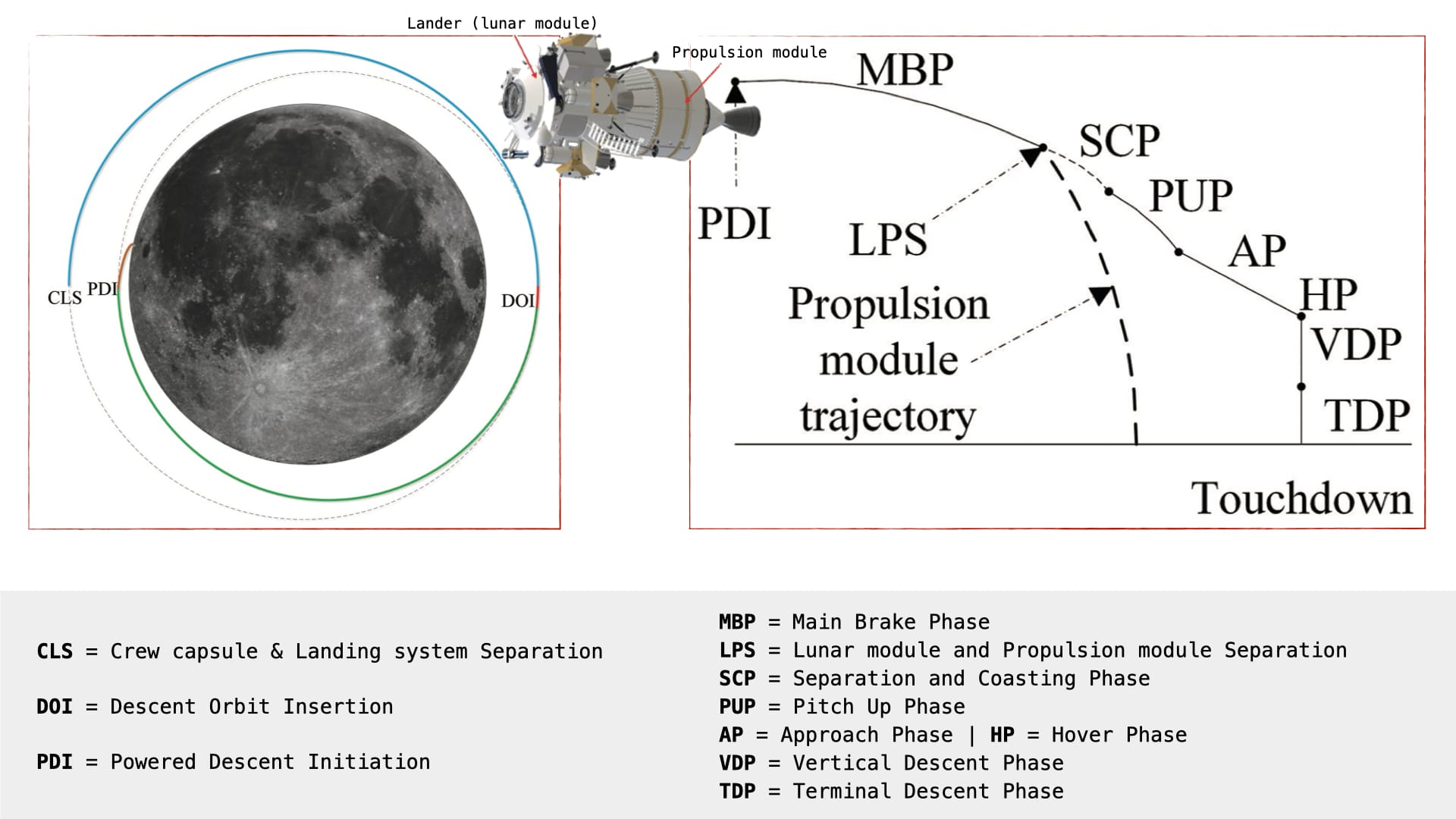
- China conducted a multi-hardware-element test unlike any other nation in its steady march towards landing humans on Luna by 2030.
- Chinese scientists & engineers surfaced details of spacecraft which will land humans on the Moon.
- All major elements of China’s Chang’e 7 Moon mission arrived at Wenchang for pre-launch integration and final tests prior to an H2 launch this year.
Related: Tests China planned to conduct this year in prep towards crewed lunar landings
The US
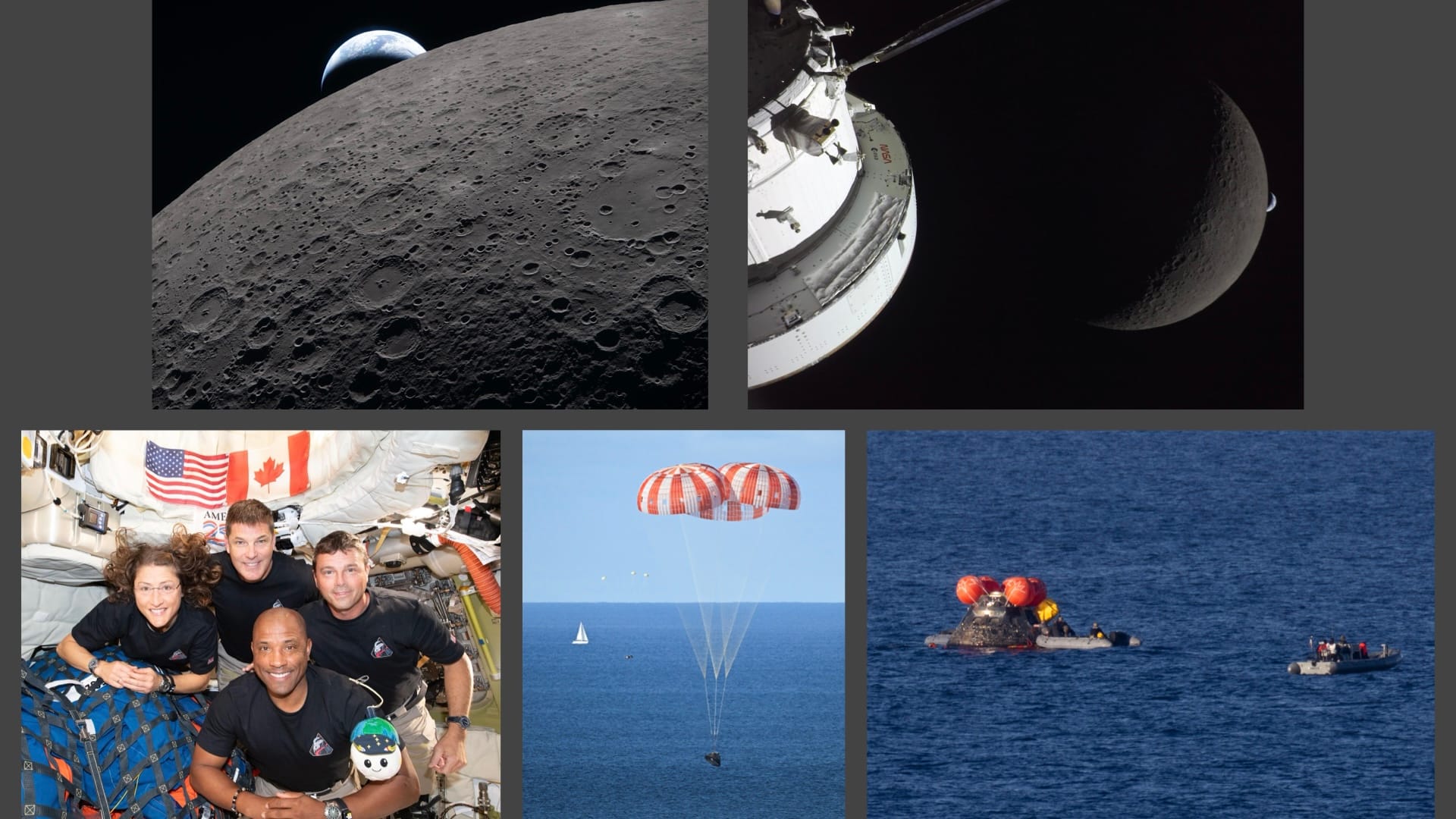
- The Artemis II mission launched and flew four astronauts around the Moon, a feat repeated after over 50 years, making “why haven’t humans gone back to the Moon” no longer a valid question for many. Relatedly:
- NASA rejigged the Artemis program elements & crewed missions, and has been catalyzing its Moonbase plans, in an effort to gain momentum after over a decade of lapses.
- While Artemis III is now supposed to be a test mission in Earth orbit ahead of attempting to land humans on the Moon with Artemis IV, the former won’t “test like you fly” since challenges confront NASA across aspects of both missions, including Starship’s repeated lapses and Blue Origin’s explosive delay chain.
- NASA faltered in communications yet again with Lunar Trailblazer failure
- NASA awarded crew-capable rover contracts to Astrolab (a Moon Monday sponsor) and Lunar Outpost respectively. These ~1000-kilogram rovers will be more advanced than the one driven by Apollo astronauts.
- NASA awarded four CLPS Moon landing contracts, two to Astrobotic and one each Firefly and Intuitive Machines, to deliver three site-agnostic scientific instruments meant to improve our understanding of the lunar environment for safer and more swift landings in the future. NASA also awarded Intuitive Machines a $180.4 million contract to deliver seven payloads to the Moon’s south pole in 2030. This includes Australia’s first lunar rover called Roo-ver as part of a US-Aussie partnership.
- NASA JPL chose Firefly to have its Elytra Dark spacecraft deliver 3-4 “Moonfall” hopper drones to the Moon.
India
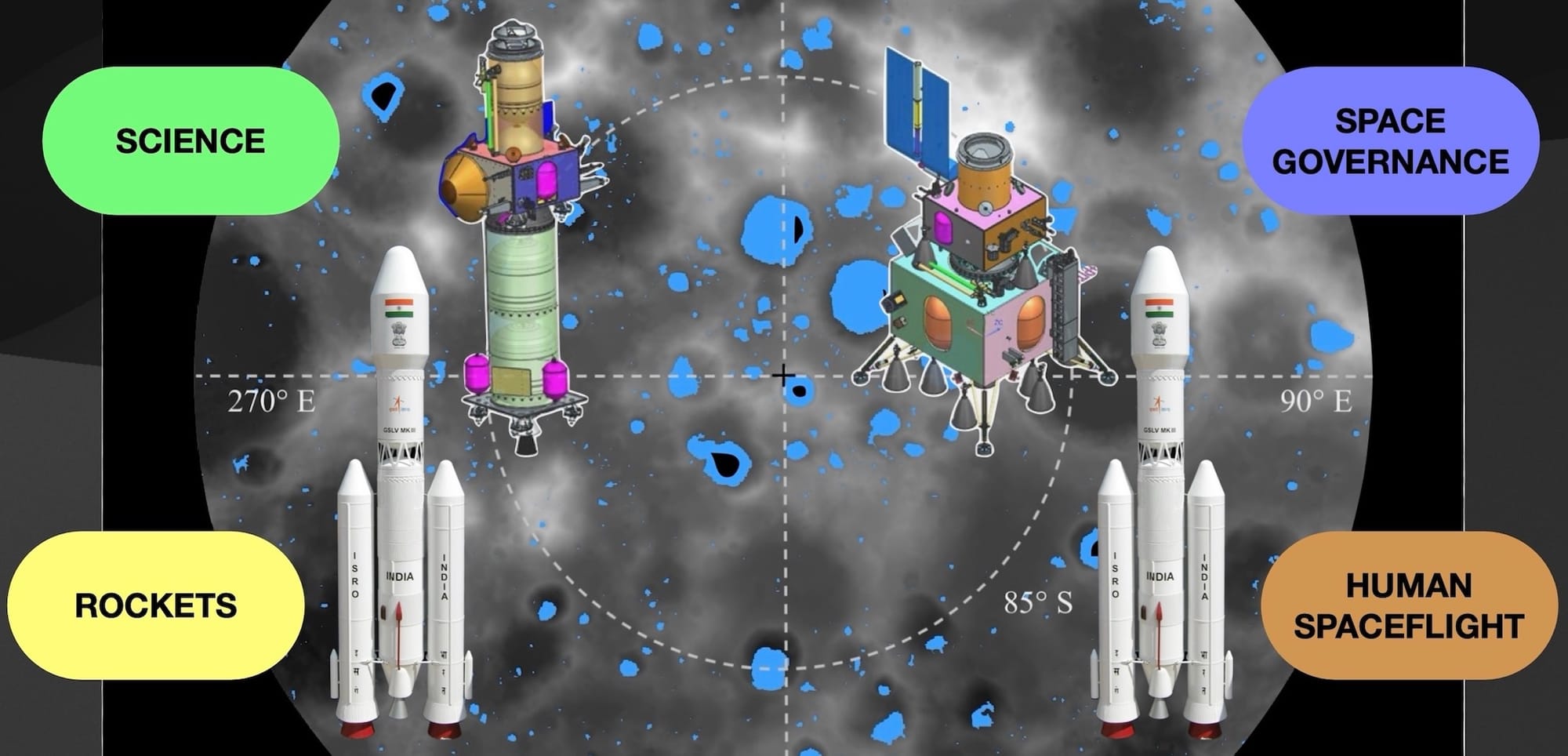
- ISRO selected the landing region for the upcoming Chandrayaan 4 sample return mission.
- Science results continued flowing from Chandrayaan 3, grounding our understanding of the near-polar lunar surface and environment.
- Putting an Indian with flesh and blood on Luna
More countries

- Japan is funding public-private Moon missions
- JAXA published research proving that the small LEV-2 mobile robot on the SLIM landing mission demonstrated navigation, image capture, and data transmission—all autonomously—on the lunar surface.
- Japan-based Dymon & JAOPS open sourced mission data from their YAOKI rover, which flew aboard Intuitive Machines’ second CLPS craft last year.
- Related article by me on the Open Lunar Foundation (a Moon Monday sponsor): Data sharing is key to a sustainable presence on the Moon
- ESA released calls for proposals for a pipeline of scientific instruments, commercial lunar data buys (including from non-European providers), and the second flight of the NILS instrument which flew to the Moon on Chang’e 6 and detected negatively charged particles.
- The Russian Academy of Sciences approved the concept of the Russian segment to be part of the China-led International Lunar Research Station (ILRS). One of the expected Russian contributions is a 5 kilowatt nuclear power plant, currently targeted to be launched in three parts next decade.
Global outlook
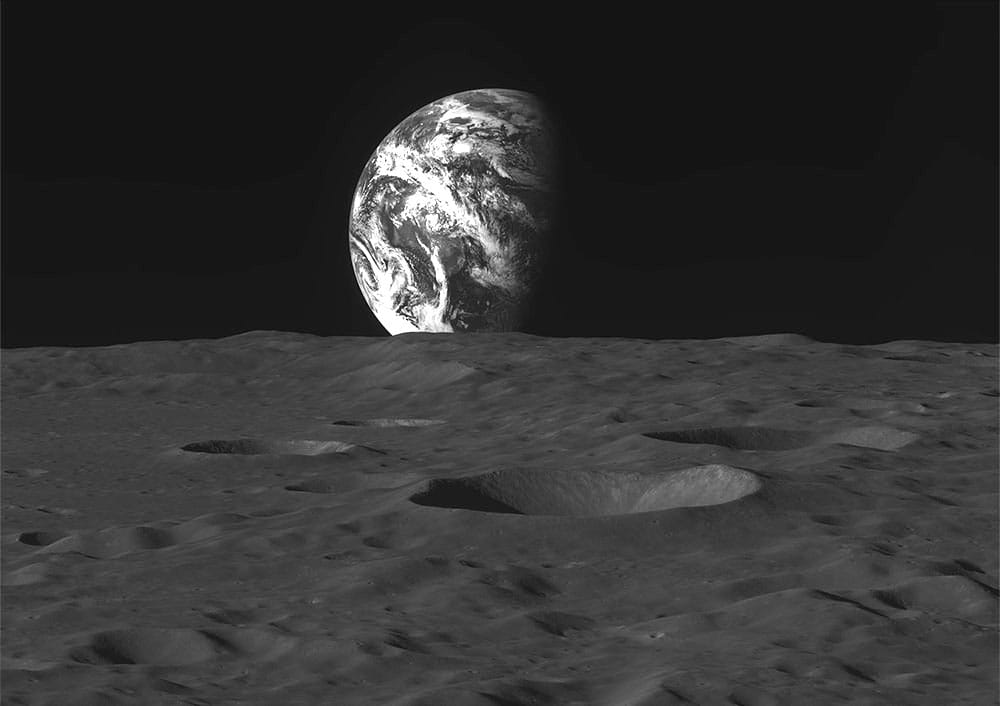
- All the rovers heading to the Moon over the next 10 years
- Artemis II astronauts gazed at our Moon with joy, curiosity, and reverence. Through finer robotic orbital views, so can you.
- We can build cities on the Moon—but who will govern them?
- The number of signatories of the US-led Artemis Accords reached 68, with NASA touting cooperative and collaborative lunar exploration among countries worldwide. However, the NASA-led Gateway international lunar habitat’s cancellation amid the Artemis rejig demonstrated that the Accords have little bearing on preserving, much less flourishing, international partnerships in the Artemis program.
- Analysis of India’s Chandrayaan 4 mission shows how lunar sampling missions intertwine science, rockets, space governance, and human spaceflight.
- Lessons on lapses in lunar missions operations from the 20th century
- What NASA’s planning in the lead up to safe Apollo astronaut landings teaches us about preparing for the next frontier this century
Lunar poetry

So that was a comprehensive look at global lunar exploration developments this half year. I wrote it for you, not social media or SEO. If you enjoyed my coverage, please share it with other space buffs by grabbing this link.
Many thanks to Catalyx Space and Gurbir Singh for sponsoring Moon Monday. If you too appreciate my efforts to bring you this curated community resource on global lunar exploration for free, and without ads, kindly support my independent writing, which is purely reader-funded. I don’t use AI to write a single word.