A precision Moon landing and the future
Moon Monday #299: How Japan’s SLIM lander sparked a new era of precision landings, with notable implications for lunar science and exploration.
This story pieces together insights from experts at JAXA, NASA, and ISRO.
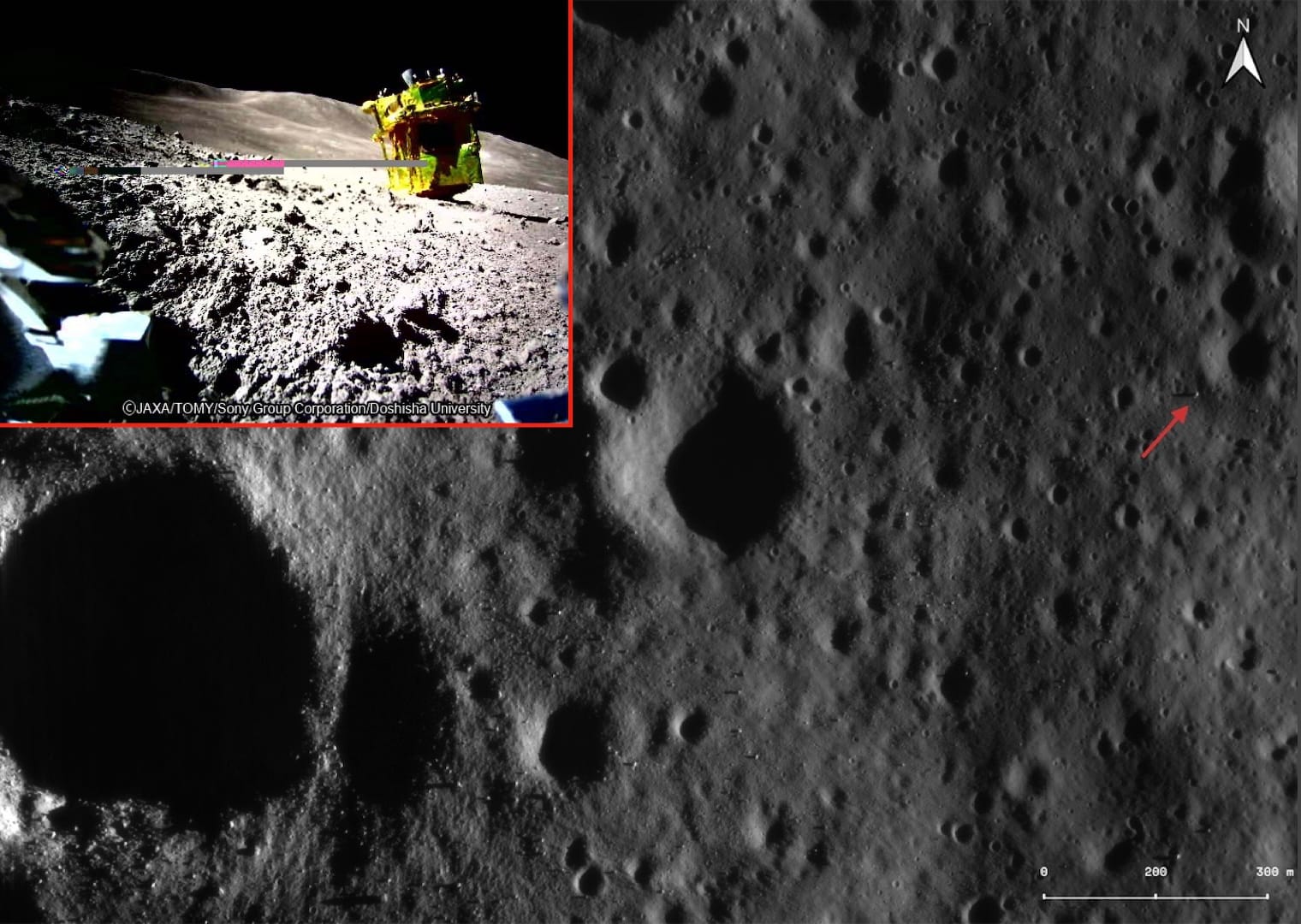
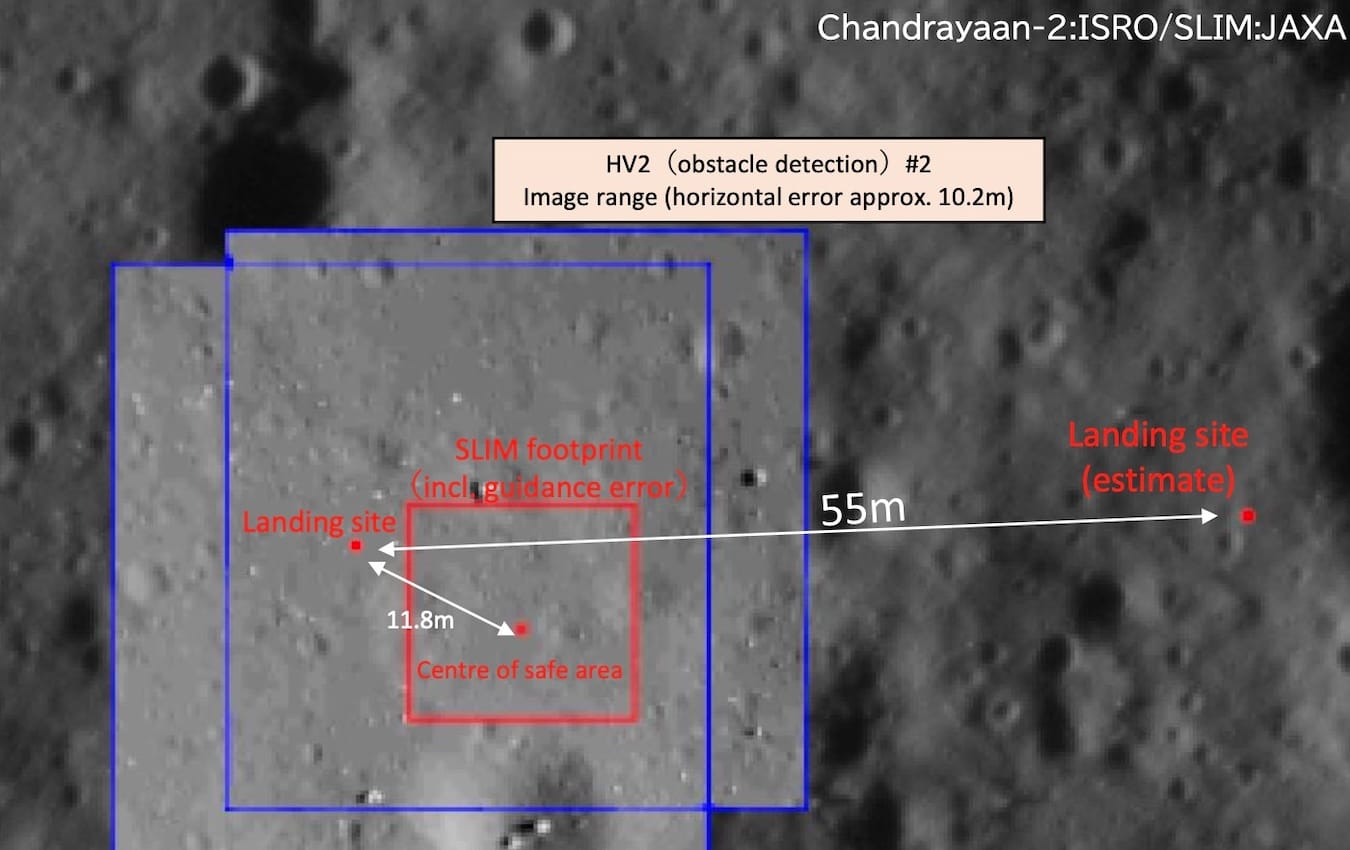
On January 19, 2024, Japan’s solar-powered Smart Lander for Investigating Moon (SLIM) lander made a lopsided-but-successful touchdown on Earth’s cosmic companion. Most (social) media coverage focused on the feat as a historic first for the nation’s space agency JAXA. After all, Japan became only the fifth nation after the US, the former Soviet Union, China, and India to achieve an intact lunar landing. But the true historic aspect of SLIM lay in its achieved landing accuracy of 55 meters amid a remarkably treacherous location strewn with craters and boulders. And that’s despite the spacecraft losing one of its two main engines during the final phase of its descent.
SLIM’s achievement can be best understood via what space engineers call the “landing ellipse”, which is the area inside which a spacecraft is nominally expected to touchdown. In an ideal world, a lander would set down exactly at the center of this ellipse, which is advertised as the target landing site. In reality, even minuscule errors in a craft’s guidance, navigation, and control systems make it practically certain that landers will miss this spot. A lander’s distance away from the ellipse center therefore defines the achieved precision.
JAXA had set an ambitiously tight landing ellipse of 100 by 100 meters for SLIM, and the spacecraft managed to touchdown about 55 meters from its center, in a region near the Moon’s equator. The near-pinpoint accuracy made SLIM the most precise robotic planetary landing in history by a considerable margin. The now-runner-up is China’s Chang’e 3 lander, which in 2013 landed some 90 meters off-center in its landing ellipse. However, Chang’e 3’s landing ellipse also spanned an area 3600 times larger than SLIM’s, giving the Chinese spacecraft vastly more room for error. The distinction between the two will matter for some upcoming missions heading to the treacherous lunar south pole, including science missions often executed on constrained budgets.
“With SLIM we demonstrated that accessing specific spots of scientific interest on the Moon can now be done with small missions too, instead of having traditional, more expensive missions deliver large rovers that drive long distances to reach desired areas,” said Masaki Fujimoto, deputy director general of JAXA’s Institute of Space and Astronautical Science (ISAS).
Benjamin Farcy, a postdoctoral researcher at NASA’s Goddard Space Flight Center noted, “Precision landings allow you to reliably study more rock and soil types by planning an optimal touchdown point. This way you can land in, say, an impact-melt region and then drive over easily to a mare basalt. Without precision landings, a typical rover with a range of a kilometer might not cover both lithologies.”
Partnering for precision
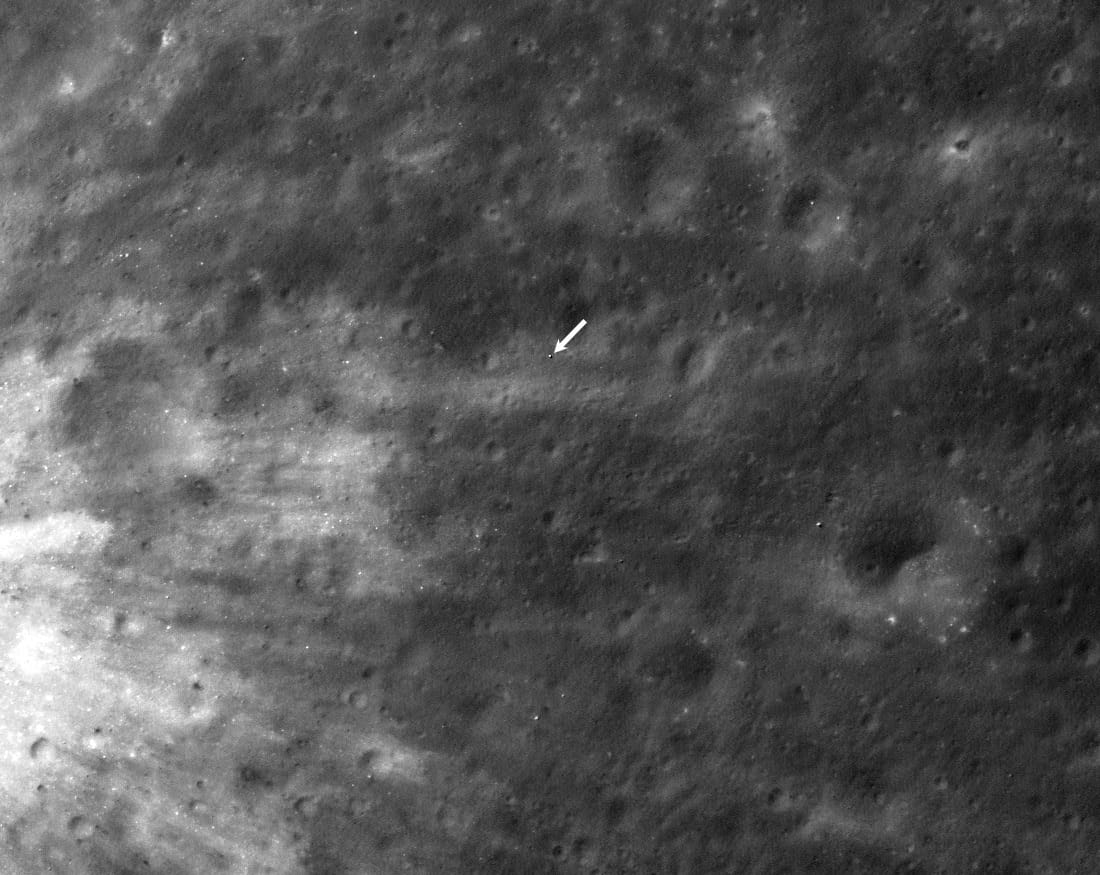
At the heart of SLIM’s precision landing ability was a technology JAXA calls “vision-based navigation”. During its lunar descent, SLIM snapped images of the Moon’s surface and compared them to preloaded onboard orbital maps. This process is optimized to occur in just a few seconds to let the spacecraft quickly determine where it is and where it needs to go. The reference maps come from NASA’s Lunar Reconnaissance Orbiter (LRO), ISRO’s Chandrayaan 2 orbiter, and JAXA’s own past SELENE craft. Each orbiter’s data was uniquely useful at various heights. In a post-landing media release, SLIM’s Project Manager Shinichiro Sakai mentioned that the mission had used Chandrayaan 2’s imagery not just during the lander’s final descent phase but also to decide the mission’s target landing area pre-launch. This is because Chandrayaan 2’s Orbiter High Resolution Camera (OHRC) boasts a best-case imaging resolution of about 0.25 meters/pixel, which is about twice LRO’s finest and the sharpest camera ever flown in lunar orbit to date.
“JAXA sent us a request in 2021 to image SLIM’s landing site, and so we planned an orbital passover of the Chandrayaan 2 orbiter to acquire OHRC images for them,” said Amitabh Singh, head of ISRO’s Planetary and Space Science Data Processing Division and a lead scientist on the OHRC team. Then in 2023, ISRO provided JAXA with more images of the landing site from different sun angles. This particularly helped JAXA engineers fine-tune SLIM’s algorithms to instantly identify boulders and other hazards regardless of specific lighting conditions at the time of descent. Even though most modern robotic landers, such as India’s own Chandrayaan 3 and China’s Chang’e 6, can find a good landing spot on their own during the final phase of their descent, the lack of a sophisticated last-mile map does affect the landing precision. Which is why JAXA’s partnership with ISRO to have SLIM use the Chandrayaan 2 orbiter’s data until the very final phase is prominent.
When SLIM was roughly 50 meters above the Moon’s surface, it hovered and identified touchdown hazards below it using vision-based navigation as well as Chandrayaan 2 imagery. But mysteriously one of SLIM’s two main engine nozzles detached from the craft. The resulting off-center thrust made SLIM go sideways. The craft’s guidance system identified this anomaly, and decided to descend using the hover-phase imagery and onboard maps while simultaneously trying to stabilize its orientation with the other, working main engine and small thrusters. This partly worked. When SLIM touched the lunar surface, its vertical velocity of 1.4 meters per second was well within acceptable bounds. However, the craft’s eastward lateral motion and touchdown orientation weren’t nominal, causing it to flip on the surface. Despite constraints, SLIM nevertheless survived and operated on the surface. Even when afflicted during its descent, SLIM could see and target a safe spot and land on it. It managed to avoid a crash, in part thanks to the Chandrayaan 2 orbiter maps.
A new era of lunar exploration
When paired with rapidly advancing instrumentation for planetary missions, precision landings can help answer some fundamental questions that previously demanded expensive and complex sample return missions. In a 2021 paper published in the Planetary Science Journal, Farcy and team suggested that by using precision-landing techniques even low-cost missions such as those under NASA’s CLPS program could reap outsized rewards by targeting very specific sites of great scientific interest. In-situ measurements—rather than costly acquisition of samples for analysis back on Earth—can now clarify some murky chapters of lunar history.
But that doesn’t mean precision landings wouldn’t benefit sample return missions, too. Such efforts tend to be roverless to reduce mission complexity and cost, as most recently seen with China’s Chang’e 5 and 6 missions. Landers touting precision touchdown can ensure high-fidelity science results by allowing them to reach and collect exactly what they came for. Over the next 10 years, precision landings will be seen in or could benefit a host of Moon missions. China’s Chang’e 7 Mooncraft, India’s Chandrayaan 4 & Chandrayaan 5 landers, multiple rovers, and several crewed missions from China and the US’ Artemis program aim to explore lunar south polar sites. The Moon’s polar regions are intertwined scientifically to the Moon’s internal structure and thus its formation and evolution. The poles are also where water ice and other volatiles persist inside permanently shadowed regions, allowing scientists and technologist alike to close in on their goals.
Other than on-ground scientific measurements by such missions and their findings, there will be detailed studies of samples brought by Chinese and US crewed flights as well as India’s robotic but likely rover-less Chandrayaan 4. Studying a fresh set of lunar materials & locations through in-situ methods as well as sample return will transform not only how we look at our Moon and Earth but also the Solar System and beyond. But the treacherous nature of the south pole demands precision landings for these missions to be safe and effective. The terrain there is rocky with steep slopes, with only small isolated areas of flatness for a lander to alight upon. Being merely a handful of meters off-target could mean the difference between a triumphant landing near the rim of a water-ice-hosting crater or a fatal tumble down its walls.
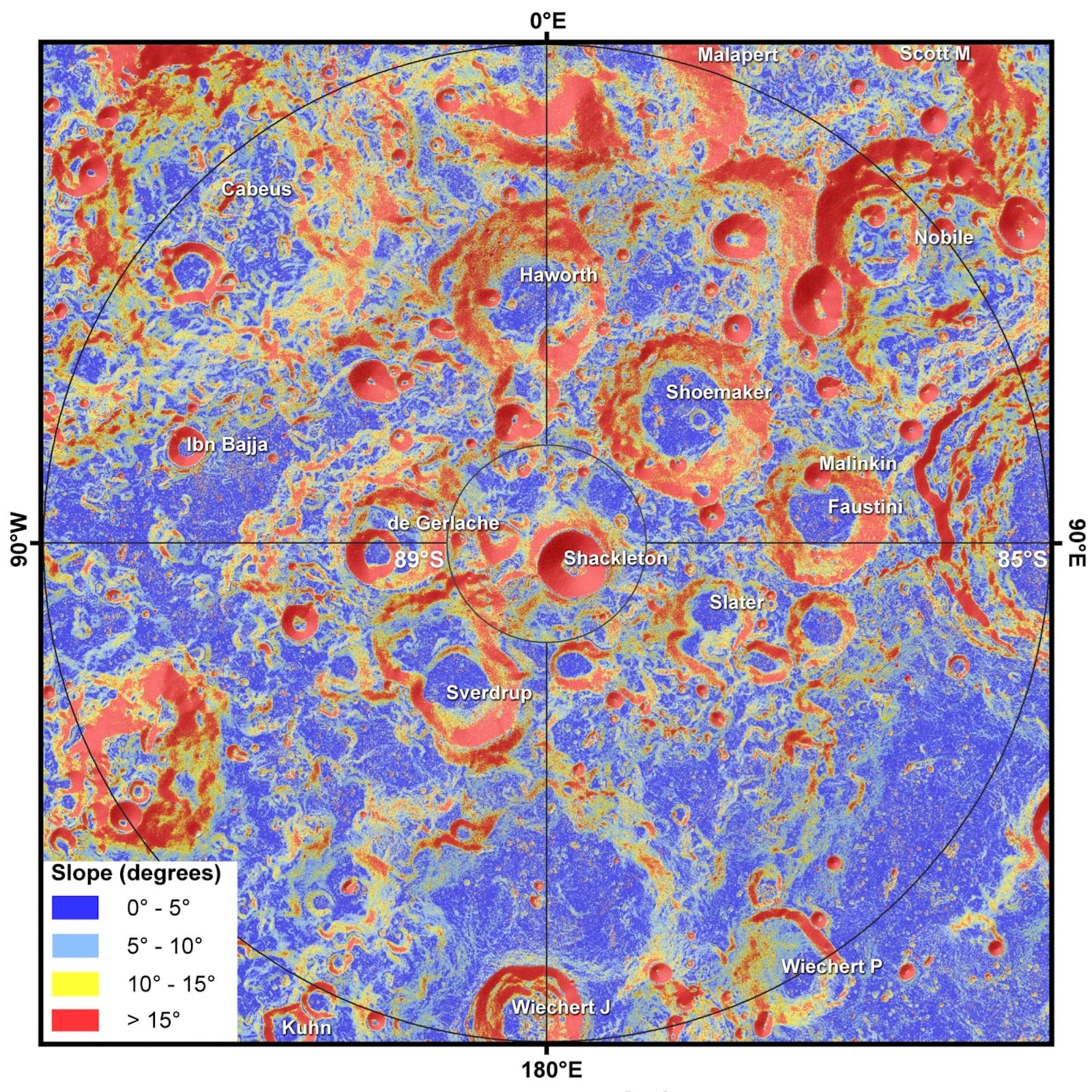
SLIM’s descent and landing, while not on the lunar south pole, was a helpful emulation of aspects of a polar landing because it was amid a boulder-and-crater-prone region and faced a nontrivial slope. With SLIM, we entered a new era of precision lunar science and exploration.
Originally published on Scientific American in 2024, updated & edited in late 2026 to contextualize new developments.
Many thanks to Astrolab and PierSight for sponsoring Moon Monday. If you too appreciate my efforts to bring you this curated community resource on global lunar exploration for free, and without ads, kindly support my independent writing as it’s purely reader-funded. I don’t use AI to write a single word and cite everything.