Lessons on lapses in lunar missions operations from the 20th century | Moon Monday #281
Announcement before we begin: I’m excited to welcome PierSight as a returning sponsor of my independent space writing for another year! 🌙

Ahmedabad-based PierSight is building a constellation of SAR satellites equipped with AIS sensors for persistent, all-weather ocean studies and monitoring. With $8 million raised in funds, and being co-selected to build India’s first public-private Earth observation constellation, PierSight is targeting a Q1 2027 launch for its first commercial satellite. The company is also hiring for various roles. Not sponsored: Personally, I’ve learnt much about space and lunar instruments from PierSight CEO and friend Gaurav Seth. He worked on the advanced dual frequency radar system on ISRO’s Chandrayaan 2 orbiter. In our conversations, he’s quite happy that both the radar and orbiter at large have produced notable lunar exploration results. 🛰️
The world’s new rush to the Moon, catalyzed by the discovery of water ice, is targeting not just robotic and crewed Moon landings but eventually sustained operations leading to full-fledged Moonbases. Many of the near-term missions too are targeting rocky, low-Sun areas around permanently shadowed regions on the lunar poles. The latter contains water ice and other volatiles of global interest but simultaneously host new unknowns about the Moon. Since no mission has explored polar water ice directly yet, we have no idea of its true physical, chemical, and geotechnical nature. How exactly will its cryogenic environments treat our hardware over time? Will instruments work as intended? How about our space grade electronics and Moonbase materials? Even when our lunar ambitions weren’t this high, the sheer difficulty of orchestrating hundreds to thousands of people and spacecraft parts in past lunar missions during the 20th century meant mistakes were made. Below are two such notable instances that serve as reminder for us to be careful as we mount increasingly complex Moon missions into the unknown.
Killing your rover with one wrong drive
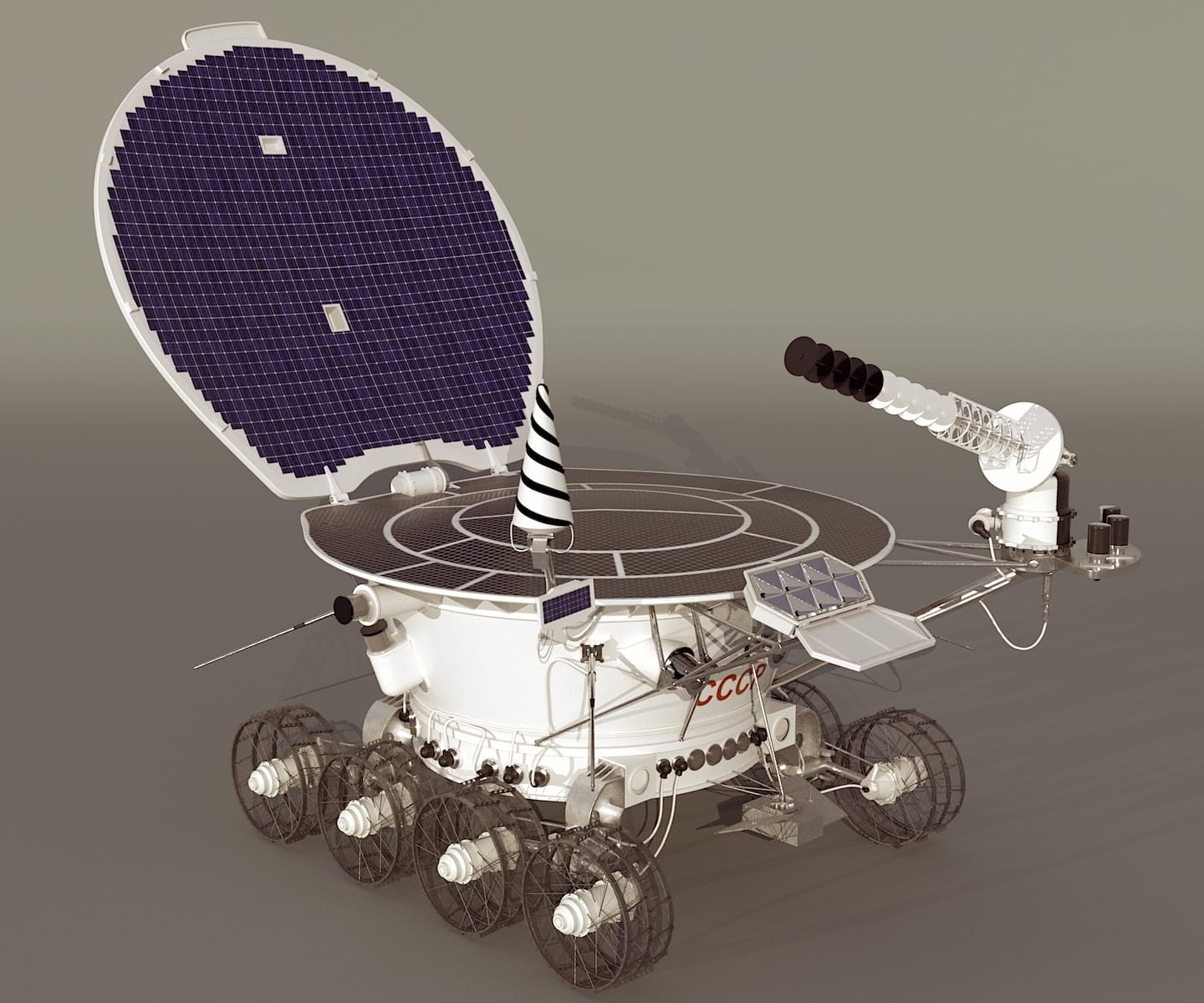
In 1970, the Soviet Union successfully remotely drove Lunokhod 1, the world’s first planetary rover, on the Moon for 11 months. That was seven months more than planned. Thus the scientific expectations from Lunokhod 2 in 1973 were even higher. But it faced a premature death just 4 months into its mission when its operators on Earth were driving the rover towards a geologically interesting place just ahead of the rover.
At the time, the Sun was close to the horizon and behind the rover. The televised views from Lunokhod 2’s navigation cameras showed smooth patches of land ahead but the low Sun angle masked much of the troublesome landscape in shadows. The operators ended up driving the rover into a small crater. Lunokhod’s open lid touched the crater wall, and the solar panels on the lid got covered in lunar dust. Operators did get the rover out of the crater but the mission’s end was already set in stone.
For the Lunokhod rovers to survive the freezing lunar night, their lid had to be closed to preserve heat. But doing so for Lunokhod 2 dumped the panel dust—a good insulator—onto the rover’s radiator. When the lid was opened the next morning, the rover could therefore not get rid of the excess daytime heat and died.
What the operators should’ve done was to recognize the tricky lighting conditions the previous day and either park the rover for the night or better assess traverse routes based on more data. This century with the lunar south pole, the Sun will be perpetually near the horizon, presenting a tricky landscape for all upcoming missions at every stage. Operators will have to be extremely careful about inadvertently damaging their hardware, ultimately costing the mission or its key goals.
Destroying your broadcast from the Moon
Apollo 12, the world’s second human lunar landing, carried a color camera instead of Apollo 11’s monochrome one. But the world never saw its television footage. When setting up the camera, astronaut Alan Bean accidentally pointed it directly to the Sun, which destroyed its Secondary Electron Conduction (SEC) tube. With only an audio feed of the mission available, several television networks switched to showing actors in spacesuits in studios simulating moonwalks, which unfortunately partly fueled conspiracy theories about the Apollo landings. [This year, NASA’s successful Artemis II mission has hopefully helped tame the conspiracies.]
To avoid video footage failure on missions after Apollo 12, NASA added lens caps to the color cameras while also flying backup black & white models in case color cameras get damaged otherwise too. NASA also replaced the color camera’s SEC tubes with Electron Bounded Silicon (EBS) tubes, which are less light-sensitive and wouldn’t be quickly destroyed by direct exposure to bright sunlight. A similarly less light-sensitive tube than the SEC was used on the color cameras mounted on the Apollo Lunar Rovers.
The risk of damaging cameras on the Moon today hasn’t withered with time but is in fact more serious now. Because the lunar polar Sun is perpetually near the horizon, and traversing near lit areas would be preferable when possible to save power and heat, many drives will be wonky amid treacherous terrain. Explorers, robotic and crewed, will have to be careful about inadvertently rotating their cameras Sunward for long in such a tricky and disorienting environment. Engineers and mission operators are obviously devising ways and procedures to avoid such exposure or damage from it but the limited orbital data constrains our planning in various ways, and so ultimately the ground truth will be more nuanced and an iterative learning excercise.

Lumpy lunar gravity crashed spacecraft in the past
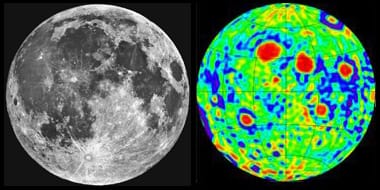
The fact that the Moon’s gravitational field is uneven and lumpy was first noticed by the Soviets when they found that their Luna 10 spacecraft was deviating from its intended orbit. Shortly after, NASA also noticed their “Lunar Orbiters” deviating from their paths in low lunar orbit by up to 100 times more than expected. So NASA took these gravitational ‘anomalies’ into account for successfully steering and landing humans on the Moon with the Apollo missions. And yet, while the landings were unaffected, two small satellites put in low lunar orbit by Apollo 15 and 16 did crash into the Moon due to the anomalies. It was clear that the Moon had more gravity surprises in store, which led to NASA later sending science missions to map Luna’s gravitational anomalies in great detail. Today, the challenge is more about us globally managing the growing orbital congestion around the Moon.
Many thanks to PierSight and Barbara Giuri for sponsoring Moon Monday. If you too appreciate my efforts to bring you this curated community resource on global lunar exploration for free, and without ads, kindly support my independent writing, which is purely reader-funded. I don’t use AI to write a single word and cite everything.