All the rovers heading to the Moon over the next 10 years | Moon Monday #256
As lunar exploration ramps up worldwide, our celestial companion is slated to be explored by increasingly advanced rovers of all sorts over the next 10 years. Not all of them will be successful, and so the reason for this post is not just to garner excitement about the possibilities of near future lunar exploration but also to archive in one place the promises being made so we can assess them in the future instead of only reporting, sharing, and amplifying grand plans. The same rationale is why I do a year-end review of global lunar activities: to see what we actually achieved and what we did not.
Alright, with that in mind, here’s a comprehensive and contextualized list of upcoming lunar rovers & mobile robots from around the world, categorized as small, sophisticated, and astronaut-supporting. To learn more about any rover, click its link—that’s what the Web is for. :)
Small but mighty
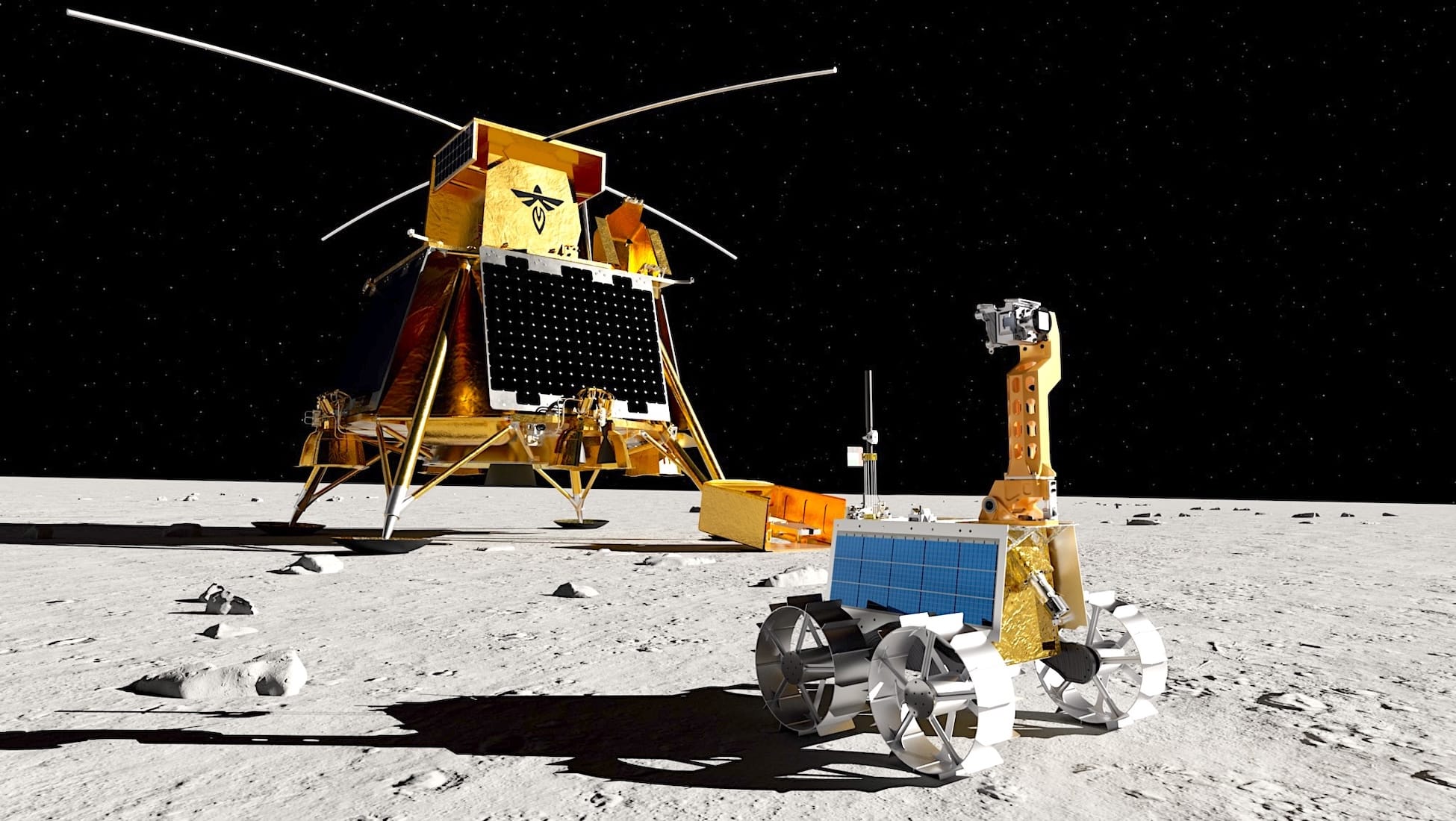
- Building on the success of its first Moon landing, US-based Firefly’s next three lunar landers, all part of NASA’s CLPS program, will carry rovers. The second Firefly lander will carry UAE’s Rashid 2 rover to the Moon’s farside whereas the third lander will deploy Honeybee Robotics’ first planetary rover on one of the two Gruithuisen Domes, a unique volcanic site on the lunar nearside. Firefly’s fourth lander, heading to the lunar south pole, will carry a versatile CubeRover from US-based Astrobotic called Moonranger. NASA has also awarded future contracts for Astrobotic CubeRovers to demonstrate power transmission and lunar night survival.
- Intuitive Machines’ third Moon landing attempt will be in the swirl of Reiner Gamma in 2026. The region has a weak local magnetic field, possibly a remnant from the time the Moon had a global magnetic field. The mission’s primary payload suite is Lunar Vertex, a collection of spectrometers and magnetometers on the lander and a rover to study the swirl’s composition and map the strength & direction of magnetic fields on the surface. This will shape our understanding of the Moon’s magnetic evolution and also help us better understand the effects of solar wind and bombarding micrometeorites on planetary bodies across our Solar System. The Intuitive lander will also deploy three shoebox-sized CADRE rovers by NASA. The rovers will autonomously navigate the landed region to demonstrate collectively better mapping it than a single rover would. The rovers will have multistatic ground penetrating radars to create 3D images of the subsurface structure up to 10 meters deep.
- Later on, ispace US’ first CLPS mission through Draper Laboratory is targeting landing on the Moon’s farside in 2027, carrying NASA payloads onboard as well as a rover from ispace Europe.
- China’s Chang’e 8 lander, targeting a 2028 launch, will deploy Pakistan’s first rover and two small mobile bots from private Chinese company STAR.VISION. The latter is being developed in collaboration with universities from China and Turkey. This would be the first payload from a Chinese company flying on a Chang’e spacecraft.
- NASA has announced that on the future crewed Artemis IV Moon landing mission, the astronauts will also deploy a rover made by Lunar Outpost, which will study lunar dust and surface plasma.
- Update from April 2026: The Japanese government selected a consortium led by Tohoku university to develop a lunar polar rover as part of the country’s 10-year, ¥1-trillion “Space Strategy Fund”, which has Moon missions as a focus area. Once on the surface, the rover aims to fire an electron beam to melt and solidify lunar soil, the first step ahead of constructing lunar infrastructure from local materials in the future.
- Update from May 2026: NASA JPL awarded a $75 million contract to Firefly to have its Elytra Dark spacecraft deliver 3-4 “Moonfall” hopper drones to ~50-kilometer lunar orbit in 2028. From this point on, each drone will land on the Moon by itself. At 225 kilograms each, these drones are really mini-landers. Each will carry a few instruments to study the lunar surface during hops. NASA aims to acquire lunar surface imagery with centimeter-level resolution ahead of crewed Artemis missions and to also use the drones to establish a Moonbase “perimeter”.
- Update from March 2026: Intuitive Machines’ fifth CLPS Moon mission targeting a landing on the Moon’s south pole by 2030 to study water ice will deploy Australia’s first lunar rover called Roo-ver to explore the polar environment. The mission’s lander will also deploy Honeybee Robotics’ second lunar rover.
- An as-yet-unspecified CLPS rover is intended to study the unique mound-like volcanic feature of Ina on the Moon by the end of this decade as well.
- South Korea’s first Moon lander plans to deploy a rover on the Moon by 2032 though details are unavailable at the moment. The country’s interest is certainly substantial though since South Korea is transforming its former mining site of Taebaek into a testing ground for advanced mobile lunar exploration technologies, owing to the mine’s environmental resemblance to the darkness, coldness, and ruggedness of the Moon’s south pole.
Sophisticated
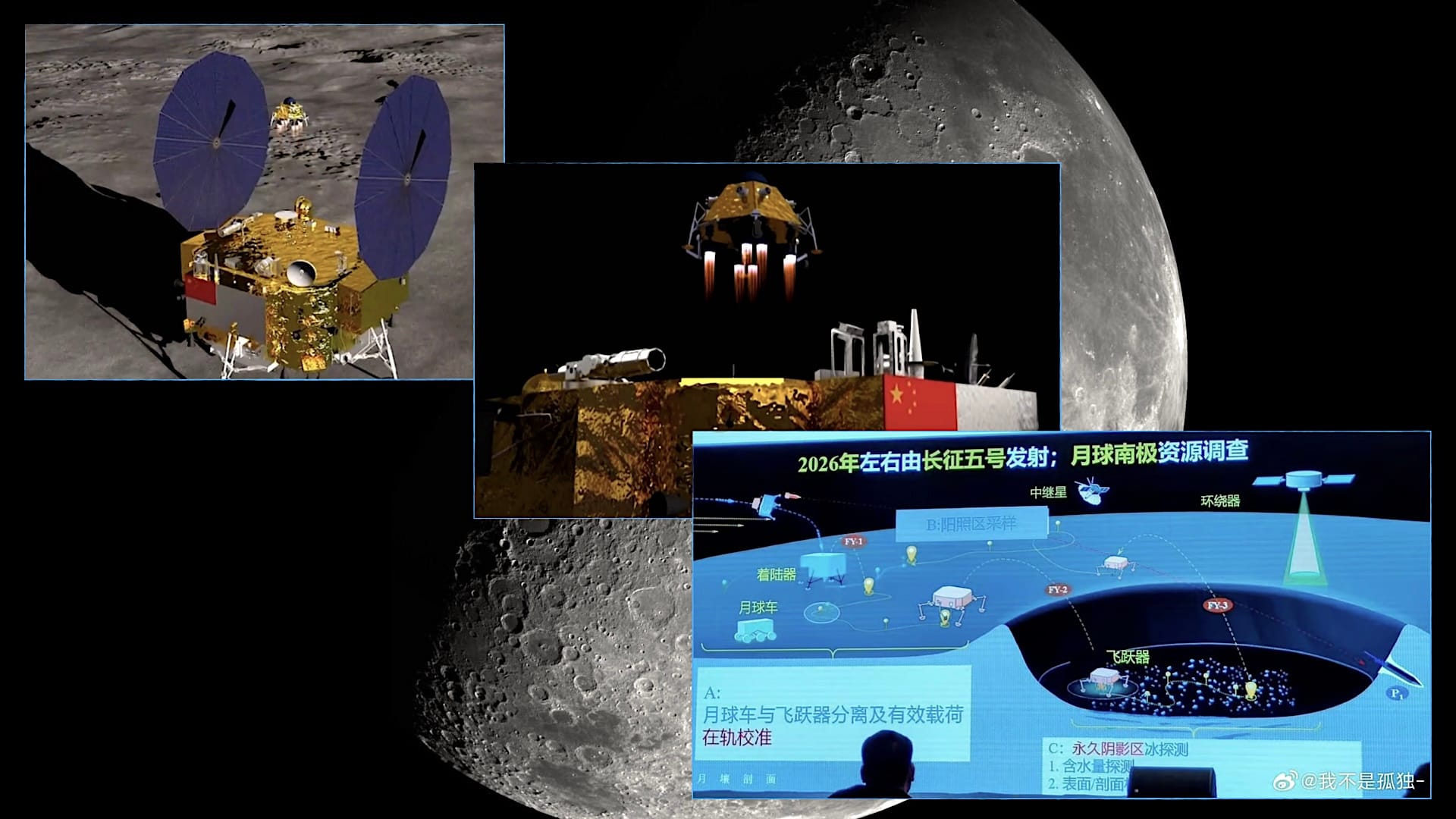
- Launching this year, China’s Chang’e 7 mission will have a rover sporting an intended eight-year lifespan and a panoramic camera, a Raman spectrometer, a ground penetrating radar, a mass spectrometer, and a magnetometer to explore the Moon’s south pole and map water ice. The Chang’e 7 lander will also deploy a small hopper with shock absorbing legs. It will jump into nearby permanently shadowed areas for its onboard Lunar Water Molecular Analyzer (LWMA) to detect water ice and other volatile resources like ammonia. Chang’e 7 will be China’s first attempt to gain such a ground truth understanding of the accessibility, movement, and storage of surface and near-surface water ice on the Moon’s poles, which is crucial to appropriately plan sustained robotic as well as crewed lunar exploration. Virtually all recent missions funded by NASA have failed to advance on this goal despite it being foundational to the US Artemis program.
- Two years after Chang’e 7, the Chang’e 8 lander will deploy a rover and a dextrous mobile robot to characterize with many instruments the lunar south polar geology and environment. The dextrous robot will melt lunar soil, make 3D-printed parts and bricks from it, and use those to assemble basic structures. That’s a fantastic sounding first demonstration of in-situ utilization of lunar resources. The robot will also fetch rock and soil samples for the lander’s spectrometers to determine their chemical composition, which will likely include water ice. CNSA might leave some intriguing samples on the Moon for future missions to retrieve them and bring them to Earth.
- Astrobotic’s large Griffin lander aims to land on the Moon’s south pole as part of NASA CLPS later this year. It will deploy the FLIP rover by Astrolab (a Moon Monday sponsor), which got manifested last year after NASA decided not to fly the critical VIPER rover for studying water ice aboard Griffin. NASA has now tentatively chosen Blue Origin’s second Mark I lander to hopefully fly VIPER in 2027.
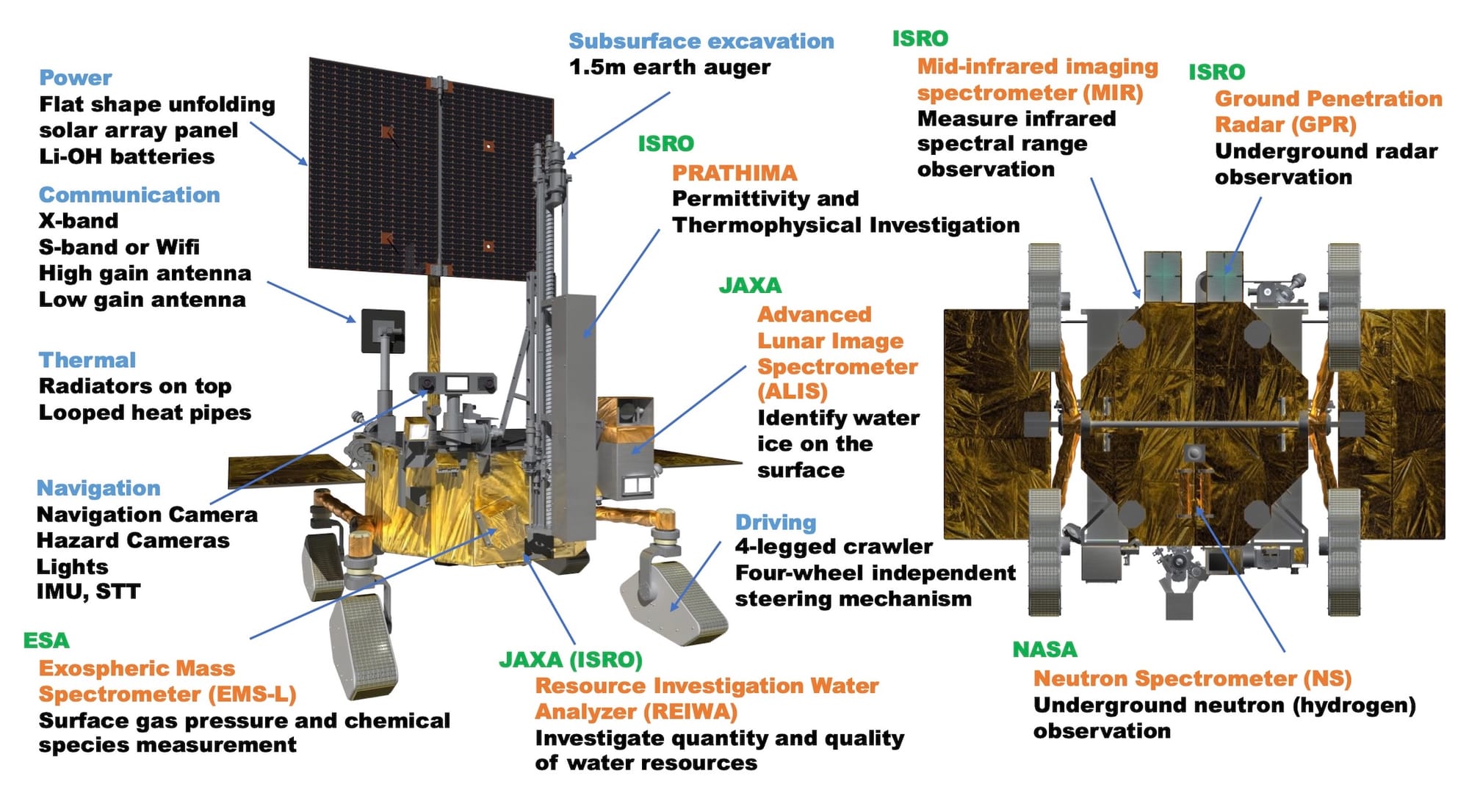
- The joint ISRO-JAXA Chandrayaan 5 / LUPEX rover mission later this decade plans to drill and analyze water ice on the Moon’s south pole. The mission will bring a giant leap in lunar capabilities for both ISRO and JAXA, and it can provide NASA with critical data that is currently missing in Artemis planning.
- As an aside, ispace’s European subsidiary led team won a ~€2.7 million ESA contract to collaborate with the agency on the MAGPIE rover mission to study lunar polar water ice and other such volatiles. The mission is not official yet. Update from June 2026: UAE is planning a similar mission with the Rashid 3 rover.
Astronaut support
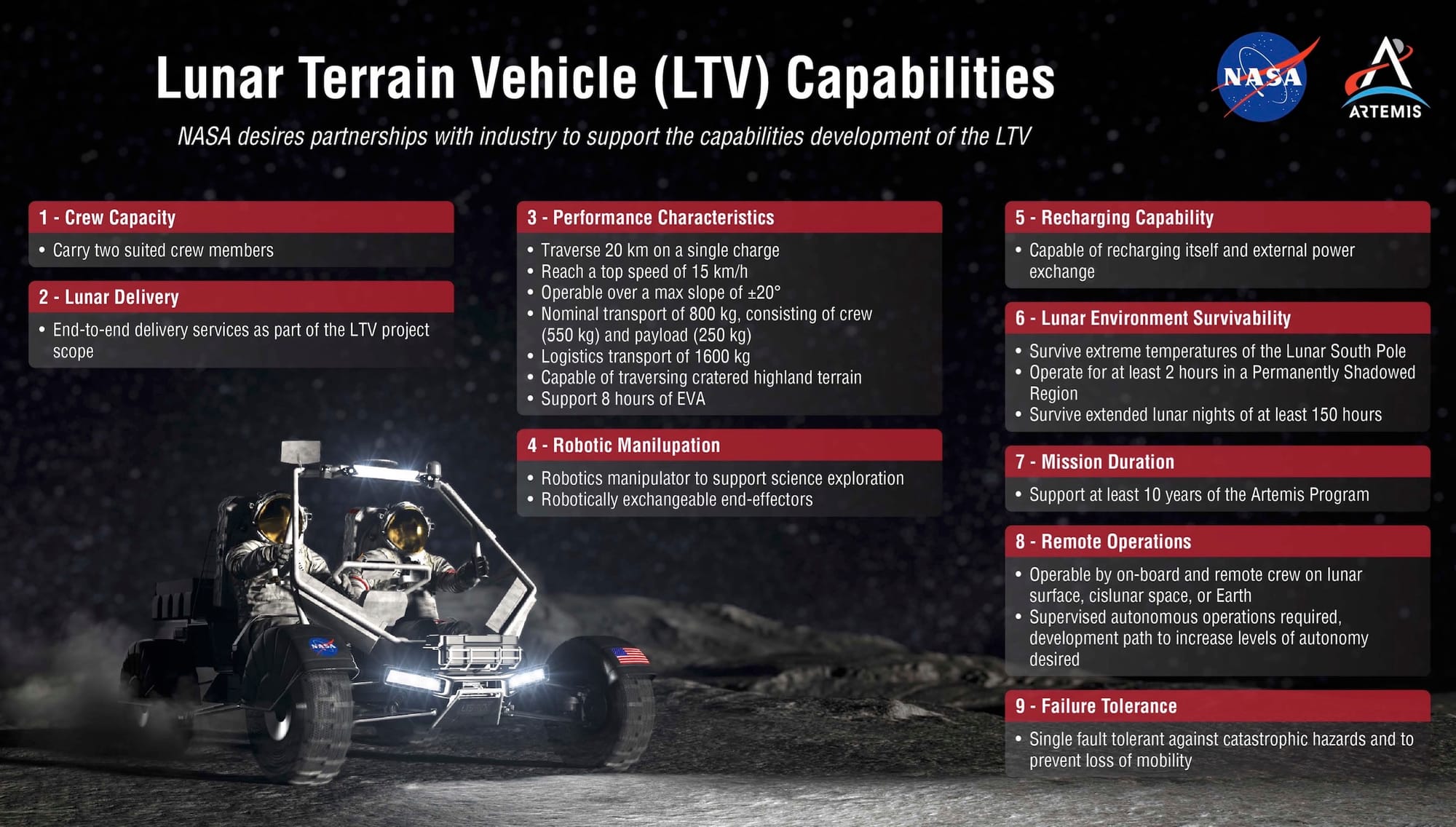
- Update from May 2026: NASA awarded crew-capable rover contracts to Astrolab (a Moon Monday sponsor) and Lunar Outpost respectively. These ~1000-kilogram “Lunar Terrain Vehicles” (LTVs) will be more advanced than the rover driven by Apollo astronauts, capable of long range exploration and site scouting with many onboard instruments.
- China is progressing with prototypes of a competitively sourced crewed rover to be used during the country’s ambitious first human Moon landing by 2030.
- JAXA will provide NASA with an even more advanced rover next decade, which will be pressurized, enabling astronauts to spend weeks in it. In return, NASA has agreed to land two Japanese astronauts on the Moon.
- CSA wants in on that strategy too. The agency has, so far, awarded initial study contracts totaling $10.6 million to three companies—Canadensys, MDA Space, and Mission Control—towards developing a “Lunar Utility Vehicle” (LUV). This kickstarted Canada’s intent from 2023 to invest $1.2 billion over 13 years to develop an assistance rover for future Artemis astronauts. Canada hopes that just like how contributing their Canadarm3 robotics servicing system to the upcoming NASA-led Gateway lunar orbital habitat bagged seats for their astronauts on circumlunar Artemis missions, contributing a large, durable LUV rover for Artemis surface missions will enable a Canadian to walk on the Moon.
- While not a rover, Italy’s 15,000-kilogram astronaut habitat module being made for Artemis Basecamp usage next decade will have wheels so it can reposition itself as needed on the dynamically lit lunar polar surface.
So that was a comprehensive look at all the rovers promising to explore the Moon over the next 10 years. I wrote it for you, not social media or SEO, and so if you enjoyed my coverage, please share it with other space buffs by grabbing this link.
Many thanks to The Orbital Index and Gurbir Singh for sponsoring this week’s Moon Monday! If you too appreciate my efforts to bring you this curated community resource on global lunar exploration for free, and without ads, kindly support my independent writing: