Moon Monday #287: Mission updates from China, the US, Europe, and Japan
Before we begin, I’m thrilled to share that Open Lunar Foundation is continuing as a sponsor of my Moon Monday blog+newsletter for the sixth year! 🌕

Open Lunar is a US-based non-profit organization with a global team that develops bottom-up tools of lunar governance to enable and promote cooperative, peaceful, and sustainable exploration of our Moon by all countries.
Disclaimer for transparency: I aid Open Lunar’s work with technical communications, and have newly joined their Lunar Ledger project as a global missions data contractor. Open Lunar’s sponsorship, just like that of all other supporters, abides by my public Editorial Independence Policy with zero exceptions. Particularly, this has included and will continue to include stating about them being a sponsor in parentheses every single time I mention their work in my coverage or writing.
Mission updates
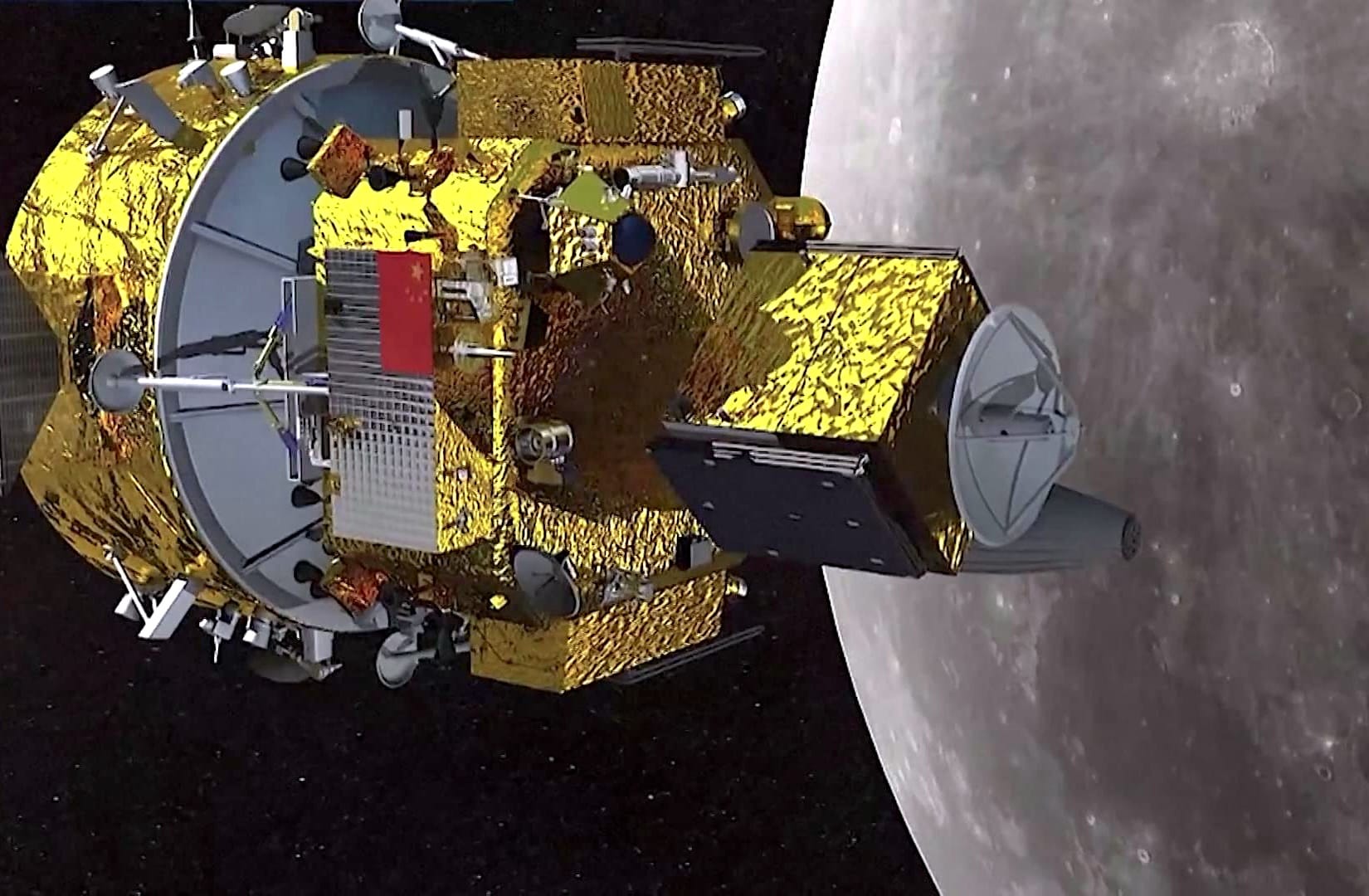
- China’s Chang’e 7 mission to systematically study water ice on the lunar south pole has been gearing up for launch as early as August last week or September first half. The Long March 5 rocket elements for the mission arrived last month for final assembly, integration, and checks. The spacecraft elements had arrived in April. Jack Congram summarizes the international instruments aboard and Leonard David reports on a study of how the lander’s seismometer might be able to help scientists infer buried water ice deposits based on how they affect seismic waves. However, today’s failure of a Long March 7A rocket might delay Chang’e 7’s launch by several weeks due to the two vehicles sharing YF-100 engines on their booster designs.
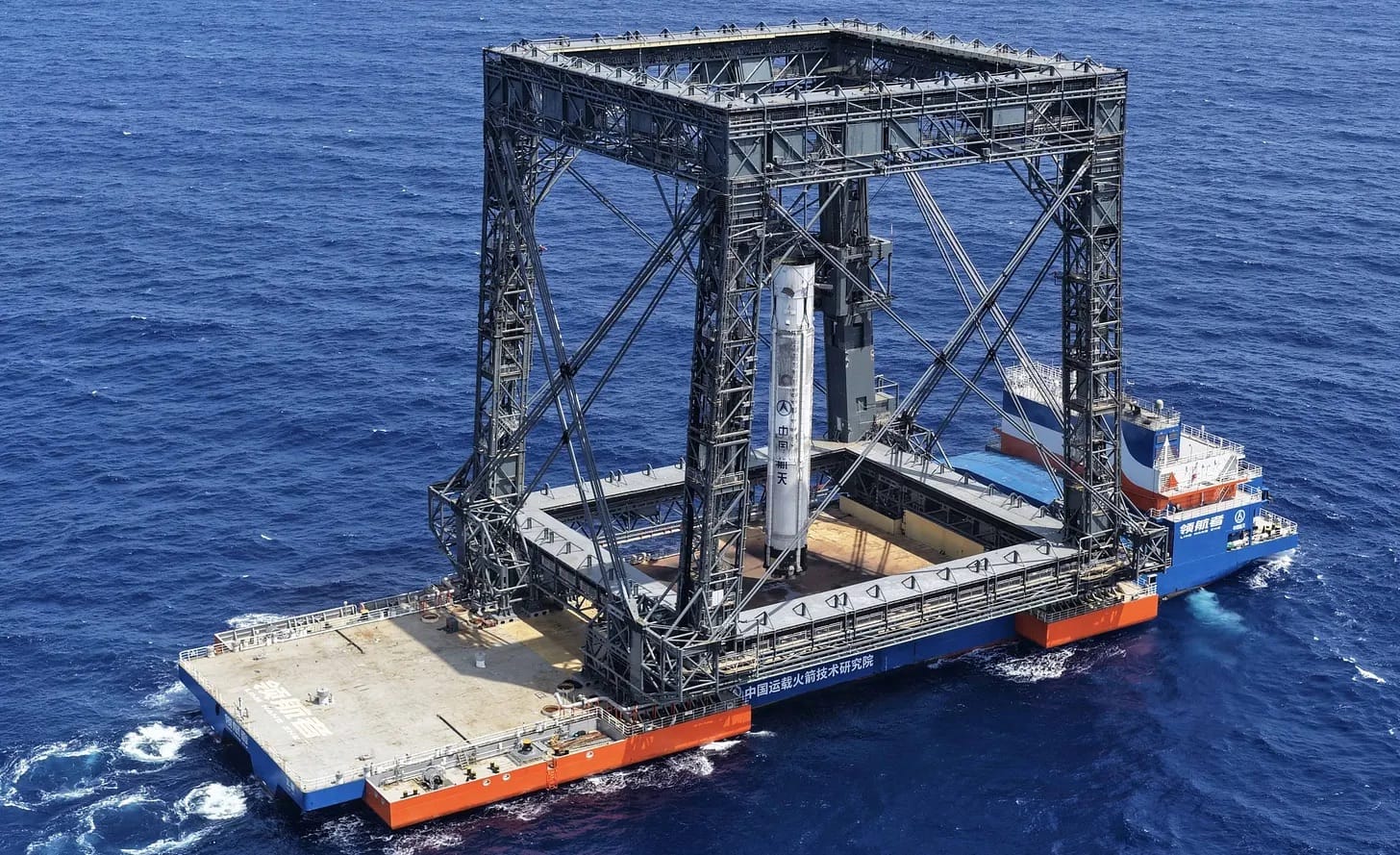
- On July 10, China successfully flew and landed the Long March 10B orbital rocket booster stage, a first such recovery for the country. The kerolox first stage is essentially the same design to be used by the Long March 10A, three of which will form the Long March 10’s first stage to launch taikonauts towards the Moon.
- SpaceX’s thirteenth suborbital test flight of its two-stage Starship rocket on July 25, was successful in its liftoff, stage separation, temporary Starlink satellite deployments, the upper stage’s in-space engine restart, and later a soft oceanic splashdown with its heat shield intact through atmospheric reentry. However, like the previous flight, this one failed again in seeing a soft splashdown of the large booster. While the thirteenth flight was a relative success on many counts, the delayed achievements of the same have meant that SpaceX continues to lapse on Starship’s expected milestones for NASA’s Artemis program as a lander element. Furthermore, Eric Berger reports on how Starship’s heat shield is its pacing item as well as fundamental constraint.
- The upper stage of a SpaceX Falcon 9 rocket which launched two lunar missions in January 2025 collided with the Moon on August 5 along its solar orbit, exposing risks for future lunar activity, science, and peaceful lunar governance. South Korea’s KPLO spacecraft observed the impact from orbit.

- NASA has said Blue Origin’s Blue Moon Mark I lander to be launched towards the Moon’s south pole has completed communications checkout on ground with NASA’s Tracking and Data Relay Satellite System and the Deep Space Network. The assembly of the lander, named Endurance, is nearing completion, with payload integration to follow. Endurance passed space environmental testing at NASA’s Johnson Space Center earlier this year. The lander is supposed to carry a few NASA payloads as part of the agency’s CLPS program and launch on Blue’s New Glenn rocket, which exploded in May and delayed all of NASA’s Moon missions with the company. Eric Berger reports Blue’s CEO Dave Limp saying that the explosion originated in the main oxygen valve on of the seven BE-4 engines on the booster stage. The root cause of the issue remains unresolved. In the meanwhile, the agency has also provided a few updates on other upcoming CLPS landers without noting any specifics about their launches.
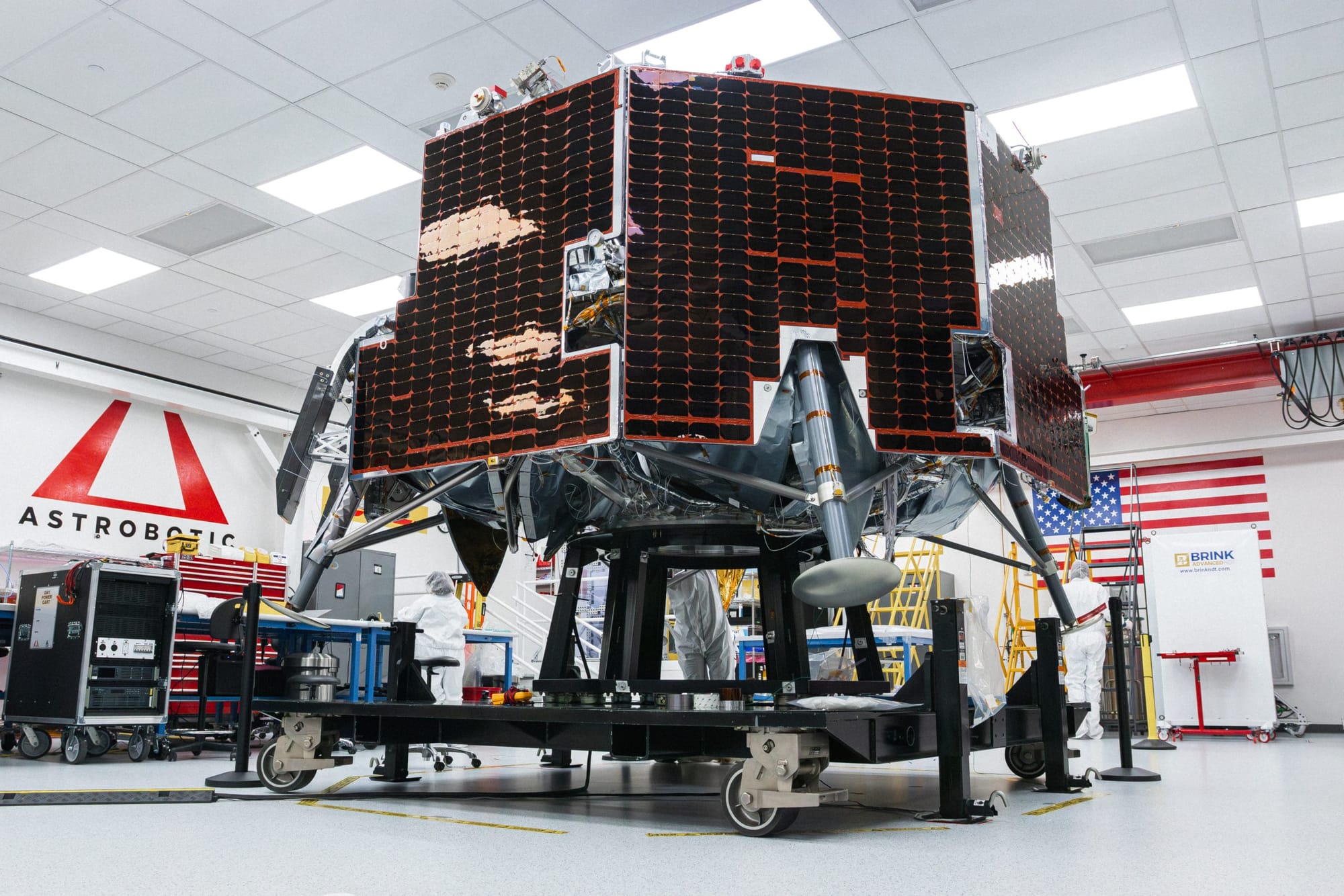
- Astrobotic’s large Griffin CLPS lander aims to land on the Moon’s south pole later this year. It will deploy the FLIP rover by Astrolab (a Moon Monday sponsor), who onboarded last year after NASA decided not to fly the critical VIPER rover for studying water ice aboard Griffin. FLIP is yet to be integrated with Griffin, which will take place pre-launch at SpaceX’s facilities. Astrobotic has so far shared that it has integrated three of the other lander payloads: NASA’s Navigation Doppler LiDAR (NDL) which will aid Griffin’s navigation, the company’s own CubeRover, and ESA’s LandCam-X which will help improve landing precision. Amid the company’s desire to position Griffin’s hoped-for success to bag more Artemis Moonbase contracts from NASA, Astrobotic has been acquired by Voyager Technologies, who wishes to accelerate said proposition.
- NASA says the agency-funded and Advanced Space-led CAPSTONE lunar orbiter demonstrated autonomous optical navigation at the Moon, including during Artemis II when the Deep Space Network communications availability for the craft was limited. NASA has awarded the same team of companies a contract of unspecified value for the CAPSTONE-02 mission, which aims to demonstrate rendezvous and docking of two satellites in lunar orbit and advance autonomous navigation capabilities.
- ispace US’ first CLPS mission through Draper Laboratory was targeting landing on the Moon’s farside later this decade. It was supposed to carry NASA payloads onboard as well as a rover from ispace Europe, intended to perform seismic studies and study the local surface & environment. However, the contract to carry NASA payloads has been cancelled, and was announced as such on July 15. It’s possible NASA might reallocate the flight-ready payloads to another CLPS lander but we’ll have to wait and watch for future announcements following feasibility studies.
- Relatedly, an ispace Europe led team won a ~€65 million ESA contract to collaborate with the agency on the MAGPIE rover mission to study lunar polar water ice and other such volatiles. The rover will launch on ispace Japan’s M4 lander mission for which the company is being funded by JAXA to demonstrate a precision lunar polar landing by the end of this decade with aid from navigation and communications (navcom) relay satellites in lunar orbit. This is interesting; JAXA has already achieved a precision robotic landing with the SLIM mission in 2024 without needing any external spacecraft. The move therefore denotes other considerations such as cost and abstracting out the sophisticated touchdown capability to a persistent infrastructure layer at the Moon so every lander can utilize it. The M4 lander will follow M3, aimed to be launched in 2028 on a Japanese H3 rocket, touting a large design with high payload capacity and improved navigation over ispace’s first M1 and M2 missions which entered lunar orbit but failed to land.
Many thanks to Open Lunar Foundation, Ajay Kothari and Arun Raghavan for sponsoring Moon Monday. If you too appreciate my efforts to bring you this curated community resource on global lunar exploration for free, and without ads, kindly support my independent writing, which is purely reader-funded. I don’t use AI to write a single word and cite everything.