What is pending for SpaceX Starship to be a Moonship for NASA astronauts? Nearly everything.
Moon Monday #276: NASA’s road to putting humans on the Moon through SpaceX Starship continues to face a receding sea of milestones to achieve.

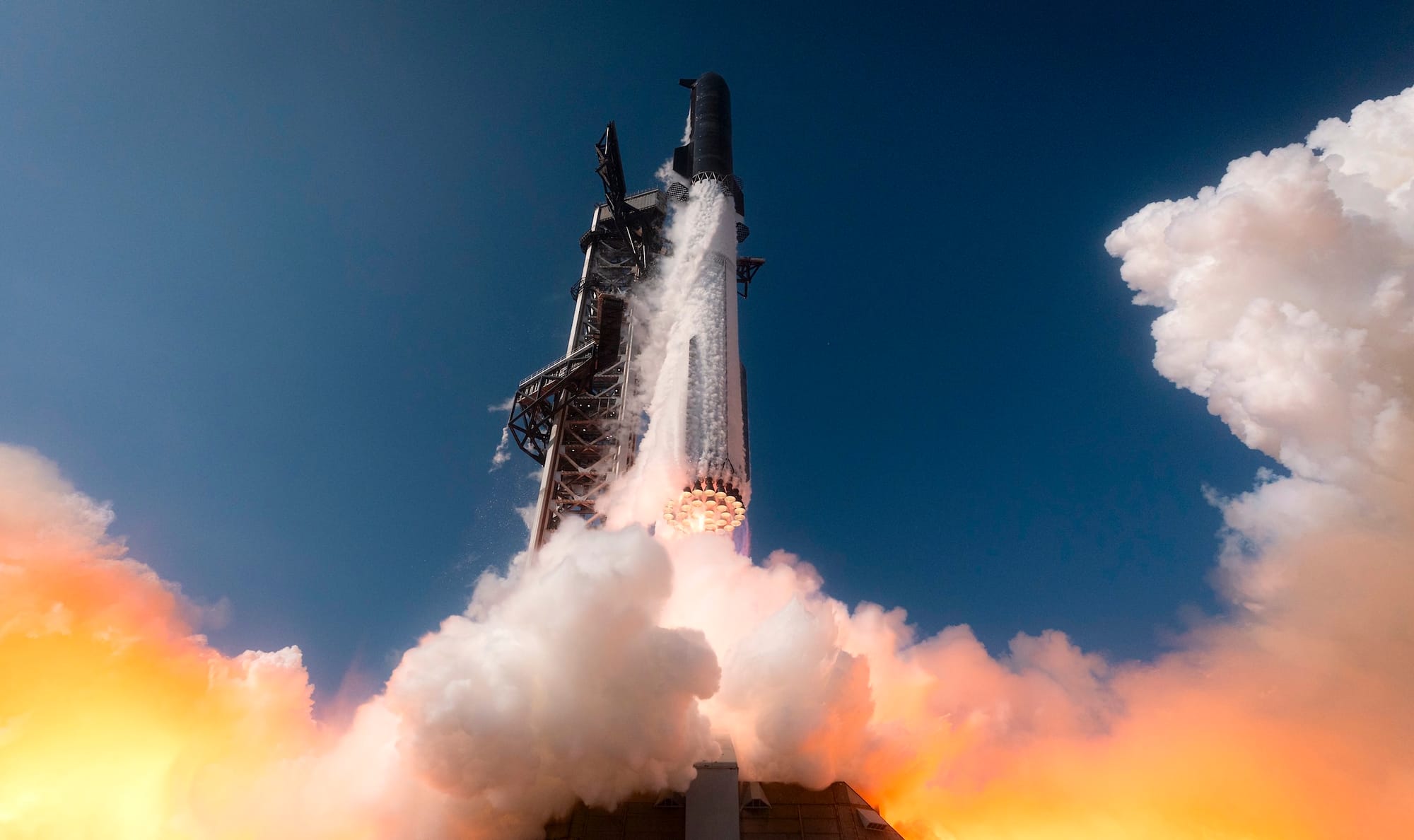
SpaceX’s latest suborbital test flight of its two-stage Starship rocket on May 22, debuting a refined V3 version, was successful in its liftoff, stage separation, mock satellite deployment test, and the upper stage’s soft oceanic splashdown while its heat shield remained intact through atmospheric reentry. However, the flight failed in even attempting a soft splashdown of the large booster, which impacted somewhere unstated in the waters of Gulf of Mexico. The flight also did not test the planned reignition of an upper stage Raptor engine in space because one of the engines had failed early in flight. This means SpaceX will likely have to delay an orbital test flight of Starship until an upper stage engine relight is demonstrated in a future flight.
In 2021, NASA selected Starship’s lunar variant for landing Artemis astronauts on the Moon in 2024 for almost $3 billion, a price proposed by SpaceX itself. Starship’s early developmental challenges meant that target whizzed by. More importantly, last year’s multiple failures of Starships against SpaceX’s own repeatedly promised timelines continued to mount delays, significantly slowing down NASA’s progress in having humans land on the Moon again via Artemis IV. Given the delays, and the hanging 2028 political deadline to “beat China”, the agency decided to reopen the landing contract. Thus Blue Origin can now vie for the first Artemis landing mission despite its own challenges. In this overall context, the V3 Starship’s first flight continues only slow progress for NASA and the US while a sea of milestones remain untouched in the lead up to landing humans on the Moon. Somehow by 2028, SpaceX still needs to achieve the following:
- have lofted Starships return to launchpads by default
- perform an orbital flight (October 2026 update: this milestone was accomplished)
- consistently deploy satellites and other payloads in Earth orbit
- human-rate the whole launch vehicle and demonstrate docking with the Orion spacecraft for the Artemis III Earth orbit test mission
- perform cryogenic fuel transfers between Starship upper stages in Earth orbit
- refurbish and refuel Starships fast enough to reach the high cadence required, itself unspecified, for the Artemis IV crewed Moon landing
- demonstrate an uncrewed lunar landing and takeoff prior to carrying crew
- demonstrate avoiding cryogenic fuel boil-off in lunar orbit and on the Moon’s surface, to simulate Starships waiting for or hosting astronauts
Two years later that last promised, even a baseline demonstration of in-orbit fuel transfer between Starship stages has not been in sight. Moreover, we don’t even have a firm enough launch target for Starship’s uncrewed lunar landing demonstration either from SpaceX or NASA. We also don’t have public information on what SpaceX’s supposed accelerated Lunar Starship proposal in response to NASA’s reopening of the astronaut landing contract looks like. Simply put, NASA’s road to landing humans on the Moon again has been crawling through Starship.
China, the catalyst
In the meanwhile, China has bagged a quicker succession of milestones in 2025 than expected, spanning prototype tests of its Moon rocket, the crew capsule, the lander, and supporting navigation and communications infrastructure. This year, China has conducted an in-flight abort test of the crew capsule, provided new details on the planning and development of various elements of China’s crewed Moon missions, and is on track for more planned tests.
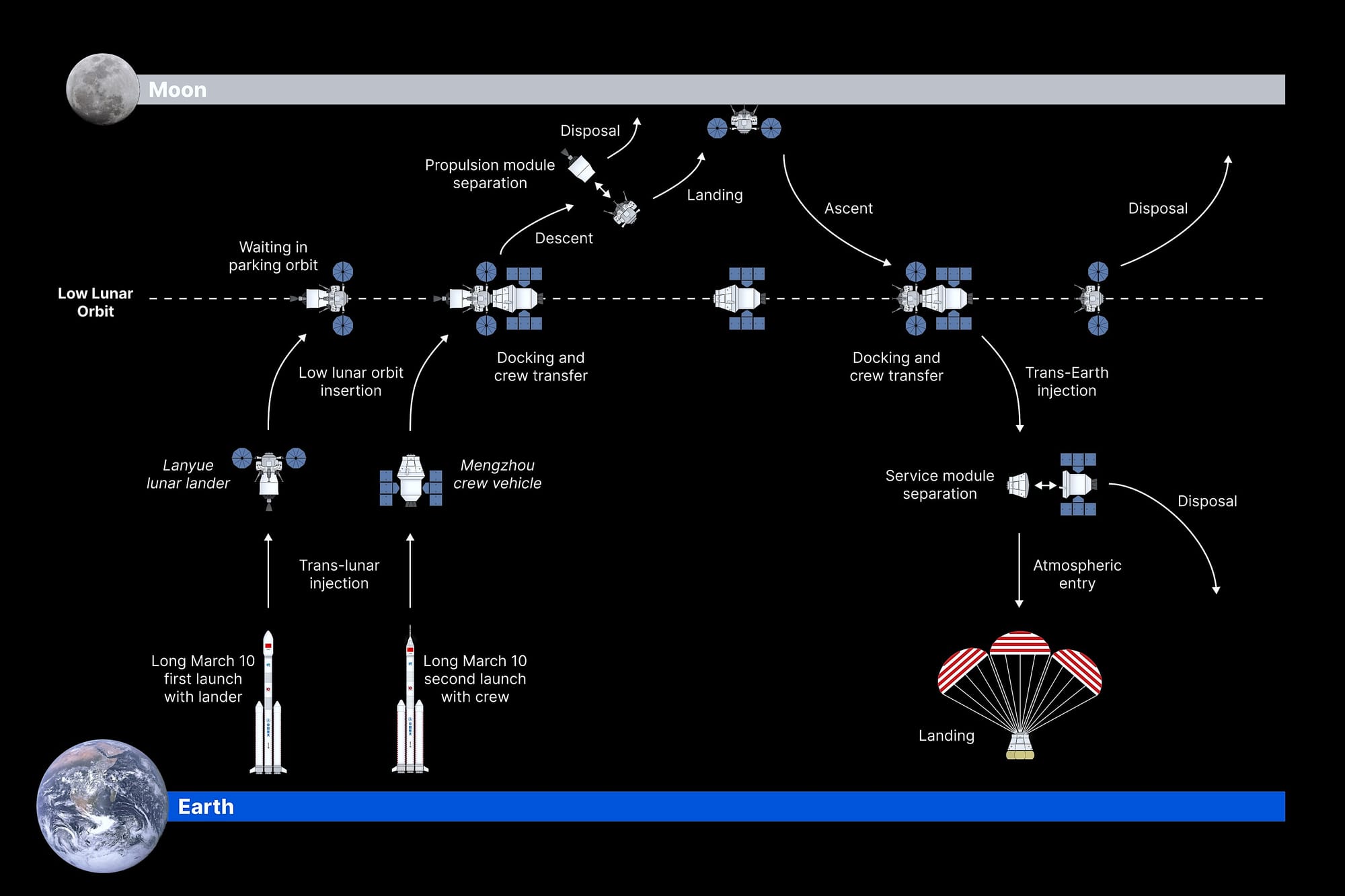
Many dismiss China’s simple two-launch approach as being less ambitious than Artemis, saying that being Apollo-like makes their plan faster to execute. Since when is a crewed Moon landing an easy feat in itself? It’s the first time China is even attempting the feat, and any architecture for the same makes for an enormous undertaking by default that deserves respect. You can’t call Apollo a historic feat while simultaneously downplaying others trying to take a similarly practical approach.
In response to China’s pace, portrayed by the US as a “race”, NASA has been trying to remove or reduce requirements to allow Starship and Blue Origin to meet the agency and its Orion craft somewhere in between. For example, the effective cancellation of the NASA-led Gateway lunar orbital habitat earlier this year removed the requirement for Starship or Blue to orbit the Moon in Gateway’s specific NRHO orbit, allowing them to dock with the crew-hosting Orion spacecraft in other potentially feasible shared orbits. Relatedly, Marcia Smith reported that NASA is considering the first Artemis landing to not be amid the treacherous terrain of the Moon’s south pole and lie more equator-ward instead. Targeting a non-polar landing improves safety from a terrain perspective while also enhancing communications and power availability to carry out the mission.
However, the relaxation of these requirements by itself does not solve the majority of the challenges and delays faced by SpaceX in particular, given its far more complex mission profile for lunar landings compared to Blue’s. The bulk of the work still rests on SpaceX to work through, including determining and then cracking the code for fast enough in-space refueling needed to achieve its crewed Moon landings.
Lunar pitfalls
NASA’s Office of Inspector General (OIG), which formally functions as an agency watchdog, released a scathing report in March pointing out various shortcomings and risks in Lunar Starship. Notable among them is that SpaceX is targeting a lower fidelity uncrewed landing demonstration prior to carrying crew, which excludes things like having a complete life support system or the astronaut elevator. The OIG also pointed out that the uncrewed flight wouldn’t simulate the full-scale mission profile of the crewed flight. And so even with a successful robotic lunar landing and takeoff, the flight would still not cover the full envelope of the landing mission with astronauts.
The OIG also noted that the Lunar Starship particularly enhances crew risk by lacking sufficient manual control options of the vehicle. In contrast, Chinese taikonauts have been training for various landing scenarios in a Lanyue lander simulator, which has manual control options to override autonomous touchdown. This training in itself is providing astronaut feedback to engineers for iterating on the lander’s development whereas a high fidelity mock Lunar Starship simulator for Artemis astronauts has either not been created or shared about yet.
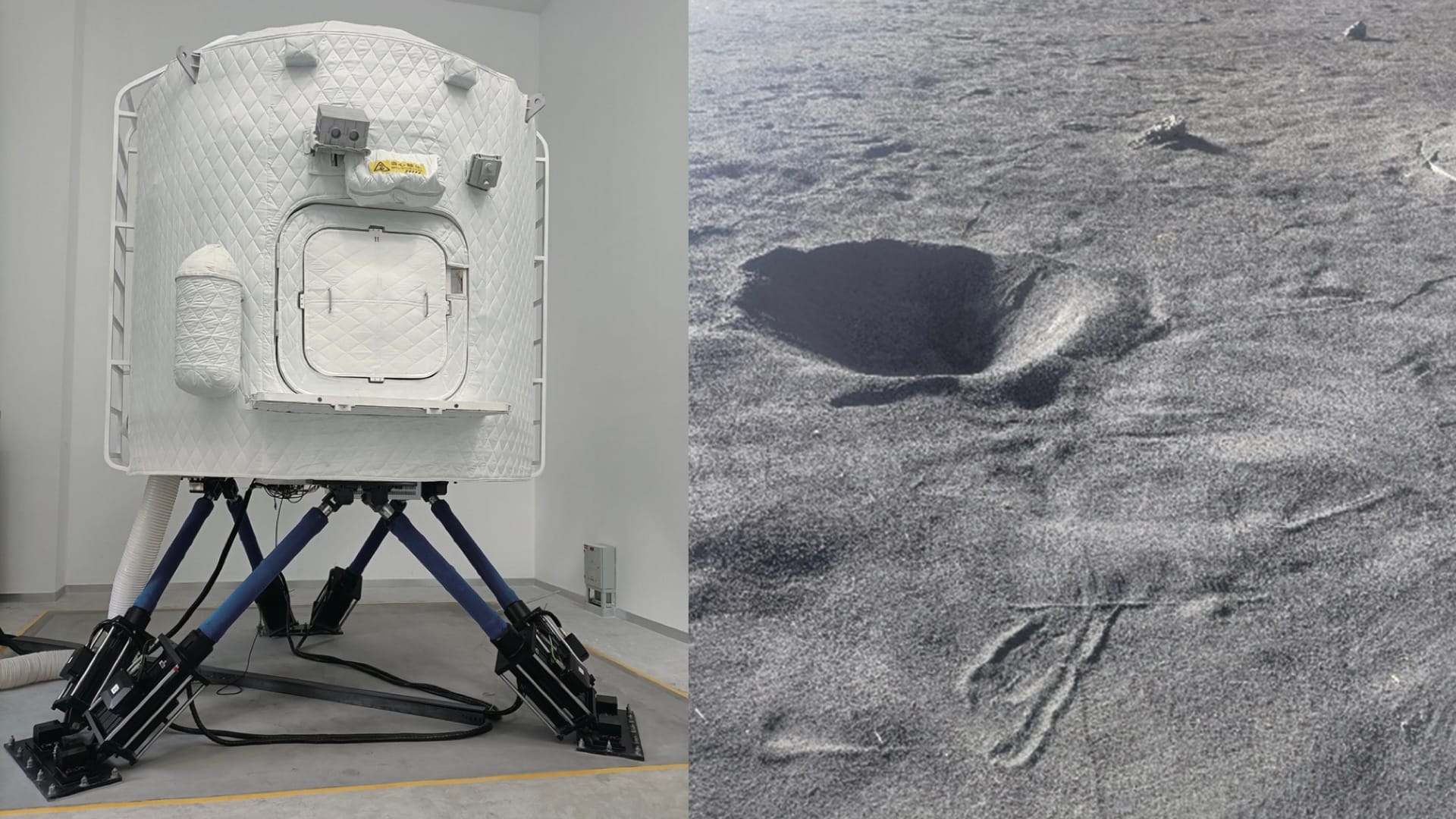
As a related aside, Blue Origin and NASA did setup a full-size mock crew cabin modeled after the company’s Blue Moon Mark 2 crewed lunar lander sometime this year for ground-based astronaut testing and feedback. NASA says the mockup will evolve to support multi-phase mission simulations ahead of crewed flights. As such, it lags behind China’s simulator at the moment but might be ahead of SpaceX based on publicly available information.
Like the OIG, another formal NASA review body has also expressed concerns about Starship’s readiness this decade. The Aerospace Safety Advisory Panel (ASAP) highlighted the following concerns about Starship in its 2025 report (released this year):
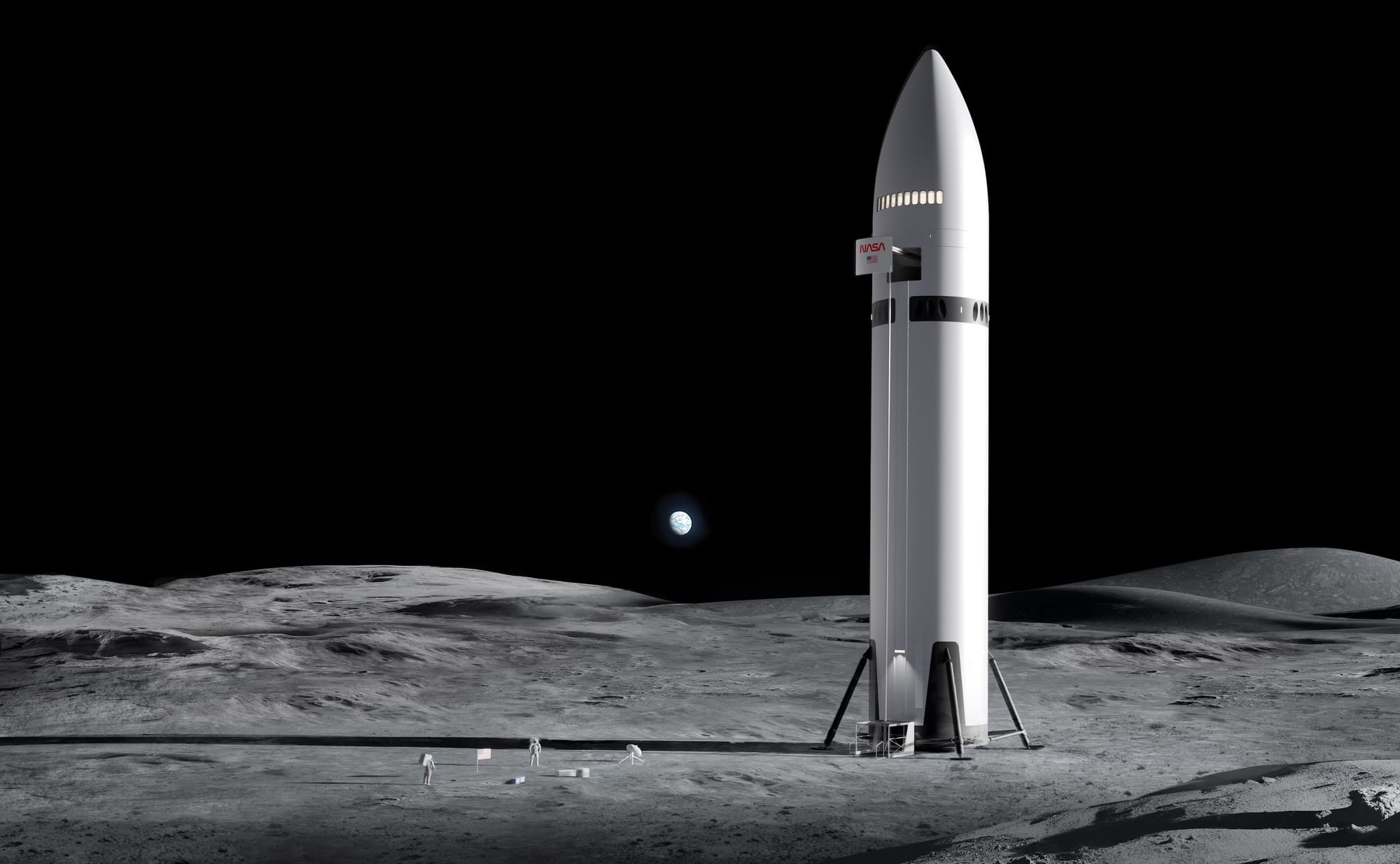
The development and test progress necessary for a version of Starship that has not yet flown in time to support a human lunar landing mission within the next few years appears daunting and, to the Panel, probably not achievable. Beyond this, the physics of landing a six-to-one height-to-width ratio vehicle on the uneven, poorly lit polar lunar surface seems questionable at best.
During both the Artemis rejig and revised Moonbase plans earlier this year led by NASA Administrator Jared Isaacman, he positioned the efforts and changes as trying to beat China.
With credible competition from our greatest geopolitical adversary increasing by the day, we need to move faster, eliminate delays, and achieve our objectives.
In an accompanying email letter sent to NASA employees and shared online, Isaacman noted the agency will embed its talent and expertise across the US space industry to increase the chances of successes for Artemis. From said letter:
Few disagree with the direction we are taking, but many question the achievability. There is a belief among some that NASA has drifted so far from its best days that we can no longer undertake big, bold endeavors and deliver on them. That is why we must take ownership of the outcomes. We will not sit on our hands and hope industry saves the day. NASA will assign subject matter experts to every program supporting the National Space Policy, from returning to the Moon to building a lunar base. We will work alongside every vendor, attached to every component on the critical path and down to the subcontractor level.
There was also an extended tone of high expectation of returns to this approach, which Eric Berger captured in a report:
The space agency is prepared to do everything it can to help its contractors succeed, from embedding subject matter experts to relaxing requirements. But the time for excuses is coming to an end, he [Isaacman] said. “We are not going to sit idly by while schedules slip or budgets are exceeded,” he said. “Expect uncomfortable action if that is what it takes. Because the public has invested $100 billion and has been very patient with America’s return to the Moon. Expectations are rightfully very high. Taxpayers and their representatives in Congress should demand accountability from every leader and every CEO if those expectations are not met.”
It will be interesting to see if this demanding hand, including for returns on taxpayer money, manifests for SpaceX’s Lunar Starship too if the company continues to lapse on its promised timelines. It will also be notable, and necessary, if NASA starts to attach and share firm timelines for key milestones being targeted by Lunar Starship, providing the missing public information transparency. NASA has not been public about any major milestones and associated payments made for Lunar Starship’s development. The ambiguity stemming from a lack of well-defined public milestones and timelines makes it easy to sell every Starship launch as a success, perpetually pushing optimism into the future. The prospects of eventually realizing Starship might be amazing, on paper and hopefully in the not too distant future, but it’s also important what is possible right now, tomorrow, next year, and in 2028. Such basic mission information and promised progress on taxpayer funded programs is crucial to have from NASA at least, instead of a deluge of futuristic sounding plans delivered with optimism forged from a vacuum.
Related reads
Many thanks to Open Lunar Foundation and Joseph Biernat for sponsoring Moon Monday. If you too appreciate my efforts to bring you this curated community resource on global lunar exploration for free, and without ads, kindly support my independent writing: