Upcoming missions to the Moon’s farside—that’s definitely not its dark side.
Moon Monday #285
<If you too want to change the frustrating misconception of people at large calling our Moon’s farside as its “dark side”, send them this rebuttal article by Ethan Siegel while also blaming Pink Floyd and the Transformers. The Moon does have real dark sides, and they’re called permanently shadowed regions.>
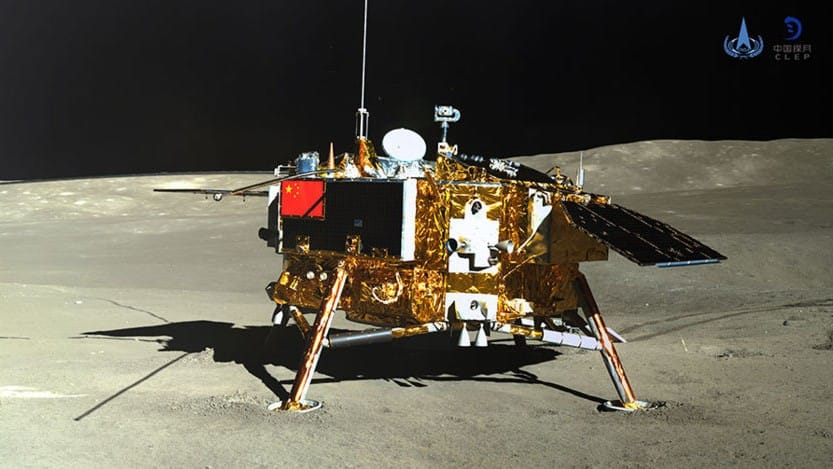
China pioneered exploring our Moon’s mysterious farside with the Chang’e 4 and Chang’e 6 missions. Soil and rock samples fetched by Chang’e 6 changed our understanding of the Moon’s evolution, paving the way for future missions to seek answers to the next set of scientific questions about our Moon and its connection to Earth as well as events in the Solar System. Chang’e 4 and its associated Queqiao 1 satellite demonstrated farside relay communications, a first as well, and carried an instrument for cosmic radio measurements to prepare for leveraging the lunar farside’s value as a unique platform for cosmology. Here are future missions planned for launch by 2030—or around that time when accounting for delays.
The second Firefly
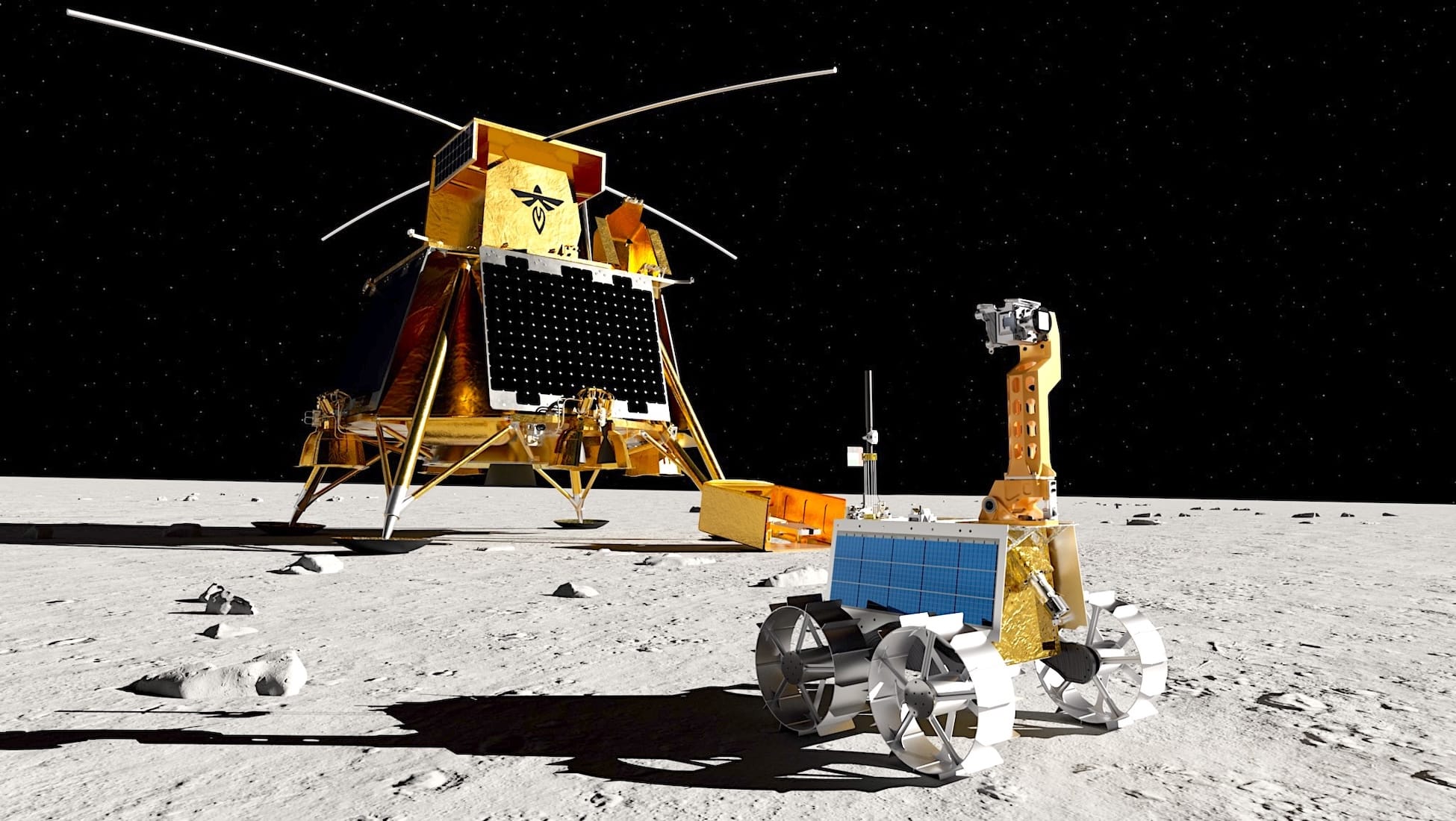
The closest upcoming mission to the Moon’s farside is Blue Ghost 2, wherein US-based Firefly Aerospace aims to deliver a lunar orbiter and surface payloads later this year at the earliest as part of NASA’s CLPS program. The company will leverage a similar lander design as its successful first CLPS Moon mission but will add an orbital transfer stage called Elytra Dark. The latter will help deliver the 280-kilogram Lunar Pathfinder spacecraft for ESA in lunar orbit. Pathfinder is a stepping stone towards Moonlight, ESA’s upcoming navigation and communications constellation in support of lunar surface missions. Post Lunar Pathfinder’s deployment, Elytra Dark will commence the company’s Ocula lunar imaging service, which can fill some—but not all—critical gaps for NASA on the lunar reconnaissance front.
The Blue Ghost lander itself will attempt to touchdown on the Moon’s farside. Once on the surface, it will deploy the NASA-funded LuSEE-Night instrument. It’s a first of its kind, aiming to measure faint but unique radio signals from our Universe’s ‘Dark Ages’—a slice of time right before the first stars were born. LuSEE-Night will help us characterize the Moon’s radio emissions for future farside radio telescopes. Firefly has also won an extended $18 million contract from NASA for Elytra Dark to provide communications and radio frequency calibration services for LuSEE-Night.
Blue Ghost 2 will also carry UAE’s second Rashid rover. UAE’s near-identical Rashid rover 1 launched in 2023 but it couldn’t operate on the Moon since ispace Japan’s first Moon lander carrying the rover crashed. The Rashid 2 rover will have largely the same science & technology goals. For Firefly and NASA, Blue Ghost 2 carrying the Rashid 2 rover to the Moon would be a milestone in flying actual commercial payloads instead of those funded by the US government or its longtime allies.
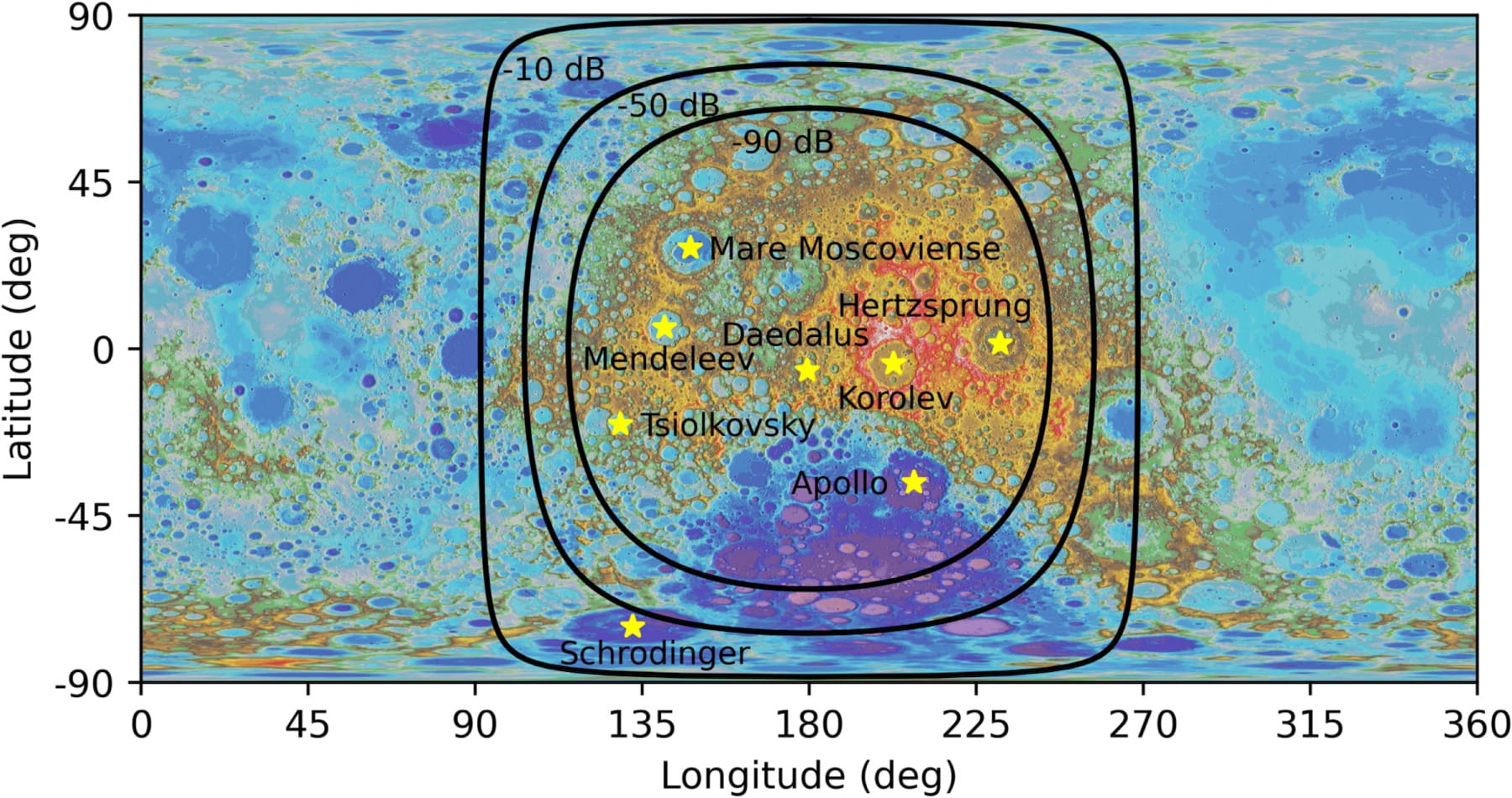
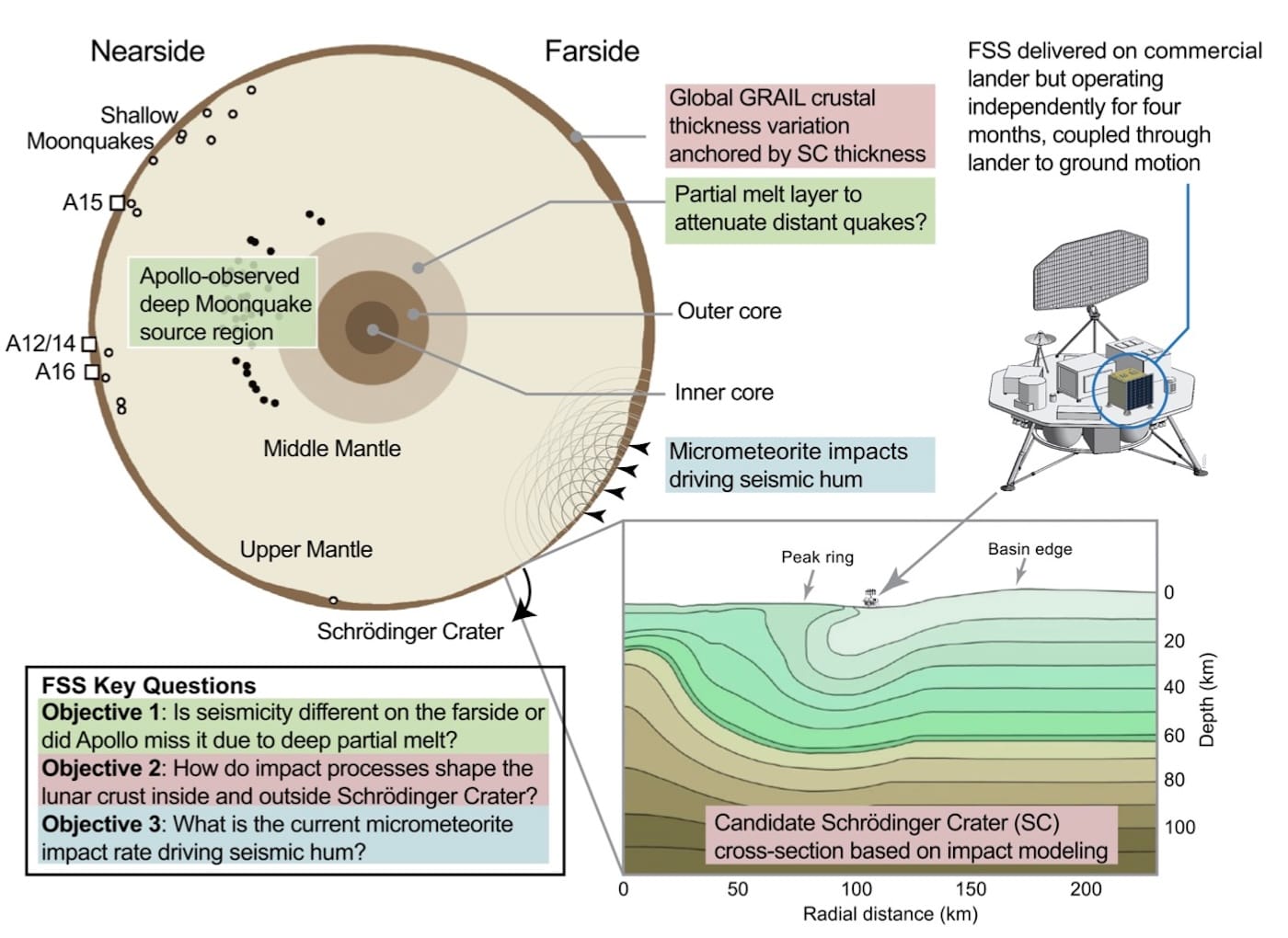
Moreover, the lander will host Volta Space’s CSA-funded wireless power receiver aboard. It’s a technology demonstrator ahead of building receivers for a planned lunar power network and service called LightGrid. Blue Ghost 2 will also carry a commercial seismometer from Australia-based Fleet Space Technologies. Once deployed, it will operate by tapping into lander-provided power and communications services—much the same as how the seismometer deployed by India’s Chandrayaan 3 lander operated. Part of the larger global effort to study Moonquakes, SPIDER will offer scientists insights into the physical structure and nature of the local crust and subsurface. It might also provide hints of resources such as water ice, depending on the chosen landing site which is as yet unannounced.
More farside missions
- ispace US’ first CLPS mission through Draper Laboratory was targeting landing on the Moon’s farside later this decade. It was supposed to carry NASA payloads onboard as well as a rover from ispace Europe, intended to perform seismic studies and study the local surface & environment. However, the contract to carry NASA payloads has been cancelled, and was announced as such on July 15. It’s possible NASA might reallocate the flight-ready payloads to another CLPS lander but we’ll have to wait and watch for future announcements following feasibility studies.
- The Honk Kong University and Chinese-mainland-based ASES are collaborating on the Lunar Flash orbiter. Largely funded by the Hong Kong government at almost $100 million HKD, the 100-kilometer altitude polar-orbiting satellite will monitor flashes of meteorite impacts on the Moon’s farside. This will help scientists determine the phenomenon’s poorly constrained sizes, rate, and potential impact (pun intended) on long-term robotic and crewed exploration. Combined with more such data from other missions, it will help us understand risk from micrometeorites too specifically to better plan future humans, habitats, and hardware on the Moon’s south pole.

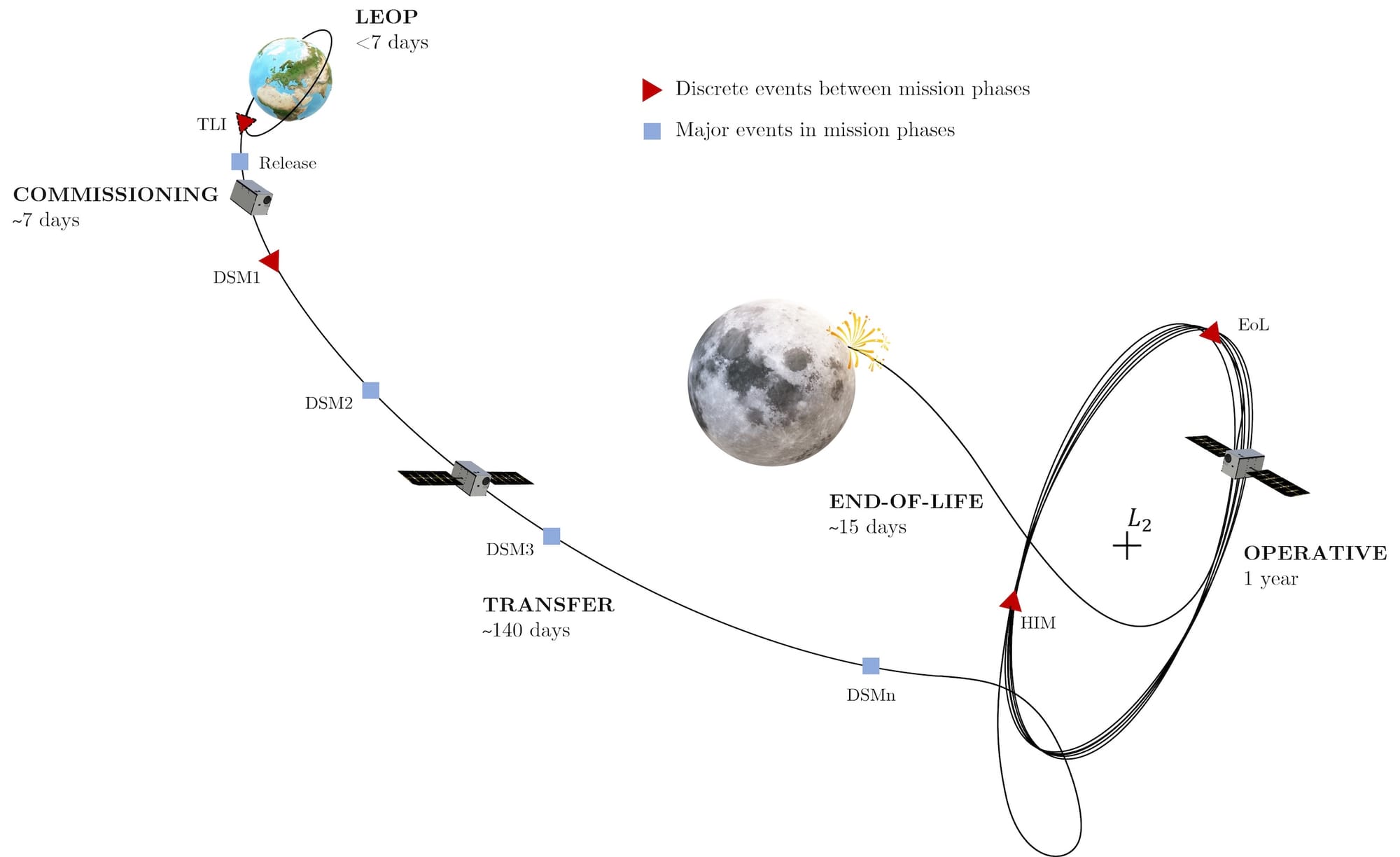
- ESA approved a similar mission in 2024 called the LUnar Meteoroid Impacts Observer (LUMIO). ESA aims to launch the LUMIO CubeSat in 2027 to the second Earth-Moon Lagrangian point (EM-L2) from where it can continuously observe the Moon’s farside. The CubeSat also aims to demonstrate autonomously determining its position in space and navigating accordingly, independent of communications with Earth, something China pioneered with its DRO lunar craft recently.
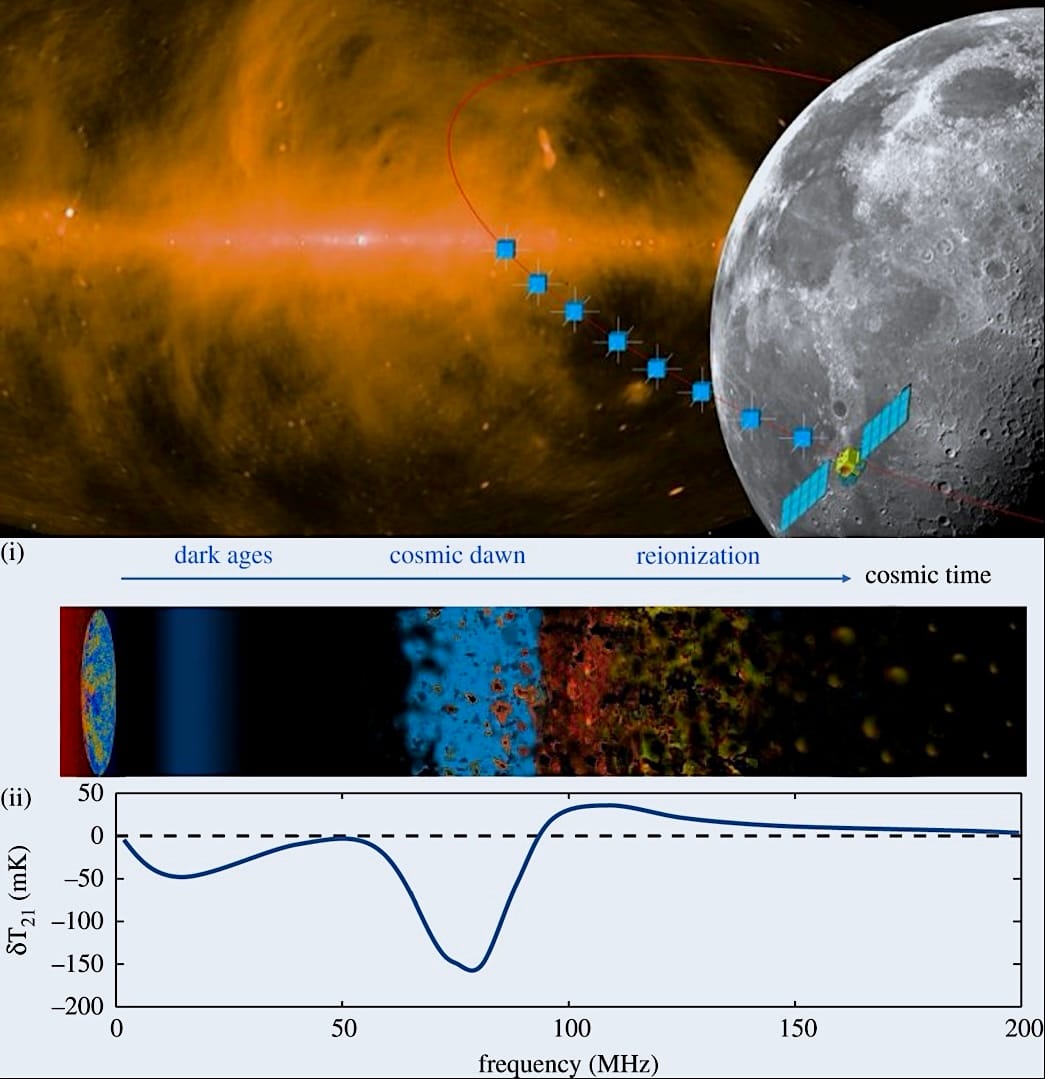
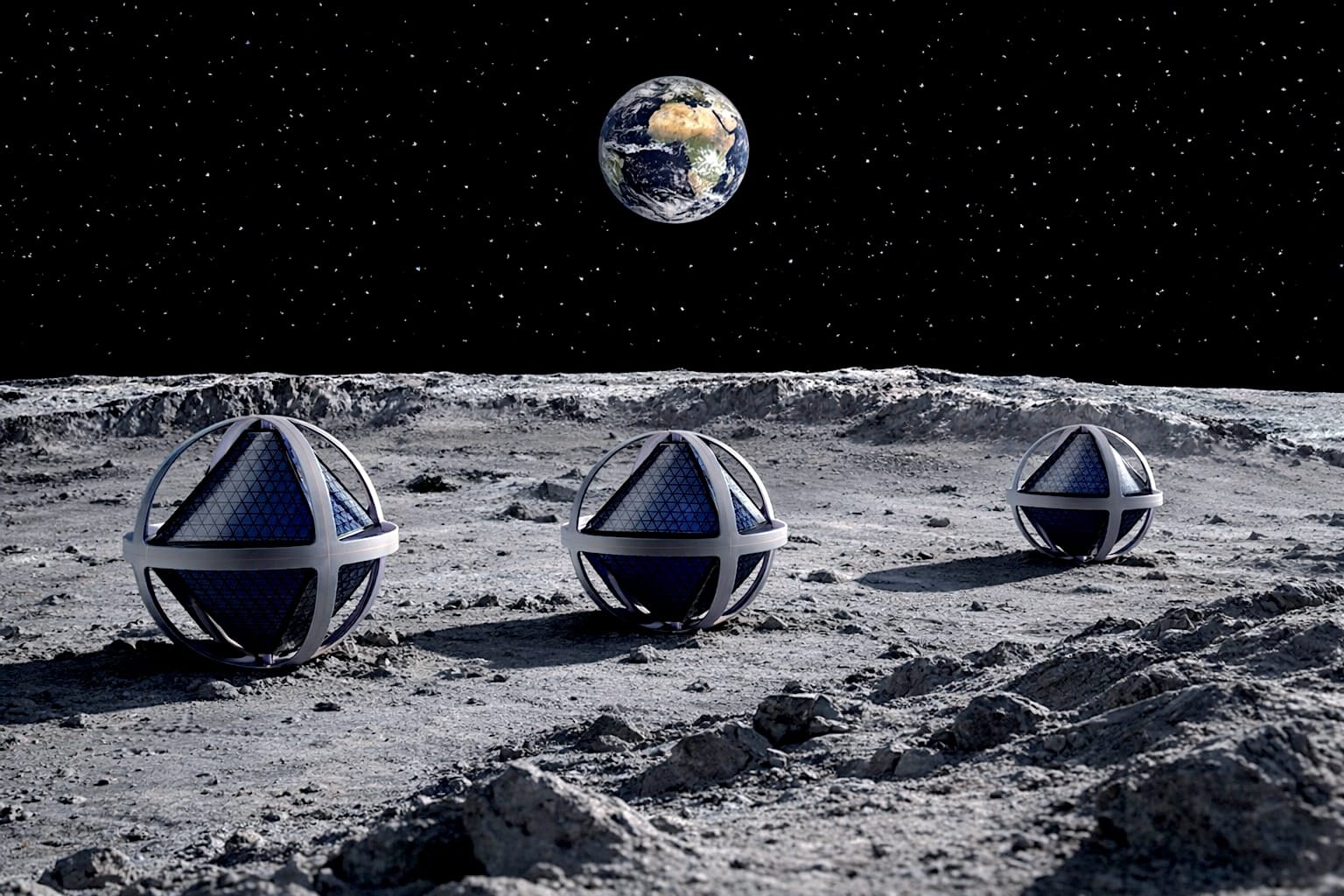
- China’s upcoming mission called Discovering Sky at Longest wavelength (DSL) aims to make radio measurements of the cosmic ‘Dark Ages’ from the Moon’s farside with one mother satellite and eight trailing daughter satellites.
- China’s Chang’e 8 mission, targeting launch in 2028, will carry three small antennae called BALLS from Africa, making it the continent’s first lunar payload. While Chang’e 8 will land on the lunar south pole, BALLS will function as a demonstrative precursor to the full African2Moon radio telescope array of 55 antennae aimed to be placed on the lunar farside by a future mission to also measure the Dark Ages.
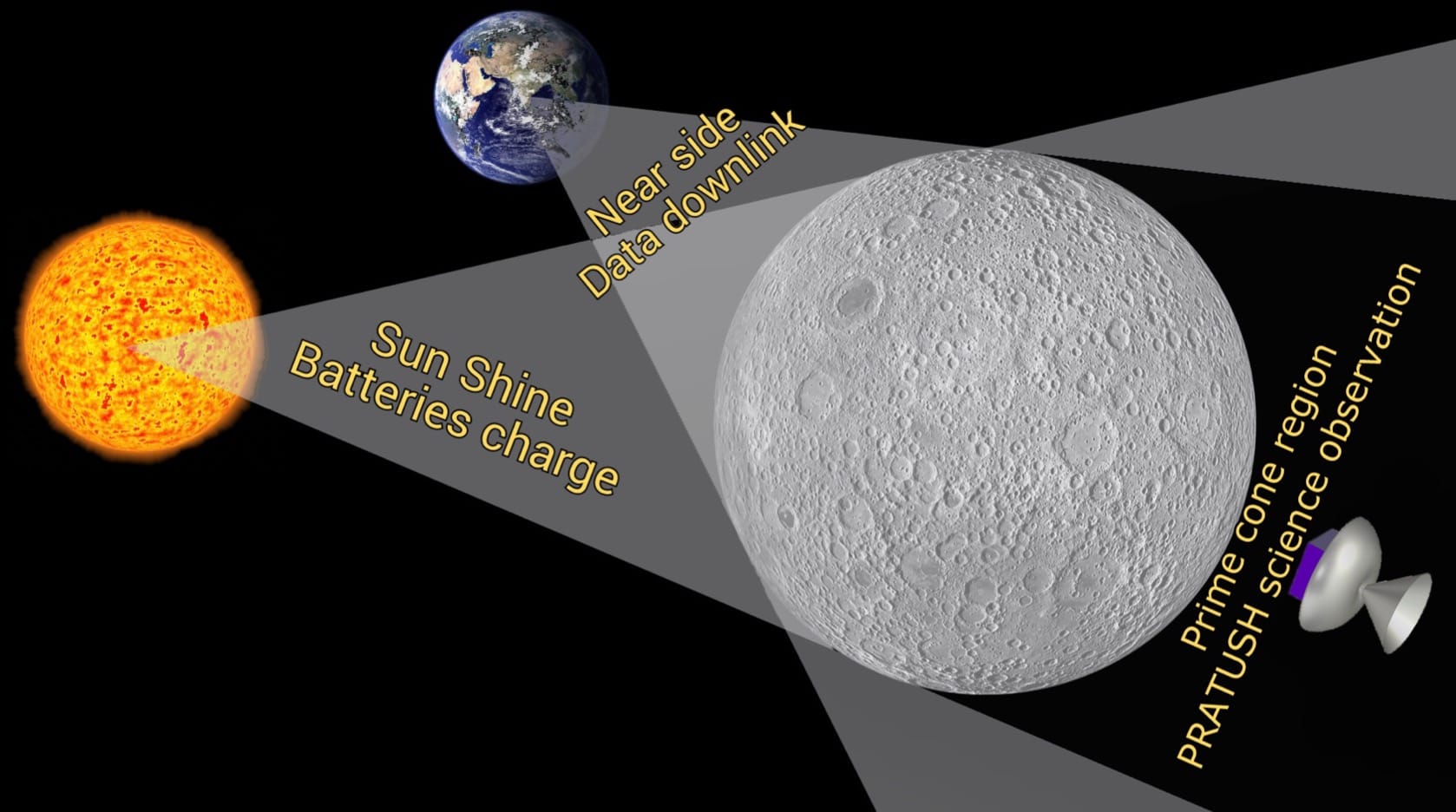
- India is developing the PRATUSH orbiter mission to detect signals from the cosmic Dark Ages as well. There has been progress on demonstrating the sensitivity of the radiometer hardware although a commissioned phase with a launch vehicle remains out of sight for the mission.
Many thanks to Gordon Roesler and Dany Waller for sponsoring Moon Monday. If you too appreciate my efforts to bring you this curated community resource on global lunar exploration for free, and without ads, kindly support my independent writing, which is purely reader-funded. I don’t use AI to write a single word and cite everything.