The fiery origin of our Moon tied to Earth, as unraveled by scientists through Apollo and now modern missions
Moon Monday #290: Lunar samples brought by Apollo missions transformed our understanding of the Moon’s formation and Earth’s past. Chang’e and Chandrayaan missions have newly enriched the endeavor as scientists continue unraveling its complex layers.
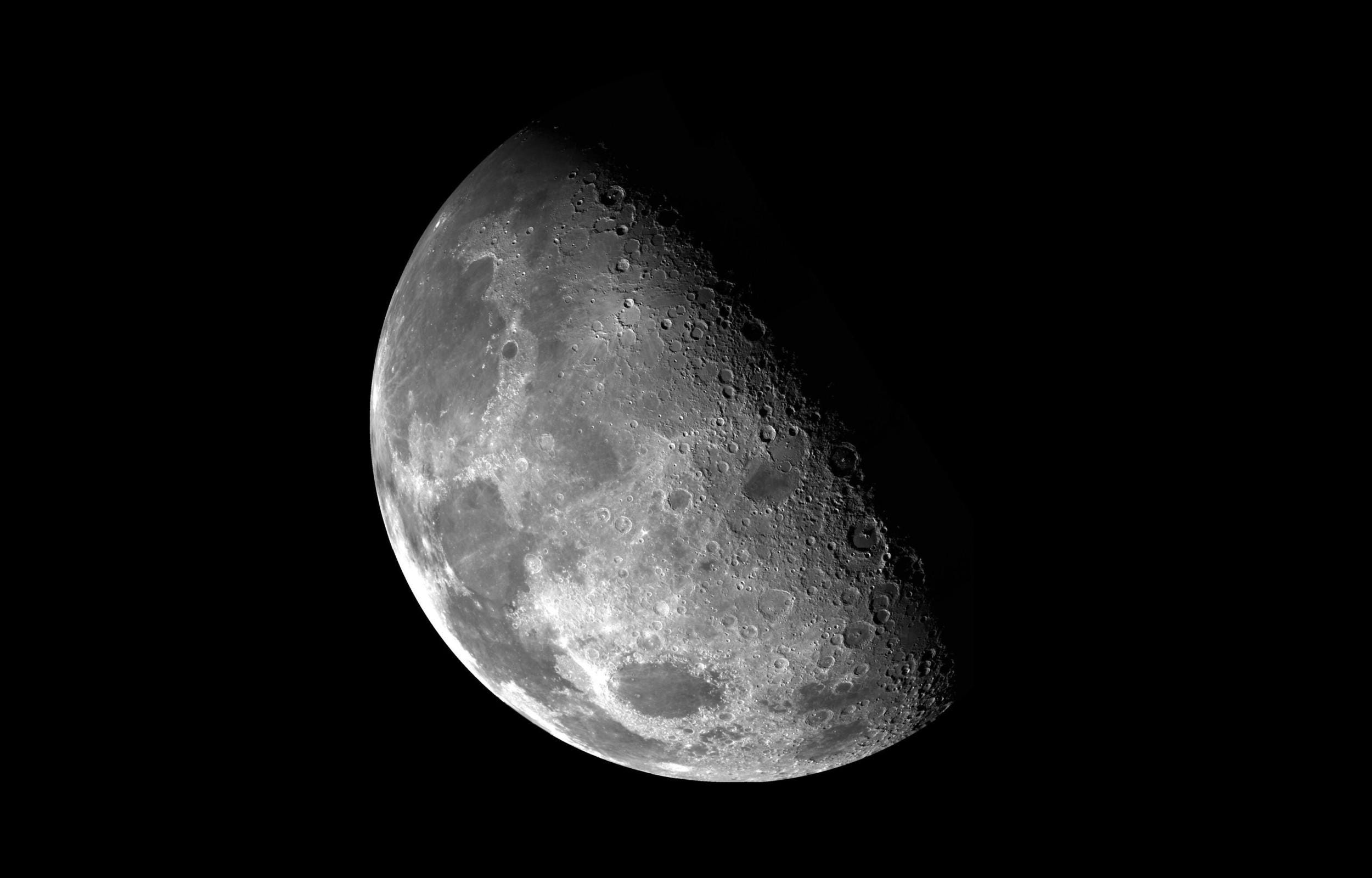
Where did our Moon come from? The origin of Earth’s cosmic companion is a fundamental question in planetary science. From Galileo’s first telescopic observations of the Moon to humans walking on its surface, our understanding of its origins has come a long way. Yet it’s far from complete.
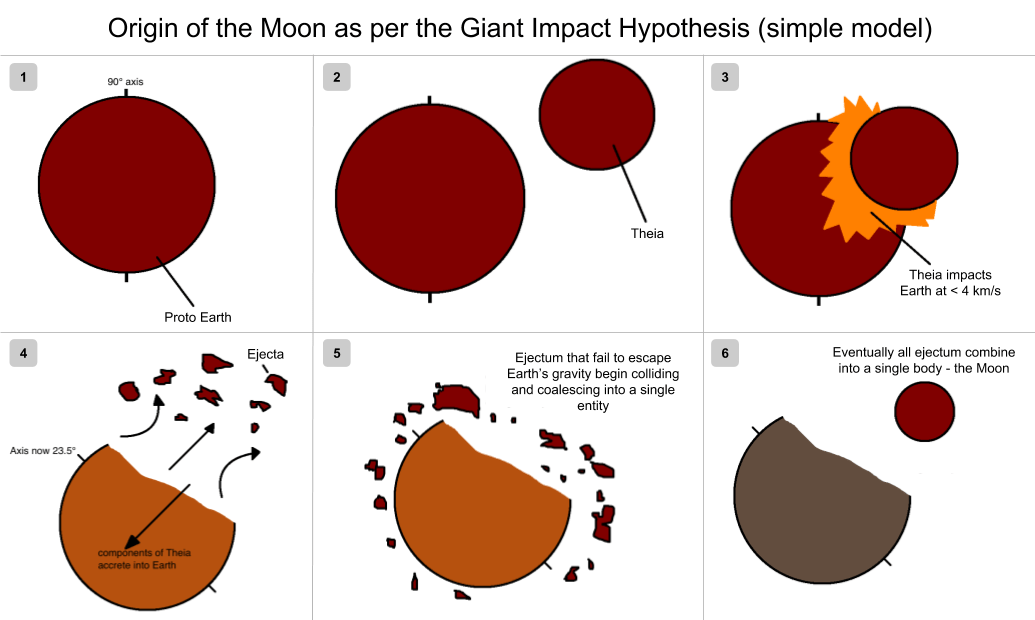
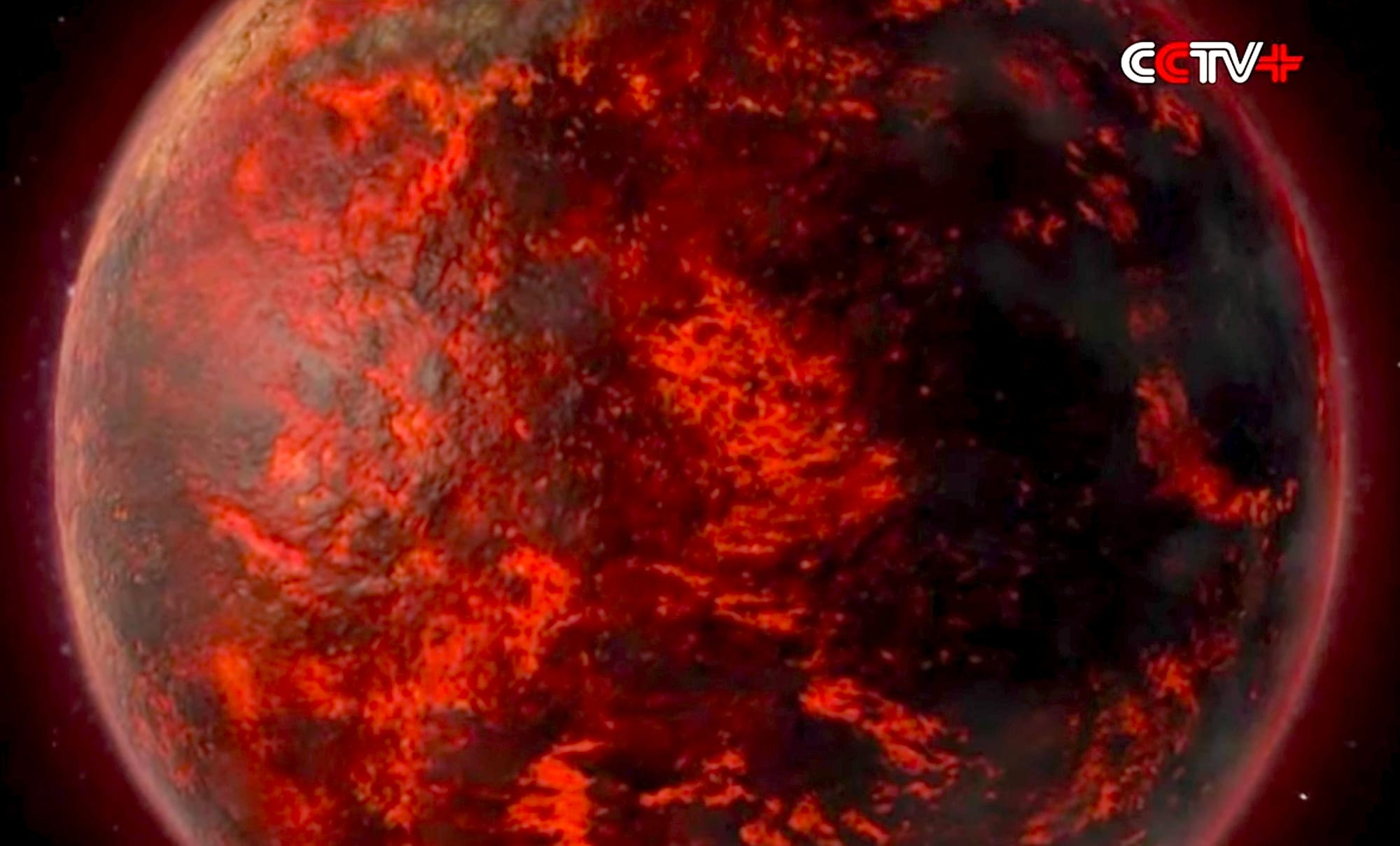
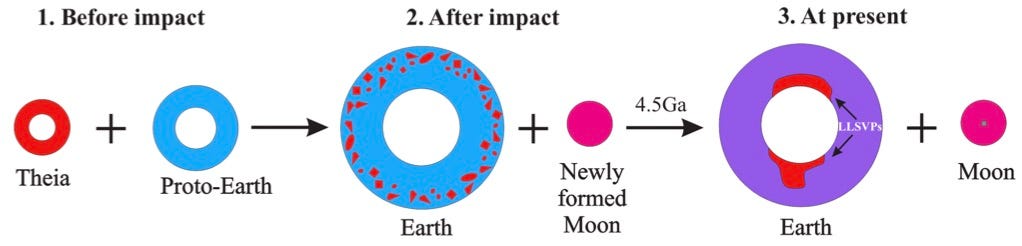
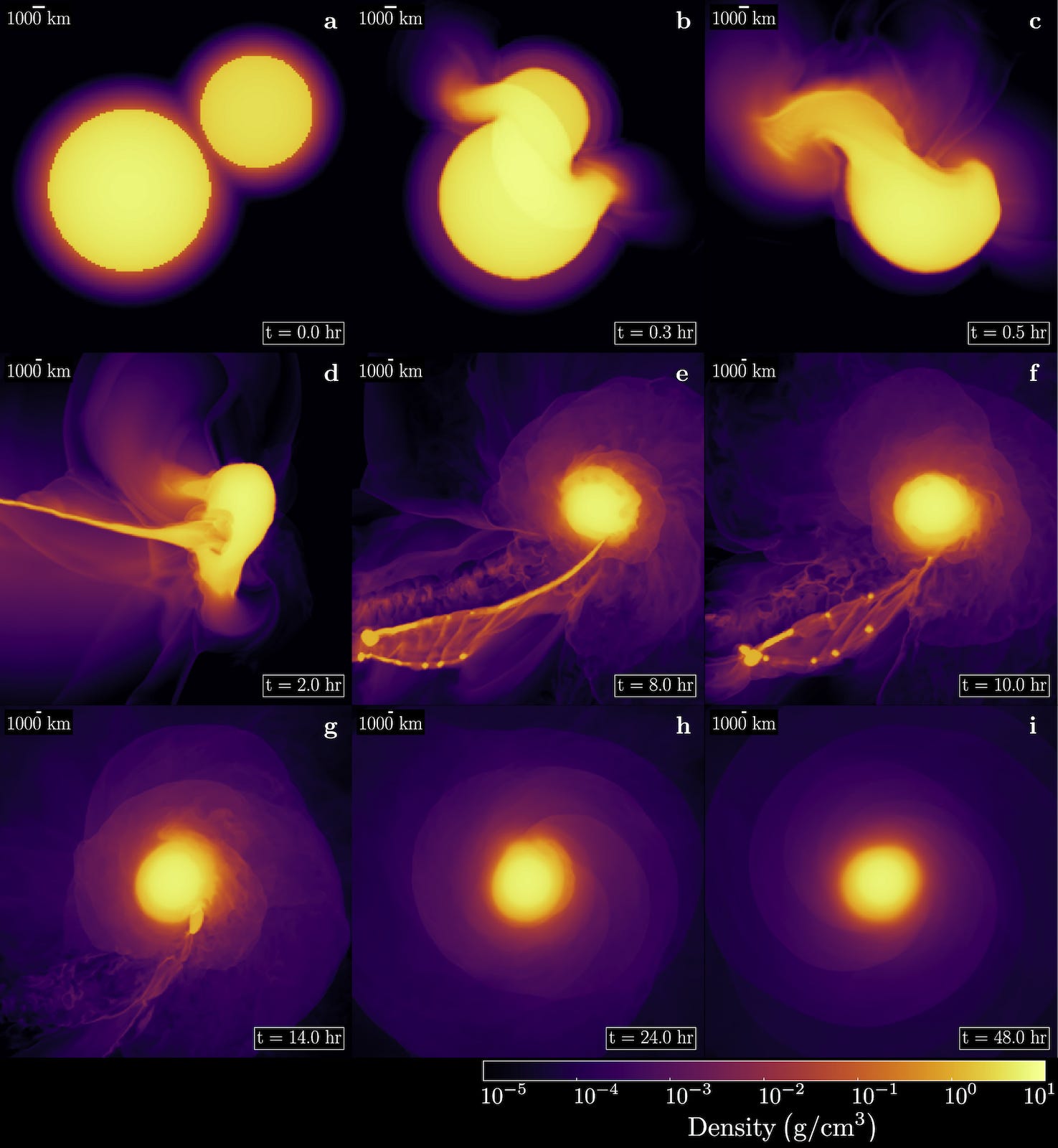
Over the decades, scientists have proposed multiple hypotheses to attempt explaining how the Moon came to be. In this article, I focus on the one with the highest consensus among scientists: the Giant Impact Hypothesis (GIH). According to the GIH, a titanic collision took place 4.5 billion years ago, when the planets had just formed in a still-chaotic Solar System. A young Mars-sized planet, named Theia, slammed into the newly born Earth. The blistering impact ejected a colossal amount of material. While some of this material escaped to space, the rest stayed in orbit around Earth and coalesced to form our Moon.
The best evidences for the GIH come from NASA’s Apollo Moon landings between 1969 and 1972, whose 382 kilograms of lunar rock, soil, and core samples brought to Earth allowed us to test multiple hypotheses in various ways. 300 grams of samples fetched by the former Soviet Union’s three Luna missions also contributed to our understanding. The picture of the Moon’s formation emerging from Apollo and Luna sample studies has been anything but simple. The results have been difficult to reconcile and interpret for scientists. Here’s a rundown of some key findings, both for and against the GIH.
Findings in support of the GIH
Magma ocean
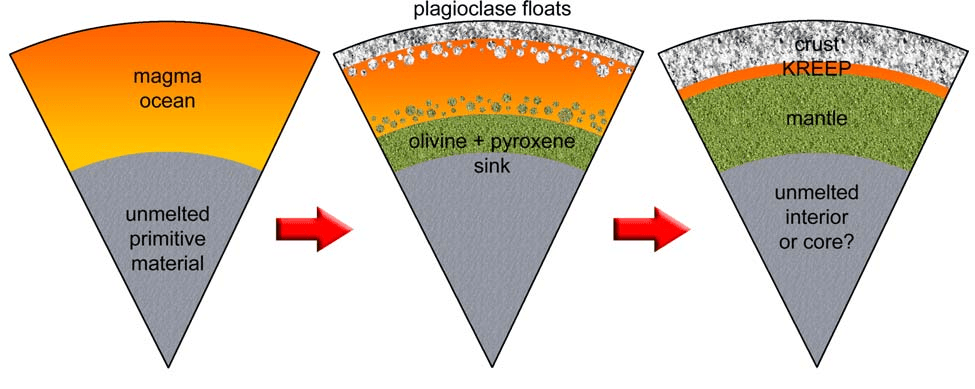
The GIH implies that the newly formed Moon post-Earth-impact must be in a molten state. Scientists have estimated our Moon to have been covered in a vast magma ocean at least 500 kilometers deep. Over time, this magma would crystallize to form the Moon’s mantle and crust. During this process, heavier minerals like olivine and pyroxene would’ve sunk to form the mantle. And lower density minerals, principally plagioclase, would float on top and crystallize into light anorthosite-based crust, which is what the bright “highland” regions on the Moon we see should be made of.
The GIH further predicts that during this process, any chemically incompatible elements in the magma would get sandwiched between the crust and mantle, forming what is known as KREEP-rich magma. KREEP is an acronym built from the letters K (Potassium), REE (rare-earth elements) and P (Phosphorus). The REE part encompasses heat-producing and radioactive elements such as thorium.
The very first lunar samples, brought to Earth by Apollo 11 contained millimetric fragments from the rocky highlands nearby. These fragments were not only found to be made of anorthosites but had KREEP-rich materials as well, suggesting a molten state for the ancient Moon and supporting the GIH. Samples from later Apollo missions and Luna ones supported the hypothesis too.
The lunar core
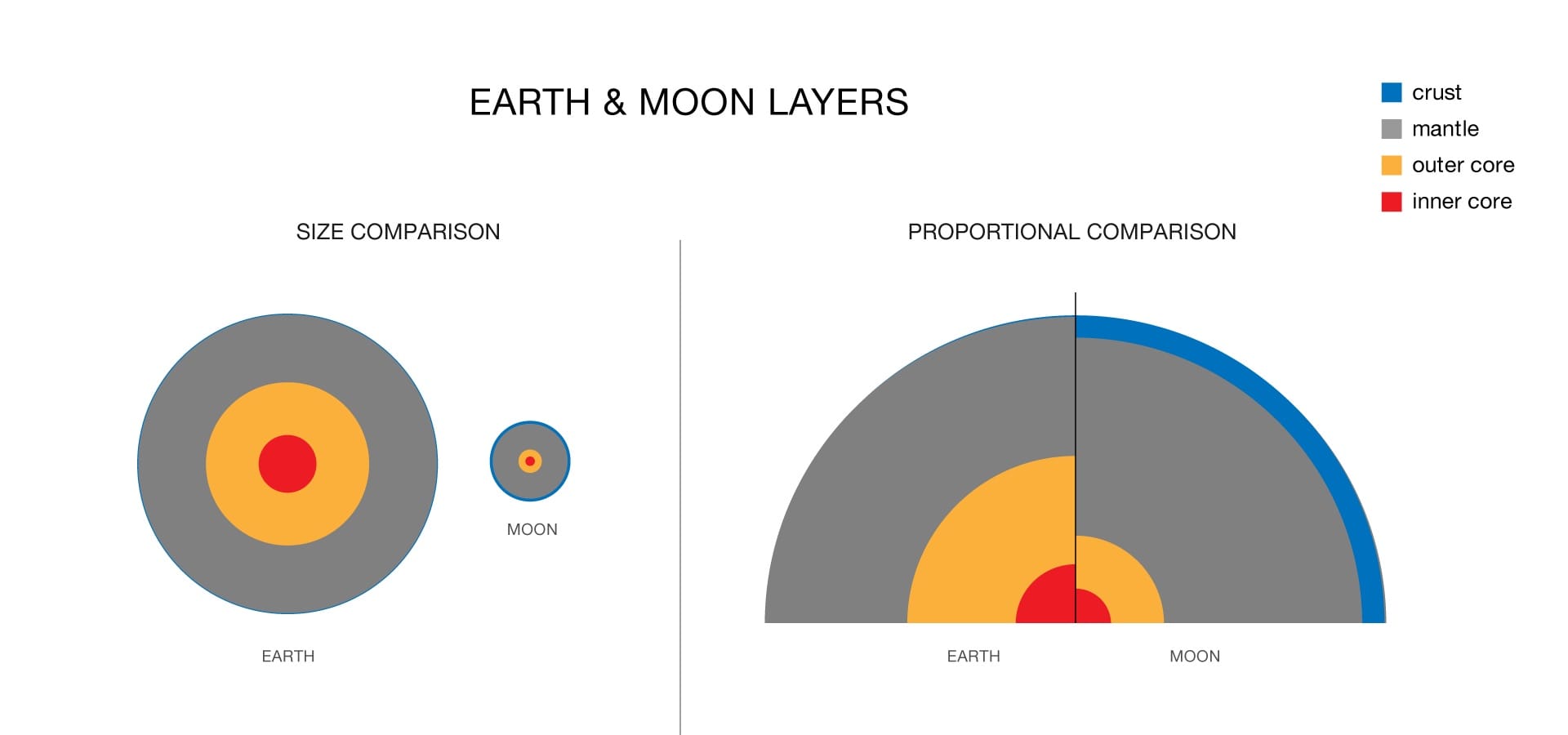
Also supporting the GIH were three independent experiments on Apollo missions that provided scientists insights into the Moon’s interior. Data from the Passive Seismic Experiments, Laser Ranging Retroreflectors, and Lunar Surface Magnetometers all implied that the Moon’s core shouldn’t be larger than 900 kilometers. That means the lunar core, solid and liquid combined, represents only about 25 percent of the Moon’s radius, in contrast to about 50 percent for other rocky planets like Earth. The GIH predicts that the Earth-Theia collision would result in Theia’s core getting absorbed into Earth, leaving a smaller core mass for the Moon. The calculated sizes of the Moon’s core from these three independent experiments thus agrees with the GIH. It’s also worth noting that Earth is the densest planet in our Solar System, which could be explained by the absorption of Theia’s core.
Volatile depletion
Another area of interest for the GIH is volatiles, which are elements with low boiling points such as nitrogen, water, carbon dioxide, hydrogen and more. Their low boiling points mean their abundances on planetary bodies deplete with time, inversely proportional to factors like the object’s gravity. On the Moon, large scale volatile depletion could’ve been due to two processes happening at different times: first, the evaporation of volatiles when the Moon formed and second, evaporation from ancient volcanism.
Scientists figured that studying isotopes—which are different subatomic forms of a given element—in existing lunar volatiles will help us know the Moon’s past. Since isotopes in volatiles deplete differently based on the nature of the event, the kinds we measure can tell us which and how much of the above two processes shaped the Moon of today. For example, lighter isotopes of Zinc would get evaporated in large amounts during the Moon’s fiery formation but remain unaffected by volcanic processes.
Scientists observed in Apollo samples that lighter isotopes of Zinc are less abundant than the heavier ones. This means large amounts of volatiles were indeed lost during the Moon’s formation, supporting the GIH prediction of a fiery formation of Luna from a volatile-rich Earth.
Findings against the GIH
Titanium isotopes
If the Moon indeed formed from the collision of two objects as the GIH posits, it should’ve inherited some of its material from Earth and some from Theia. One way to test that is to measure the titanium isotopic composition of the Moon and compare it to Earth’s. If the Moon formed from both Earth’s and Theia’s materials, its titanium signature should be a mix of both. Titanium is a good element to measure because it isn’t easily vaporized and tends to remain solid or molten even at high temperatures. Our Moon’s titanium abundances should thus roughly be in the same state now as during its formation.
Comparative analysis of titanium in Apollo samples indicates that the Moon’s titanium came from Earth alone; it’s not a mix of Earth and Theia. In stark contrast, meteorites found on Earth show two orders of magnitude larger variations in titanium isotopes, indicating their distinct and varied origins. How then could the GIH be correct?
One unlikely explanation is that Theia had the same composition as Earth but that’s a long shot. Computer simulations of the GIH collision by Caltech researchers in 2007 estimated the origin of various materials relative to the Sun, and how they would’ve been distributed across the early Solar System. They found the likelihood of Theia naturally having an identical isotopic composition to Earth to be less than 1%. And so for the Moon to have identical titanium signatures as the Earth is a major anomaly for the GIH. Many scientists call it the “isotope crisis”.
On the other hand, scientists proposed in 2021 that the two continent-sized regions discovered in Earth’s mantle with greater density, one beneath Africa and one beneath the Pacific Ocean, could be Theia’s remains. That between Earth and the Moon, the former would’ve absorbed most of Theia’s material not lost to space. In 2022, scientists published a study of six lunar meteorites, which concluded that the Moon’s noble gases like helium and neon come from Earth too, bolstering the GIH.
A shared water source for Earth and Luna
Much like the case with titanium, the isotopic compositions of lunar hydrogen and oxygen can be compared with that of Earth. The volcanic glass samples brought back from Apollo 15 and 17 had minor quantities of water in them. The isotopic composition of hydrogen in this water is nearly identical to that of water in Earth’s mantle. Likewise, the Moon’s oxygen isotopic composition, measured in Apollo 11, 12, 15, 16 and 17 samples, also show identical natures to Earth. When compared to other Solar System objects, such as Mars, the Earth-Moon system is thus compositionally distinct from them and identical to each other, with seemingly no trace of a distinct Theia in Luna. More recent and higher precision data suggests a slight difference in oxygen isotopes between Earth and the Moon, suggesting Theia’s presence albeit only minimally.
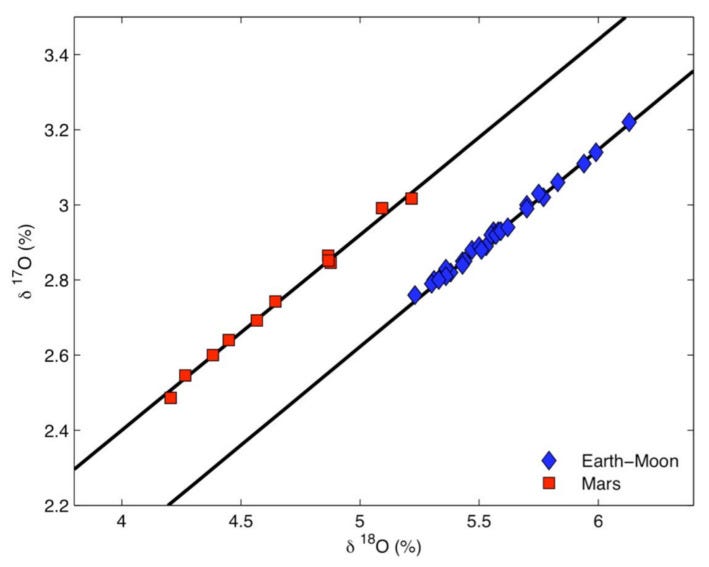
Iron isotopes of the Earth and Moon are identical too. Some of the latest measurements (open access) of iron composition and distribution in lunar samples, Earth rocks, and meteorites entrench the outcome but do suggest a slight variation possibility between Terra and Luna from a Theia formed closer to the Sun than Earth.
In any case, the Earth-Moon isotope crisis remains across all modern measurements at large across titanium, oxygen, iron, and so on. In oxygen’s case especially though, a much broader study is necessary because Apollo landing sites represent a small slice of the Moon’s diversity, all being near-equatorial and on the nearside. When scientists study lunar water ice and oxygen-rich polar soil samples fetched by future missions, and determine the relative contributions of various sources of the Moon’s water and oxygen, it will provide us a far firmer basis for any comparative analysis on the origins of Earth and Luna.
Chang’e and Chandrayaan contribute
Some modern missions have continued contributing to the endeavor of figuring out the specifics of our Moon and Earth’s origin story.
With robotic instruments for surface-only studies becoming increasingly advanced, scientists suggested in 2021 that even non-sample-return missions can now provide some significant insights with higher precision measurements that before, especially if performed in key and diverse places on the Moon. India’s Chandrayaan 3 mission falls in that category. It landed on the Moon’s nearside in August 2023 at the near-polar location of 69.37°S, 32.32°E, which lies far away from Apollo and Luna sampling sites. The Chandrayaan 3 rover Pragyan made lunar soil composition measurements using its X-ray spectrometer, finding it broadly similar to Apollo and Luna samples. This bolstered our Moon’s fully molten origin scenario as laid out by the GIH, or extended its validity to high-latitude regions on the nearside at the very least.
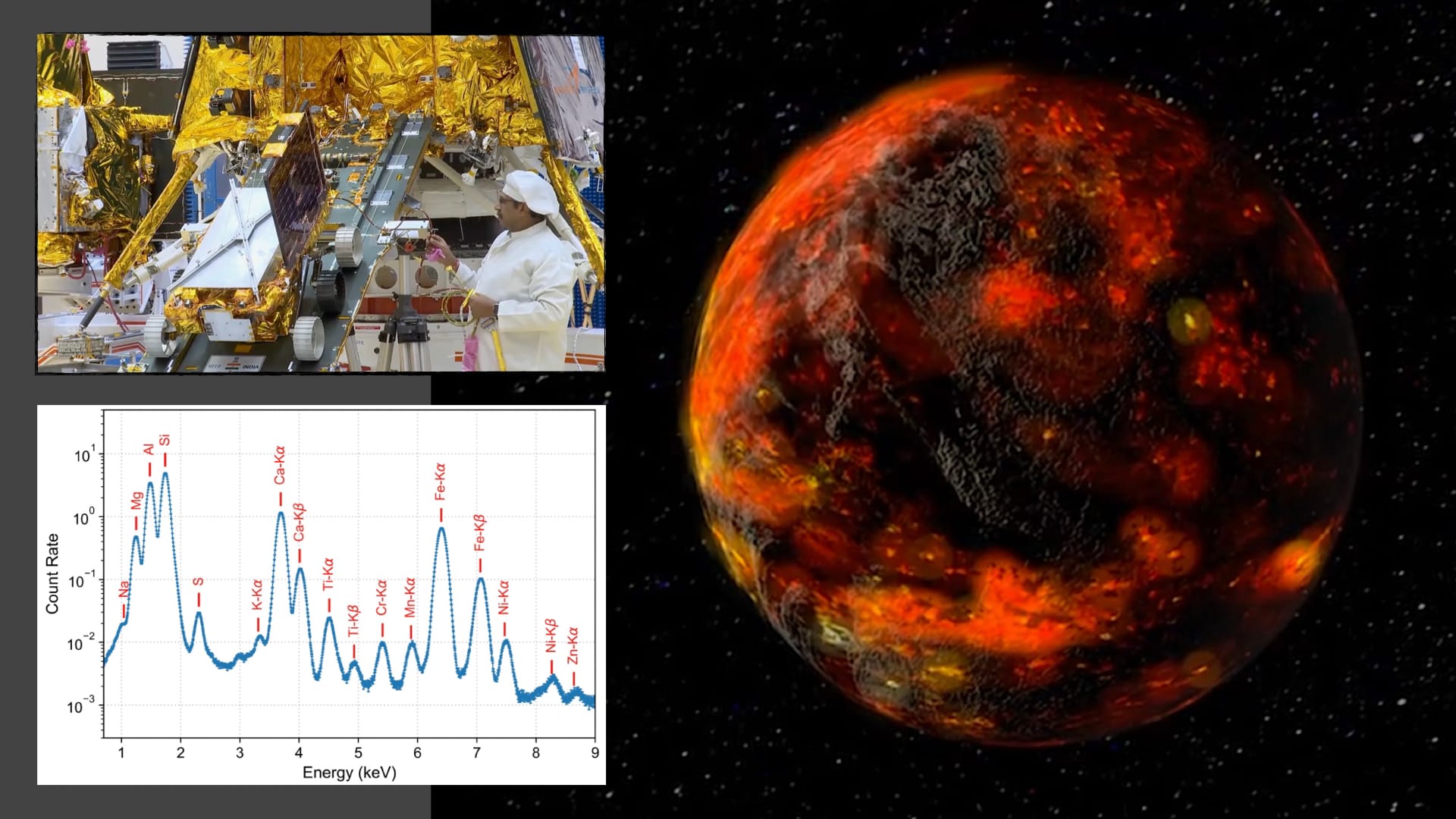
The fact that the elemental measurements came from a unique region on the Moon is important. Factions of scientists have been counter-hypothesizing that our Moon was either only partially molten (PDF) after its formation or that the lunar crust didn’t solidify homogeneously enough (PDF), both tenets opposing the GIH’s dominant global magma ocean model. Chandrayaan 3’s measured compositional ground truth thus uniquely casted a metaphorical wide net across the Moon. There’s also a small chance the rover might have stumbled upon lunar mantle material amid measurements of volatiles. Its detection of such materials makes the Chandrayaan 3 landing region a potential mantle sampling location for future missions and studies of the Moon and Earth’s origins. From the paper:
Prior to ISRO’s Chandrayaan-3 mission, there were no in-situ volatile abundance measurements from the lunar southern high-latitude highlands. Consequently, our understanding of the variations in the concentrations of volatiles across the lunar surface is constrained by the limited scope of measurements obtained primarily from lunar samples collected from equatorial regions. This points to a substantial gap in our understanding of the mechanisms governing enrichment-depletion of volatiles such as sodium (Na), potassium (K) and sulfur (S) on the Moon.
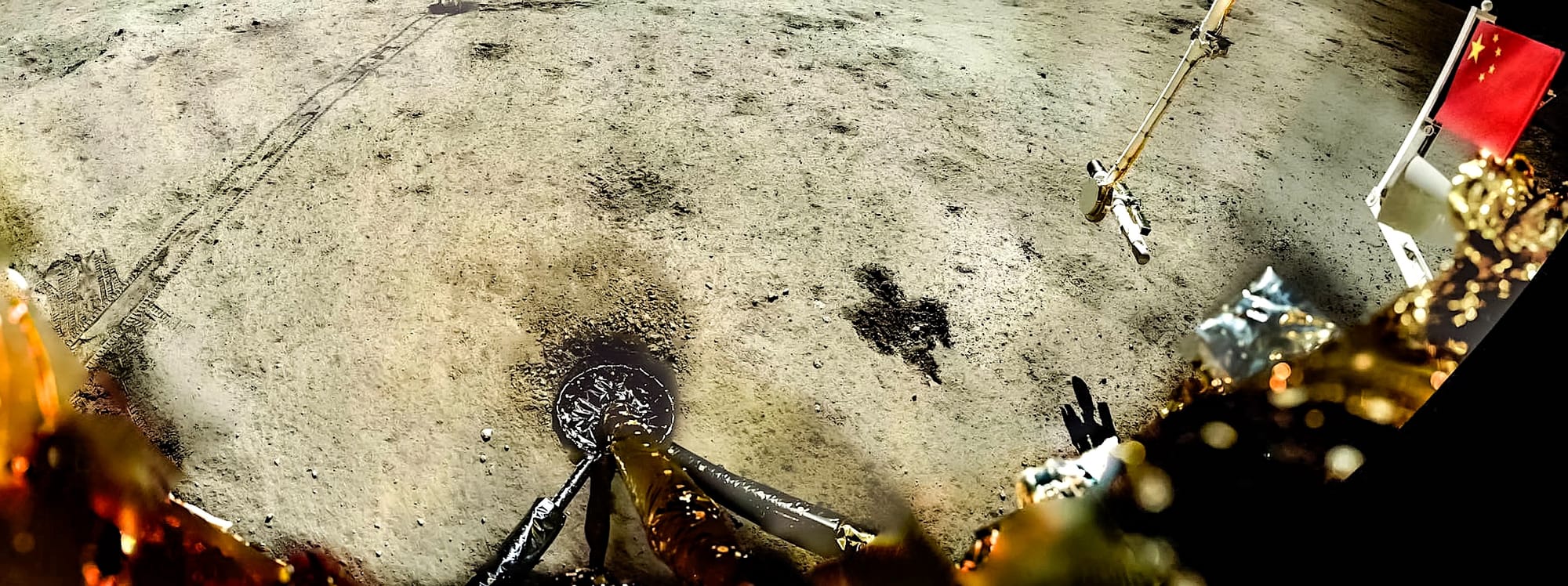
Of course, more grounded and more versatile studies still require and benefit from samples. In 2024, China’s Chang’e 6 spacecraft collected samples from the Moon’s farside, a world first. Since then, fervent studies of the samples have transformed our understanding of the Moon’s evolution by anchoring key events in the lunar timeline. In one such study, Chinese researchers analyzed two grams of Chang’e 6 samples and found the isotopic measurements of key chemical elements to be compatible with a fully molten young Moon. Chang’e 6 thus lent unequivocal credence to the GIH, anchoring a key event in our Moon’s origin and evolution.
Another Chang’e 6 study analyzing 578 particles revealed for the first time that the Moon’s farside mantle contains less water than within the nearside, another factor in the contrasting farside-nearside volcanic activity. The finding added to the debate on the topic in a grounded and unique way, favoring the GIH hypothesis that our Moon indeed lost a major portion of its water and its constituents amid a fiery formation.
Future findings
While various forms of modifications of the GIH have been proposed to account for deviances in evidences, the fact remains that specifics of the Moon’s and Earth’s origin stories are still a mystery. Despite the fact that Apollo missions landed in largely similar geological areas, they still transformed our understanding of the Moon’s possible origins. At the same time, its results left us with more knowledge but farther away from a firm conclusion, a common outcome in complex scientific research. Chandrayaan and Chang’e results added nuanced layers to our understanding gained from Apollo while opening new questions still.
To continue piecing together the complex origin and history of the Earth-Moon system, we need samples from new locations, including geologically pristine rocks below the lunar surface, the poles, and the farside. We need to probe the nature of water on the Moon’s poles and in the lunar interior to know their origins. A nice, detailed review paper, Origin of the Moon, summarizes recent advances in our knowledge. The paper highlights ten key datasets that would clear the dust on our Moon’s formation. This includes getting a better understanding of the role of magnetic fields, which likely accelerated the process. An intriguing inclusion in the list is measuring the isotopic composition of Venus so that scientists can get a better grip on what made the inner solar nebula, and thus Theia and early Earth. Upcoming missions to Venus from India, Europe, and the US could provide anchor points to that end. Researchers are also bringing advanced simulations to the field, overcoming limitations of past computational models and better analyzing possible compositions of Earth, Theia, and Luna. This will help researchers determine specific measurements future missions can make to help us know if our Moon has a blue origin.
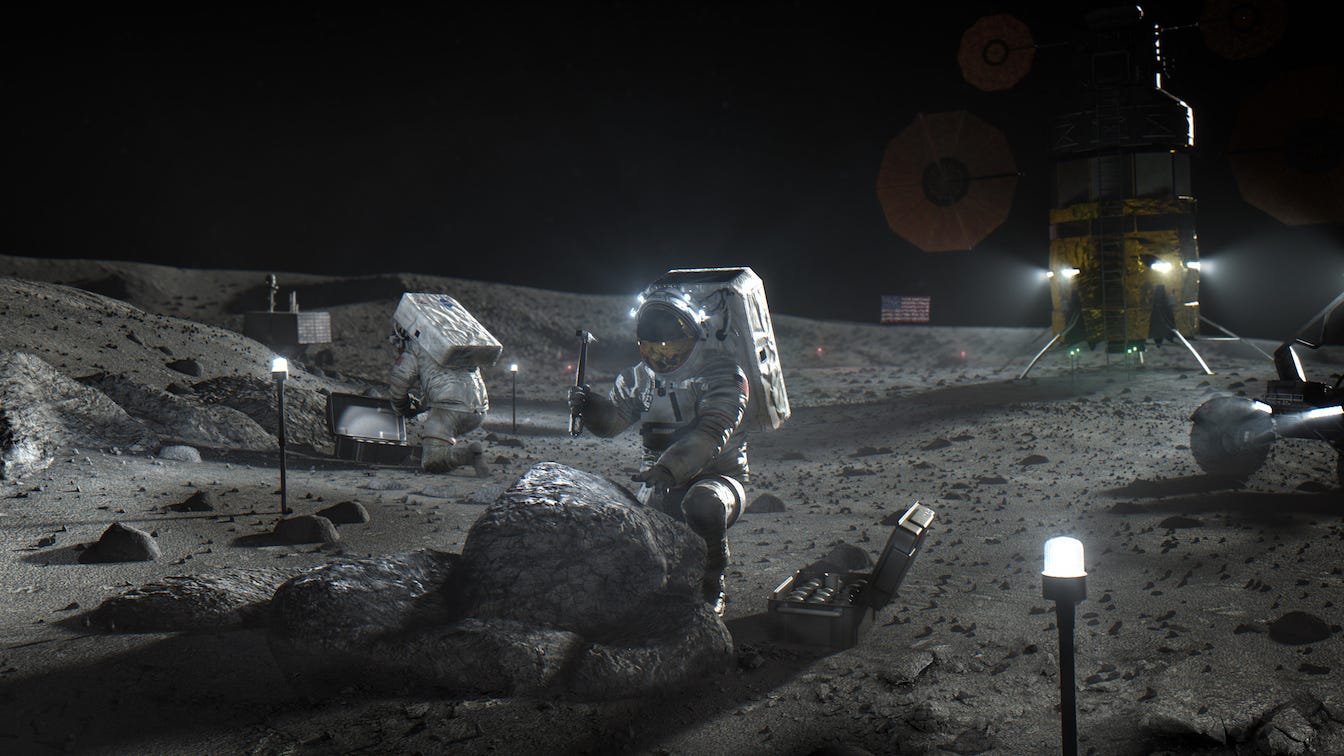
Later this decade or early next, India’s Chandrayaan 4 & Chandrayaan 5 spacecraft as well as multiple crewed missions from China and the US’ Artemis program aim to explore south polar sites. The region is intertwined scientifically to the Moon’s internal structure and thus its formation and evolution. The poles are also where water ice and other volatiles persist, allowing scientists to close in on the goal. Other than on-ground measurements by such missions and its findings, there will be detailed studies of samples brought by Chinese and US crewed flights as well as India’s robotic Chandrayaan 4. These samples are expected to host pieces of ancient crustal and potential mantle materials. Crewed missions in particular are expected to bring more diverse and more amount of samples over time. Much like Apollo, studying a fresh set of novel samples will likely transform not just how we look at our Moon and Earth but also the Solar System and beyond. Luna’s pristine interior compared to other geologically active worlds means it helps researchers understand the baseline layer of processes that drive the interior evolution of rocky worlds everywhere.
What a profound success it would be to unravel the origin story of our dear Moon and Earth. Being the most accessible and well preserved body in our Solar System to study fundamental planetary processes, our Moon beckons. 🌖
Many thanks to Alexandra Witze and Ajay Kothari for sponsoring Moon Monday. If you too appreciate my efforts to bring you this curated community resource on global lunar exploration for free, and without ads, kindly support my independent writing as it’s purely reader-funded. I don’t use AI to write a single word and cite everything.
The Apollo half of this article was originally published in 2018. The article has been significantly updated, rewritten, and expanded in August 2026 to reflect new research results and the updated landscape of missions. Thanks to Phil Stooke for fact-checking the original piece, which was republished by The Planetary Society, and featured in their Apollo at 50 celebrations.