With Artemis II done, challenges confront NASA to send astronauts on Artemis III and IV | Moon Monday #272
Key developments to watch out for this year as both China and the US aim to land humans on the Moon by the end of this decade.

Last week I argued how NASA’s Artemis II mission wasn’t a “science” mission even if its communications and majority media coverage have been getting people worldwide to believe so. Since then, my inbox has been flowing with emails from planetary scientists in support, who variably noted also its broader value in having certain distinctions and nuances when it comes to talking about space exploration and its terms. It’s so good to know that so many of my readers care about this issue. This is a good time to remind my dear readers that my Moon Monday blog+newsletter as well as my space writing at large is absolutely free to access by everyone. I display zero ads, and neither show signup walls nor paywalls. My work is purely supported by readers and organizations, and so if you find value in my writing and my curated community resources on global lunar exploration, kindly sponsor my independent writing and journalism to keep it going:
Challenges ahead for crewed Artemis Moon missions

- While the crewed Artemis II lunar flyby mission’s technical performance was largely smooth, the Orion spacecraft’s Europe-provided service module was launched with an internal leak of helium gas, The gas is used to pressurize the module’s oxidizer tanks for propulsion. NASA launched Artemis II anyway because the mission engineers characterized the leak as minor. The leak grew by 10 times by the time the astronauts were swinging around the Moon. NASA says this wasn’t a concern for the basic propulsion needs of Artemis II but added that the affected system will need to be re-reviewed and redesigned for the more demanding lunar orbit and landing missions in the future. This issue thus adds another constraint for the US to land humans on the Moon this decade, other than delays with its crewed landing systems and the spacesuit (more on that below).
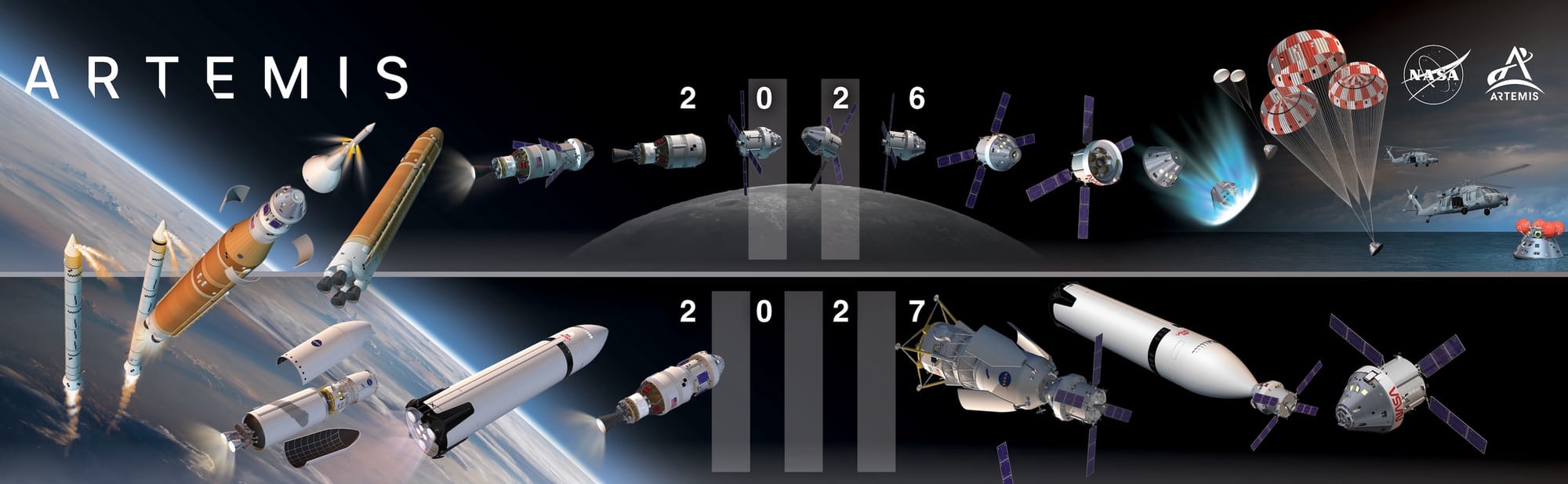
- NASA is targeting an H2 2027 launch for the next mission, Artemis III, which will see at least one prototype lunar lander approach close to Orion in Earth orbit for potential docking. While there will be no Moon landing for Artemis III, the mission will still have its challenges, given the lack of readiness of crewed landers being made by SpaceX and Blue Origin. Eric Berger has reported on a key challenge in realizing Artemis III:
SpaceX and Blue Origin must go through NASA’s extensive “human rating” process for their Starship and Blue Moon vehicles, respectively, before they can approach and dock with Orion. Also, it is non-trivial for SpaceX and Blue Origin to integrate with Orion, which has fairly strict limits for thermal management and other issues. Even ensuring roughly equivalent cabin pressures between two vehicles is a significant task. Completing all of this within the next 12 to 18 months will be a difficult hill to climb.
- In other preparations feeding into Artemis III, NASA will closely inspect and scan Orion’s heat shield from Artemis II to analyze its performance compared to Artemis I and its post-mission modeling work so as to ensure astronaut safety. Technicians will also remove reusable components from Orion—such as avionics, seats, stowage containers, etc.—for use on a future mission.
- NASA’s Office of Inspector General (OIG), which formally functions as an agency watchdog, released an assessment report on April 20 about the readiness of Artemis spacesuits to be provided to NASA by Axiom Space. The report analyzes past progress and pending milestones, concluding that the suits likely won’t be ready by the end of the decade. This would add an additional delay to the already delayed delivery of the suits. Marcia Smith highlights the key challenges identified by OIG:
On February 12, Axiom announced it had obtained $350 million in financing for the Axiom Extravehicular Activity Unit, or AxEMU, spacesuits. At the same time NASA said Axiom passed a contractor-led technical review and NASA would begin evaluating its readiness. Today’s OIG report notes the new plan, but remains cautious. Axiom is “proactively mitigating” supply chain risks and leveraging data from prior NASA efforts, but additional delays are likely “given the developmental nature of the spacesuits and the significant amount of testing and certification remaining.” The OIG identified three other companies — Genesis Engineering Solutions, ILC Dover, and SpaceX — NASA could turn to, but said the agency doesn’t think bringing someone new on at this point would accelerate the timeline.
- Last month, the long-planned and repeatedly delayed NASA-led Gateway lunar orbital habitat was effectively canceled as part of an Artemis rejig led by the agency administrator Jared Isaacman in favor of a surface Moonbase. The agency told at the time that it plans to repurpose Gateway’s modules for the lunar surface in any way they can. But that prospect too might face delays, as Eric Berger recently reported and confirmed that both the habitable modules of the Gateway have rusted due to a manufacturing issue at the source contractor Thales Alenia Space.
Aside: Chinese space reporting specialist Jack Congram posted a representative roundup of how Chinese media viewed and covered the Artemis II mission. It really helps to have a different perspective even for simple things we otherwise assume. For example:
No reports recognized the US’ perception of a so-called new space race, which China doesn’t care about.
As far as I can tell, there are no mentions in these reports of Artemis II having gone for all humanity either. If something really is being touted as for all humanity, I’d expect others part of that humanity to feel and say the same.
Key developments to watch out for this year
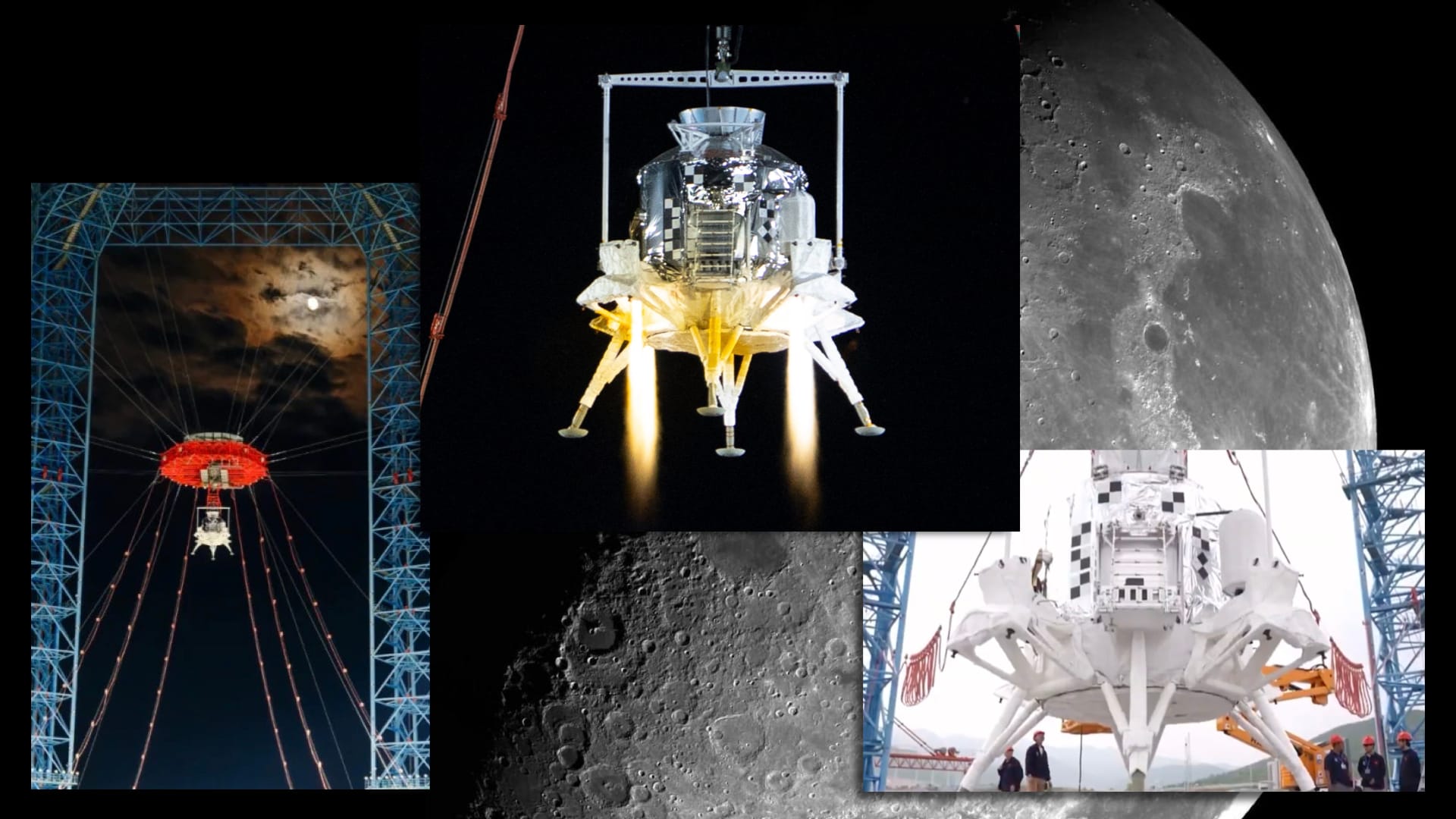
As China aims to land humans on the Moon by the end of this decade, and the US aims to “beat” the nation through a self-imposed “race”, here are all the related key developments to look out for this year on both sides.
- Things NASA has not yet shared about the Artemis rejig but has said it would later on, at unspecified times in the future:
- Details on the revised Artemis III mission and its exact objectives, and who its astronauts will be.
- What the accelerated proposals for crewed lunar landers being made by SpaceX and Blue Origin actually look like, especially in the case of Starship where a sea of key milestones remain untouched.
- Tests China will conduct this year in prep towards landing humans on Luna—with one major capsule escape test already complete.
- Launch of China’s Chang’e 7 mission to the Moon’s south pole in the second half of this year to directly study water ice and other volatile resources as a world first.
- The pace at which SpaceX achieves Starship milestones since the company and founder Elon Musk have now prioritized the Moon, following China, the US, and Blue Origin in that regard.
- Two things about the first lunar landing attempt by Blue Origin:
- Blue’s successful launch of its New Glenn rocket last January followed by another in November finally opened up a second line of pursuit for NASA to send lunar astronauts vis-à-vis Blue Moon. Amid NASA’s plans to accelerate the realization of Artemis crewed lunar landings, Blue Origin decided to pause the company’s other internal projects and focus most of its resources and efforts on the Moon. After a year’s delay, the company aimed to launch its first robotic Blue Moon ‘Mark I’ lander by the end of this year to test and validate key design decisions and systems ahead of their use in crewed flights. However, the failure of the third New Glenn rocket this month could delay Mark I’s launch further. Even as NASA and Blue aim to accelerate things, they need this mission to be a success to set things on the right path for Artemis crewed landings. How quickly Blue brings the New Glenn to flight again is something to watch out for.
- Based on the first Mark I lander’s expected performance, NASA has tentatively chosen the second Mark I’s 2027 flight to carry the agency’s VIPER rover—whose mission to study polar water ice has been critical yet deprioritized. Any kind of modified crewed Blue Moon lander will still depend on the two Mark I flights succeeding, and soon.
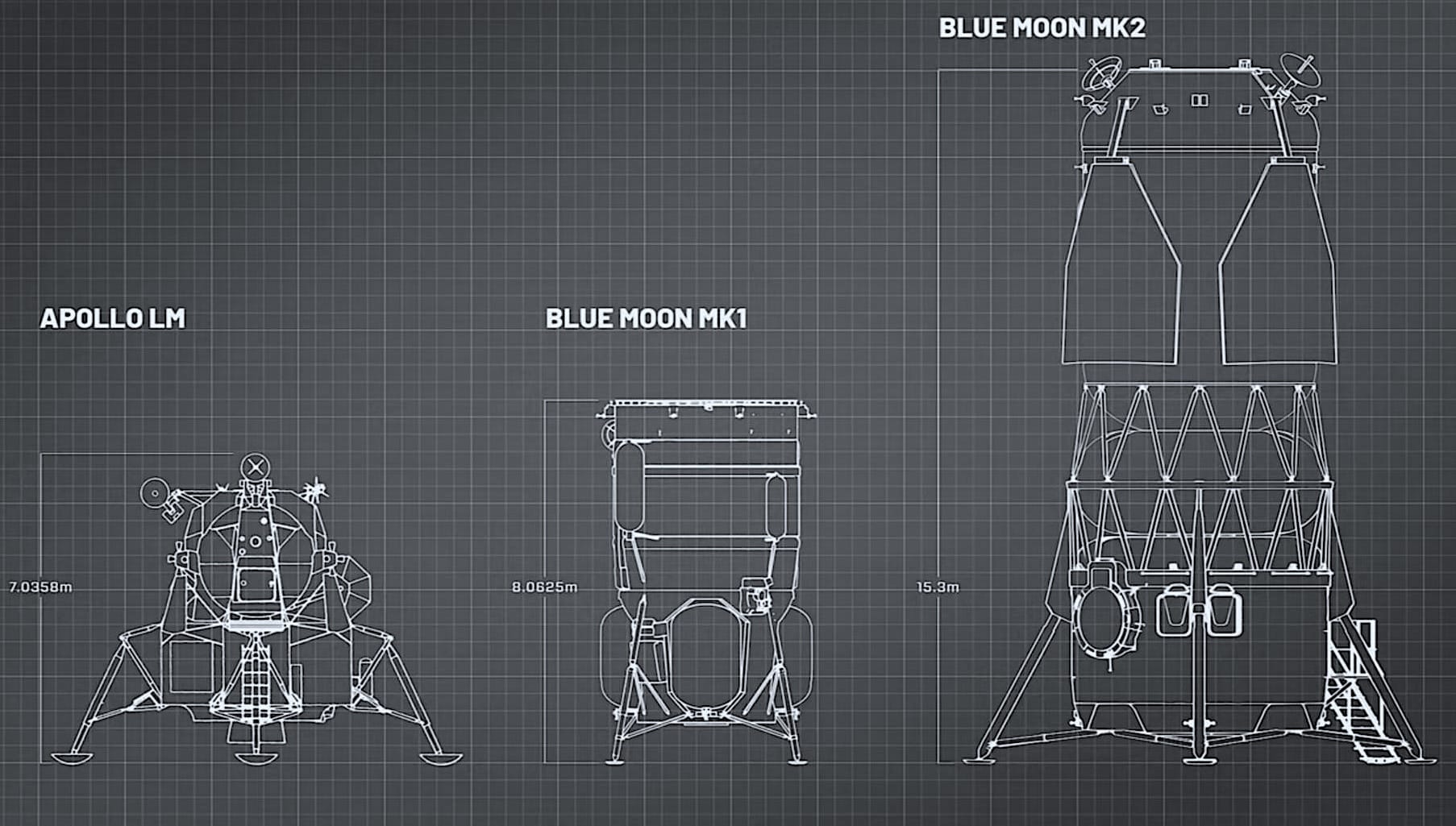
Despite NASA’s efforts to fast track Artemis crewed lunar landings, the short timeline and still-present complexity even in Blue’s landing system, which involves at least four launches compared to China’s focused two-launch approach, means that the US will likely not meet its self-imposed goal of “beating China” to the Moon. As noted before, China does not see this as a race. It might win anyway.
Either way, it’ll be amazing to have a second nation from Earth land humans on Luna. We should be happy that we now have two distinct efforts to sustain crewed and robotic exploration of our Moon. It gives humanity a better chance to do so since a dichotomic political system is apparently only able to do better under a competitive mindset driven by fear-mongering rather than through collaboration.
Many thanks to Dany Waller and Nathan Price for sponsoring Moon Monday. If you too appreciate my efforts to bring you this curated community resource on global lunar exploration for free, and without ads, kindly support my independent writing: