Did NASA’s Artemis II mission really do lunar science or go to the Moon for all humanity?
An unfortunate breakdown of too many giant leaps of imagination. | Moon Monday #271
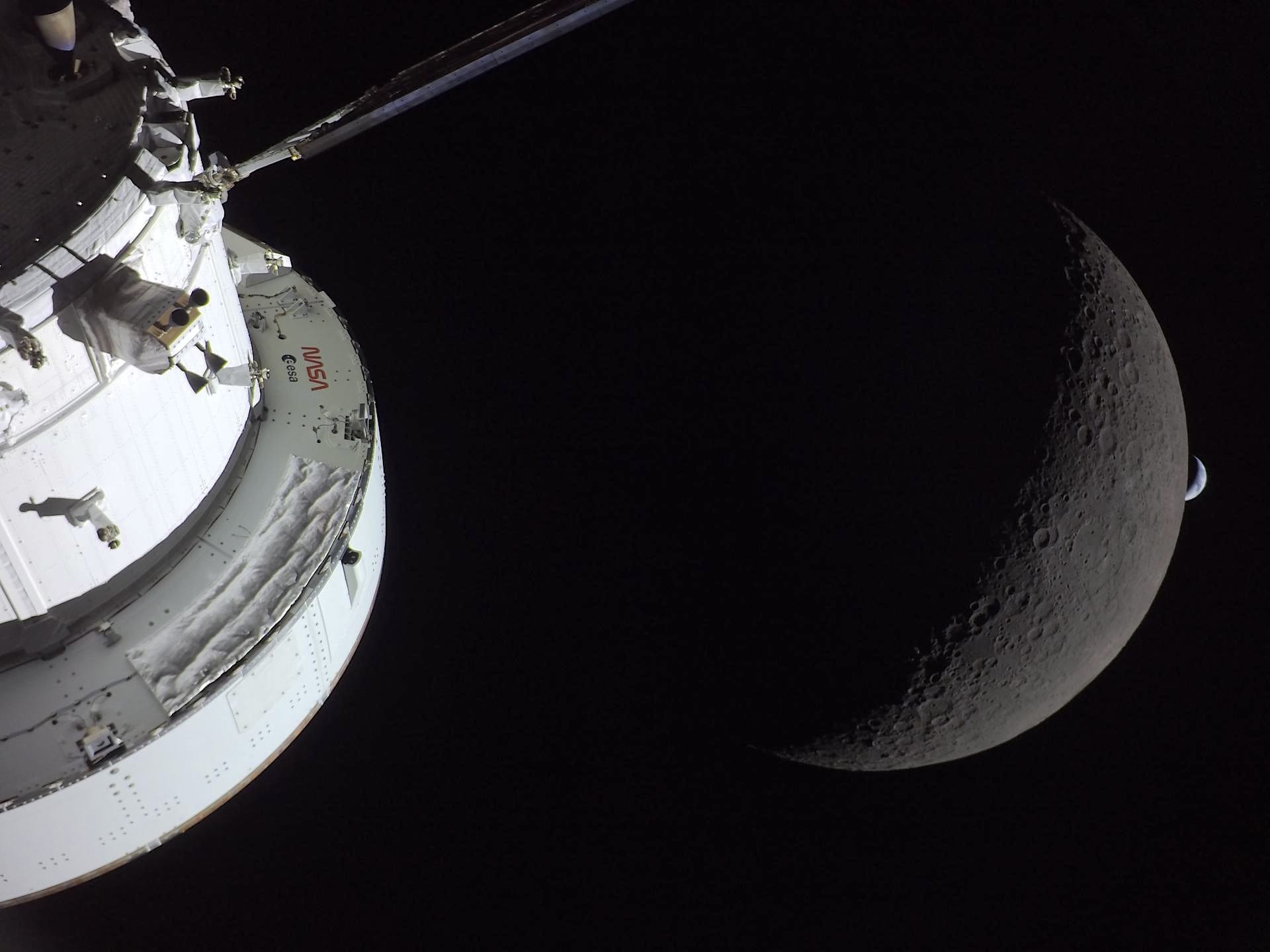
There’s an unsaid rule in the space industry: the more popular a mission or a program, the more inaccurate its broader coverage and public discussions, especially by people who aren’t thinking about space everyday. NASA’s Artemis II mission and its four astronauts flying around the Moon naturally had its share of whimsical coverage and social media fluff too. But what stands out here is that NASA itself has unfortunately been a source of misinformation. The US government’s revered space agency has touted the mission to have done substantial lunar science during the flyby, and the US government at large has framed the mission as one going “for all humanity”.
Before you get your pitchforks out, especially if you aren’t a regular reader, kindly consider that I’m not an outsider to the space industry who is arguing in bad faith with no understanding of spaceflight or space science. I’ve spent the last 7+ years extensively promoting the exploration of our Moon and space by countries and organizations worldwide. I love and cheer all civil lunar missions, whether they be robotic, crewed, or from any country. However, being a journalist and science communicator means I can’t be on cheering mode all the time. And being a writer and human means I can’t ignore humanity. Artemis II was an amazing technology demonstrator mission but cheering for it does not mean we also have to cheer for what the mission did not do, as we’ll see below. Remember that scientists and engineers are humans too. In peak emotional moments, of which Artemis II gave us many, we humans tend to lose objectivity at what seems like the speed of light. That’s alright during a moment but not when we stretch it well beyond. I’ll be glad to receive responses and rebuttals to my article because the goal is to improve our collective communications of the Artemis II mission. And if NASA itself provides more detailed explanations on its website which patch what all their existing statements don’t, that would be perfect. With that disclaimer and context, let’s begin the unfortunate breakdown.
The hoax of Artemis II selecting landing sites
The Artemis II mission has been officially portrayed as helping select landing sites for future crewed Artemis lunar surface missions. NASA said it multiple times amid Artemis II livestreams, and so did its mission scientists, with many media outlets playing along. Here’s a representative note from a NASA release:
Artemis II astronauts will observe the Moon during their 10-day mission around the Moon and back, taking photographs and verbally recording what they see. Their observations will support science objectives and provide data for potential landing sites for future Moon missions.
Let’s start with the fact that Artemis II did not even orbit the Moon. The four astronauts inside the Orion capsule flew about 6500–7000 kilometers from Luna at their closest approach. The flyby lasted less than seven hours, with the actual duration of the closest observations being even shorter due to nighttime passage and other visibility factors. That’s not enough time to do new lunar science for the most well studied planetary body after Earth, much less select any landing sites.
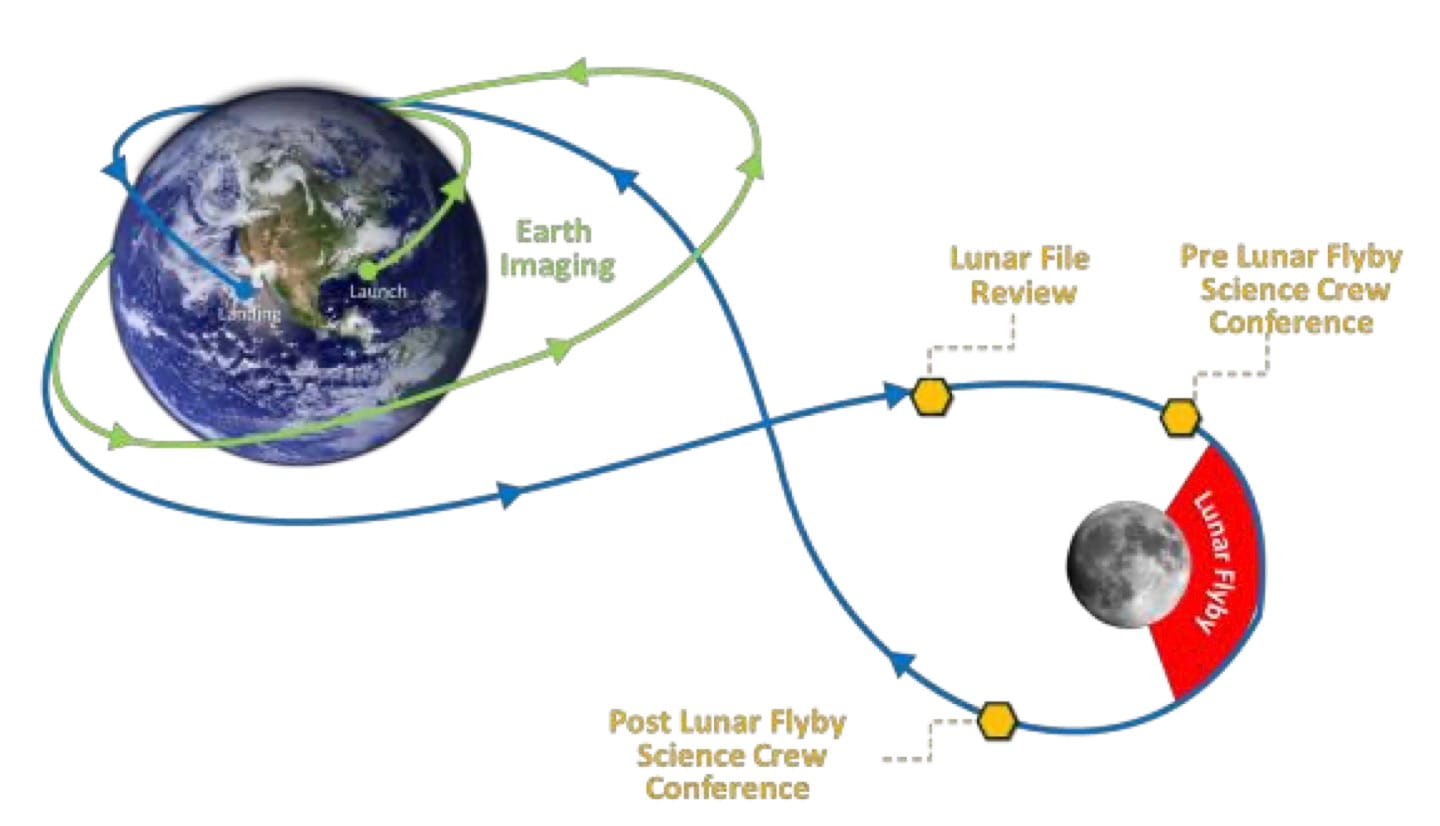
For contrast, consider NASA’s own robotic Lunar Reconnaissance Orbiter (LRO) launched in 2009. Since over 15 years now, LRO has been flying in polar and near-polar orbits within 100 kilometers of the lunar surface. Not only is LRO about 100 times closer to the lunar surface than was Artemis II, its orbit is the kind required for any systematic mapping. LRO has provided us global coverage of the Moon, across varying seasons and lighting conditions. Artemis II flew past the Moon for mere hours, not years, and saw only 20% of its farside—from about 100 times the distance of LRO. As for the Moon’s nearside, not only has it been better studied by robotic orbiters like LRO but also observed by Apollo astronauts from low lunar orbit in more detail than Artemis II astronauts could even theoretically see from long approach distances.
The planning of all 21st century Moon landing missions has been possible in part thanks to the over 1.6 petabytes of data from LRO. Even Artemis II’s own flyby leveraged LRO’s Moon mapping. For the process of selecting landing sites for crewed Artemis landing missions, NASA has been using LRO’s imaging and topographic observations to assess scientific value and engineering feasibility of various places. The agency has also been getting aid from India’s Chandrayaan 2 orbiter to leverage its superior imagery and radar system than LRO for filtering among the candidate sites. LRO’s best case imagery with its Narrow Angle Camera (NAC) is pretty sharp at 0.5 meters/pixel but the Chandrayaan 2 orbiter’s high-resolution camera peaks at 0.25 meters/pixel, the sharpest in the world. These orbiters tout sub-meter imagery because scientists and engineers involved in any surface mission planning require the same to match the physical scale of landers and rover trying to safely reach and explore the surface. By comparison, the naked eye resolutions of Artemis II astronauts viewing the Moon during their flyby was about 1,000 times less at its best. Even when paired with the 400mm lens on one of the Nikon cameras onboard Artemis II, the resolution still fares over 100 times worse than LRO and Chandrayaan 2. And Artemis II did not provide the kind of topographic data the orbiters do.
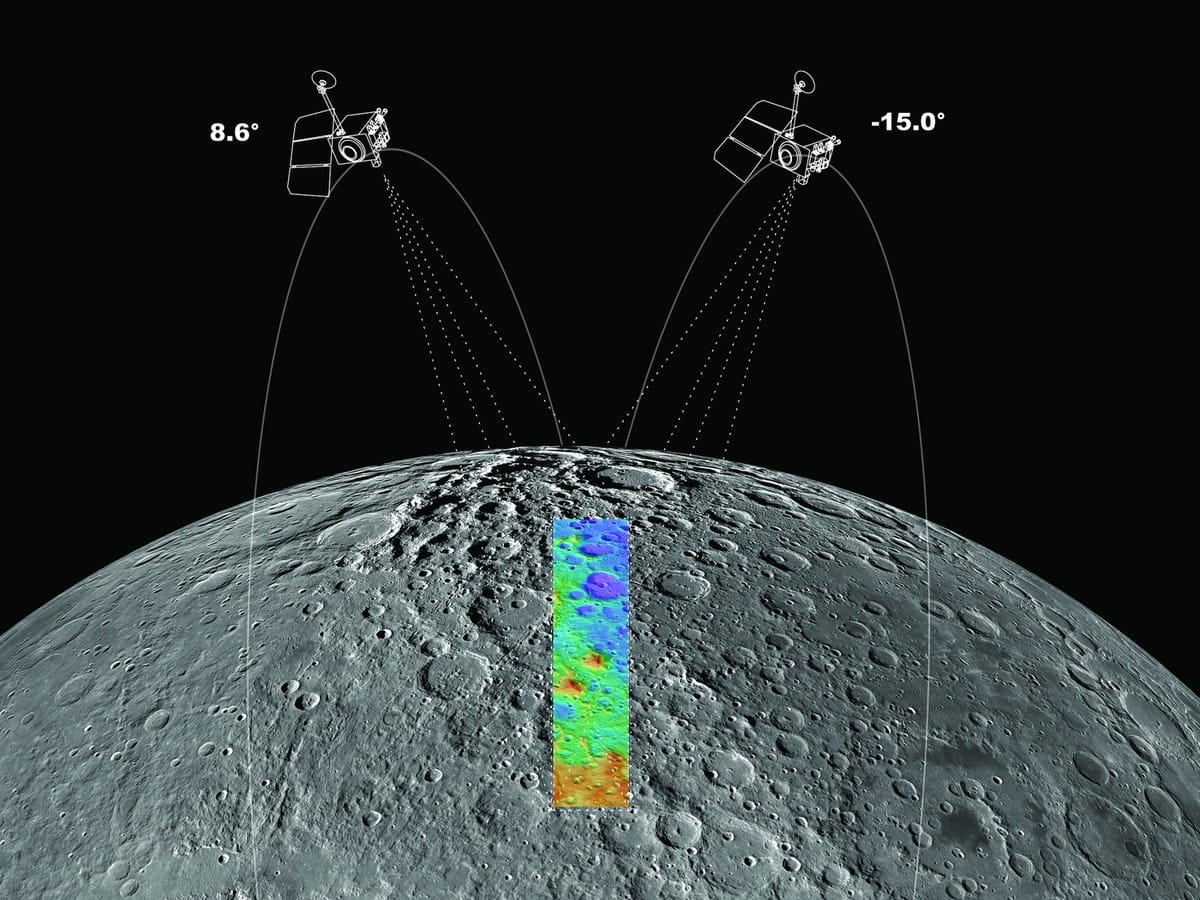
Moreover, never mind the fact that even the “closely” visible locations during the Artemis II flyby didn’t include the south polar candidate sites of the future Artemis IV landing mission. Nor could the astronauts see permanently shadowed regions because of their very definition—but which is where global interest is converging due to its potential for water ice and other resources being harvested for lunar construction. Obviously, LRO and Chandrayaan 2 being polar orbiters study these regions for real. And so can South Korea’s KPLO orbiter, including NASA’s ShadowCam instrument onboard which has been capturing unique observations of permanently shadowed regions to help plan future surface resource prospecting missions.
But according to official sources, we are supposed to believe that a few hours worth of Artemis II observations of a handful of lunar sections from several thousands of kilometers away will help select landing sites? If Artemis II was to really fly around the Moon to do lunar science, NASA would’ve at least timed the flyby such that more of the lunar farside is sunlit for astronauts. As Alexandra Witze reported on Nature:
The Moon and Sun are in a geometry such that only 20% of the lunar farside will be illuminated by sunlight when the astronauts fly by it, according to NASA. That’s a bit of a disappointment because many parts of the lunar far side have never been seen in sunlight by human eyes before, and scientists were hoping for a wider swathe to be visible.
And thus if science was anywhere near a priority for Artemis II, NASA would’ve launched the SLS rocket towards the end of its April 1st week launch window at a minimum so that more of the Moon’s farside would’ve been visible to astronauts and their cameras. The reality is that, as usual, scientists simply tried to get what they can amid constraints of someone else driving the car and dictating the destination. Any lunar science generated from Artemis II was transient and basic at best based on what is essentially a random flyby compared to the systematic mapping carried out by actual planetary science missions. This also applies to the observations of impact flashes by astronauts during the 40 minutes of their nighttime flyby. These transient observations of meteorite impacts are exciting but in no way statistically significant. To truly characterize the flux of such impacts is only possible through seismometers and dedicated optical observers over long durations, measuring in months and years not a random hour. Upcoming missions dedicated to optically observing and characterizing lunar impact flashes for real are ESA’s LUMIO satellite and China’s Lunar Flash orbiter.
Humans seeing hues vs. the entire electromagnetic spectrum
With Artemis II’s public communications, NASA and its scientists repeatedly highlighted color and hue variations on the lunar surface as indicators of geologic interest, with these being purportedly better visible to astronauts than robotic eyes. “Right away, they [the astronauts] started describing the green around Aristarchus plateau and different brown hues, and these colors really help tell us nuances about the chemistry of lunar material,” said Kelsey Young, the lead scientist for the Artemis II flyby. While that may be true, it’s not an unknown fact by any means, known in better detail in fact due to orbital observations like that from LRO, which helped guide the Artemis II astronauts and scientists in what to look for to begin with. Media reports have stated, with unspecified numbers, that with the 400mm camera lens the Artemis II astronauts could see the Moon at resolutions “theoretically” comparable to LRO’s low-resolution color camera called the Wide Angle Camera (WAC). Even if really comparable, comparing also the Artemis II flyby’s ultrashort time duration and limited area coverage to the global coverage of LRO WAC under varying lightning conditions over 15 years is an unsubstantiated—or at least unspecified—giant leap to take, bothersome for any scientific mind.
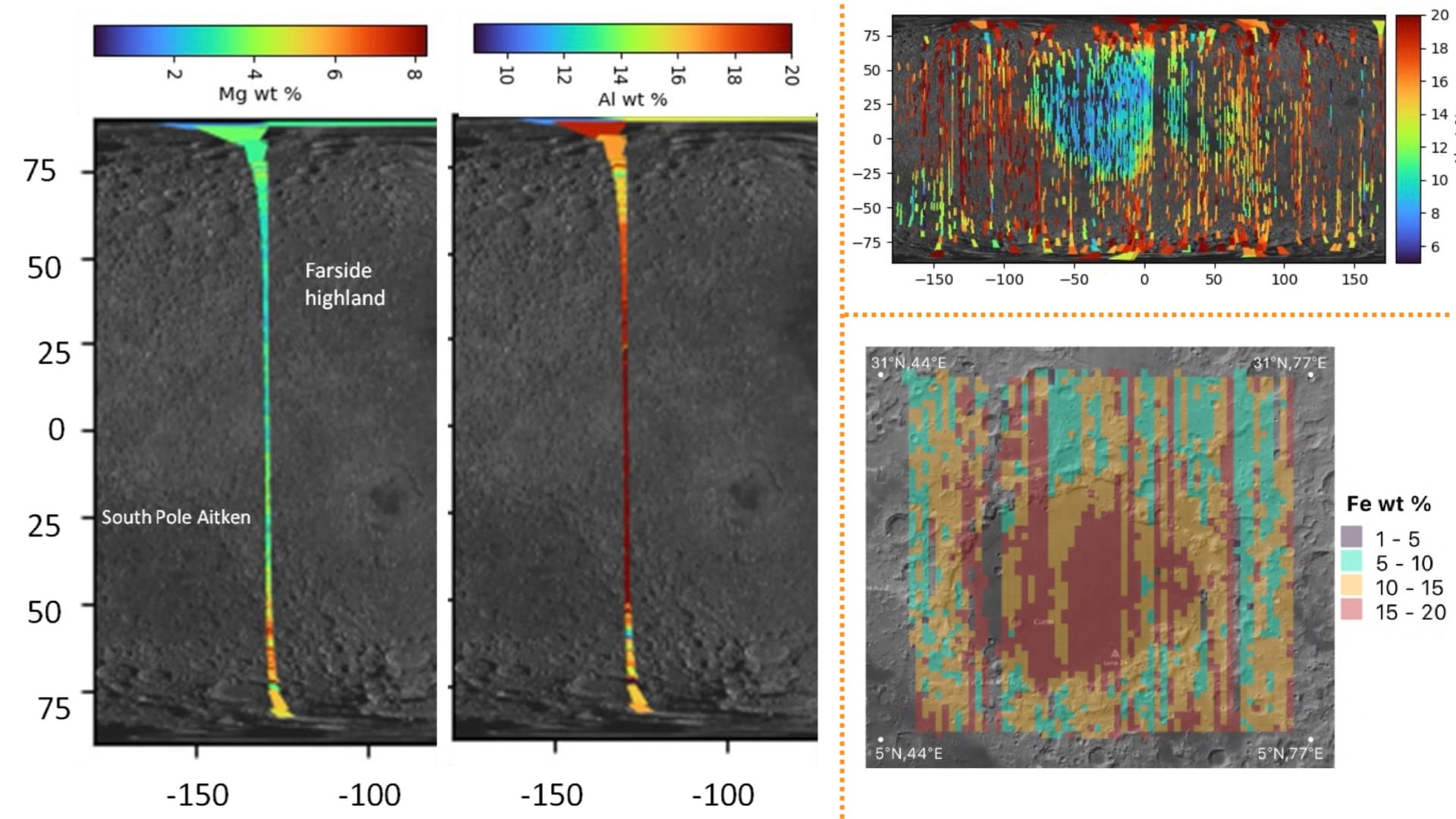
Because we’re talking about science, consider also what human eyes can’t see. We can’t see in ultraviolet, infrared, X-rays, or gamma rays, among other wavelengths of light. Orbiters, however, have been observing the Moon across these wavelengths because humans know how to build such instruments. For example, the Chandrayaan 2 orbiter maps elements on the lunar surface based on their X-ray emissions. Chandrayaan 1’s NASA-provided infrared spectrometer discovered water on the Moon, which has been an integral factor to the birth of the Artemis program itself. More such instruments have revealed way more about the Moon’s physics, chemistry, minerology, and geology at large than a few human eyes can from short period optical hue observations at large distances.
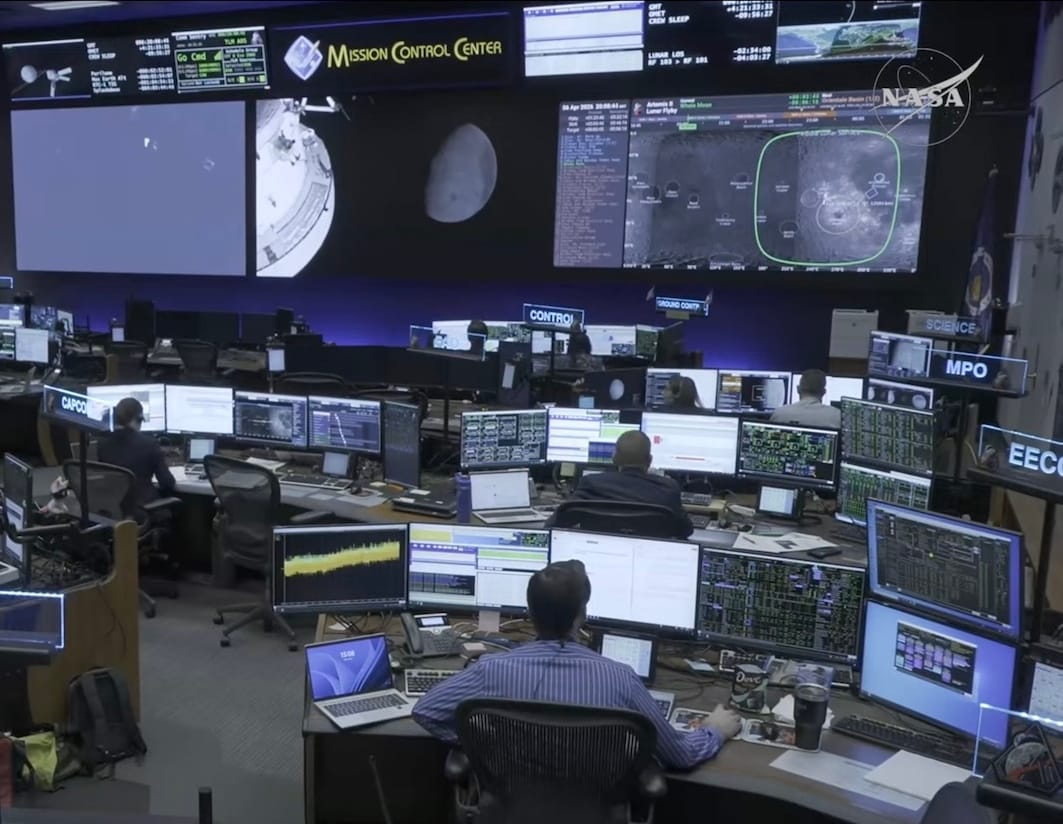
Also never mind the fact that humans are not reliable narrators. Here’s an aspect of Artemis II observations from Alexandra Witze’s behind-the-scenes story who was present in the science room part of the overall mission control:
The researchers had a precious 20 minutes to ask the Artemis II crew follow-up questions about their lunar observations, before the astronauts’ memories faded. “This is going to be tightly choreographed,” said Jacob Richardson, NASA’s deputy lunar-science lead who was now in charge.
Moreover, if human eyes were so valuable in a scientific mapping context, we would be seeing way more active usage of human observations of Earth from the International Space Station and of Apollo astronauts’ low lunar orbital imagery for calibration purposes. In fact, NASA itself launched the Arcstone satellite last year to Earth orbit with the express goal of calibrating imagery of our planet captured by hundreds of Earth observation satellites based on Arcstone’s accurate measurements of lunar reflectance. For all the talk of astronauts spotting albedo variations, human observations of the Moon or Earth are not being used to calibrate scientific observations even in the optical wavelength. Furthermore, planetary robotic spacecraft often calibrate their radar systems based on prior robotic radar observations of the Moon because it’s such a well studied planetary body compared to others. Human eyes definitely can’t do that.
How does one fathom and seriously take momentary glimpses of our Moon by astronauts from large distances as being competitive with orbiters who have provided us with comprehensive global coverage, invisible-to-us detail, and systematic streaks of observations to specific ends? To portray Artemis II lunar observations as doing lunar science and helping select landing sites in any serious capacity is to simultaneously mock and downplay the work and efforts of real planetary science missions and their scientists, including NASA’s own.
Defining what Artemis II really did matters
Countering common counter-arguments.
Planetary scientists outside of NASA thankfully seem to have not portrayed Artemis II as being a “science mission”—but they also haven’t voiced against it. That practicing scientists both outside and inside NASA haven’t been able to voice against the obvious fluffiness of Artemis II’s “lunar science mission” portrayal is concerning. It follows a trend of communications shortfalls from NASA, an agency that once proudly pioneered effective science and technical communications to the public for decades, elevating understanding of space exploration worldwide. If scientists can’t even voice out against something obvious to them in non-political scenarios, like Artemis II not being a science mission, then how will they speak up amid serious geopolitical issues at the Moon’s south pole in the future where science can be and will be weaponized?
To see scientific minds praise Artemis II for lunar science while NASA’s entire science division is being gutted with massive budget cut proposals yet again is disappointing. It can be argued that last year’s proposed budget cuts for NASA science did not pass through the US Congress, and so maybe this time around the outcome would be similar. Even if so, what it doesn’t consider is that the US White House stalled those budget releases despite Congressional approval, that NASA prematurely implemented proposed budget cuts without them getting enacted, and that NASA has also lost or let go of thousands of people since the Trump administration’s term began last year while. This includes closing the Office of NASA’s Chief Scientist. Moreover, when the NASA administrator itself supports the budget cuts, we cannot let hope alone define our views.
Operations and scientific intentions
Now, there is a nuanced element to Artemis II’s lunar observations. All Artemis II activities are certainly useful operationally to enhance coordinating the science team with mission control as well as astronauts for future crewed lunar missions. The geology training of astronauts is also useful in that context of streamlining operations of future surface missions. During the Artemis II lunar flyby livestream, it was enjoyable to hear the coordination between teams, and see that excitement about the pure act of planetary observation. However, these general benefits of training and operational aspects were always there. That’s not the same thing as science from the mission specifically. And it doesn’t make science a mission objective. There are also limits to what such operational coordination can teach us about surface missions when astronauts are this far from the Moon.
Artemis II was a pure technology demonstrator mission for the US to operationalize two of three key elements required to land humans on the Moon again. It did well at that. Whenever NASA called Artemis II a test mission during its coverage, that’s the time when the agency was portraying Artemis II accurately without any fluff. Other times, not so much. Of course, just like how Apollo missions transformed our understanding of the Moon and Earth, future Artemis surface missions are expected to unlock a host of planetary science insights. Without success on Artemis II, combined with the successes of upcoming landers, there can’t be US lunar surface exploration with Artemis IV and beyond. That doesn’t make Artemis II a science mission in itself though. Otherwise, taken to its logical conclusion, the same argument can make nearly any space technology mission a science one.
If we count transient and basic, emergent science from a random enough flyby as a science mission, we will end up classifying pretty much every mission as a science mission. Then what do you call planetary missions which produce specific kinds of papers numbering in the hundreds on niche scientific areas it intentionally targeted? Super duper hyper science missions? If Artemis II is a science mission, so would be India’s Mangalyaan Mars orbiter against all evidence. Any such spacecraft that happens to produce a few scientific papers without specific enough science goals is not a science mission. Otherwise we will be left with no good indictors of scientific output and intent to distinguish between missions.
Public perception
Since Artemis II garnered broader public interest in space than typical spaceflight activities, it’s also prudent to think about what we teach the public during such times. The Artemis II launch livestream seems to have had about 10.4 million concurrent viewers, a record high for any stream on YouTube. ISRO’s Chandrayaan 3 landing was previously the most watched YouTube stream, peaking at 8 million. Now, one can argue that both of these numbers are not quite big enough to be denoted as world events. That’s absolutely correct. Even so, this public interest is at least far higher than seen during typical spaceflight events, and so the vast majority of Artemis II viewers were likely not from the space industry. When such people are introduced to Artemis II as a science mission, it sets lower and wrong expectations of what planetary science is. It also embeds wrong notions of what NASA’s science division as a whole does.
I do think Artemis II was a very good opportunity to introduce people to lunar geology, starting with the features astronauts saw, and to the impressive work of LRO in advancing lunar exploration. That’s why I highlighted the same in Moon Monday #270. But that’s intentionally not the same thing as calling Artemis II a science mission in itself. The point is to leverage public interest due to presence of crew to funnel them to more substantial observations, which is what I had hoped NASA would do.
There are also geopolitical biases to tackle when the power to shape public narratives is concerned. For example, why is China’s Chang’e 6 lunar sample return mission with its immense science output portrayed more as a strategic mission with ulterior motives but Artemis II, a US technology demonstration mission, is framed as pristine and pure by “going for all humanity” and a beacon of lunar science? Of course, the beautiful views of our Moon and Earth from Artemis II did positively impact people’s minds, building on the beauty of the Apollo 8 Earthrise. As such, Artemis II carries a lot of emotional value; just not much of a scientific one. Neither is the Artemis program not strategic in nature, especially when the US government and NASA itself position its near future goals as competing with the faster-paced China to “beat it”.
As a global space industry and collections of communities, let’s make sure we represent our space missions and ambitions more fairly. As lifelong admirers of NASA, let’s continue holding the agency to a high standard. It’s possible for everyone to celebrate a mission for its engineering capabilities and emotional value while not muddying the waters in the name of science. Acknowledging that Artemis II didn’t go to the Moon for lunar science wouldn’t rob it or you of the mission’s value. But not doing so will rob us of integrity.
Did Artemis II go to the Moon for all humanity?
Artemis II was certainly inspiring. But going from there to peddling that the mission went to the Moon “for all humanity” against the backdrop of crimes against humanity on Earth is an unfathomable giant leap. Instead of responding to this emotionally embedded question with surgical words, here’s an emotionally charged poetry to match.
Back to the Moon..
For me not thee, but still for humanity..
We’re going back
back to the Apollo era
back to human eyes at Luna
back to views of our blue marble
and back to bombing its civilians
Back to the horrors of Vietnam
in the schools of Iran
while lunar astronauts look back
“for all humanity”
We’re going back
with a translunar injection burn
while leveling buildings in Lebanon
in that same duration
We’re going back
back to taking pains
for ensuring lunar crew safety
but not the missile precision
that avoids civilian casualty
We’re going back
for all humanity, they say
back for cosmic aspiration
not the million displaced children;
isolate them, they may
for it inspires them not thee anyway
Are we going back
for that overview effect
or the elite overlook defect?
For the children who weep Earth’s blue
remain unresolved in that 4K overview
We’re so going back
back to little sense of humility
back to preserve the future of hypocrisy
where local diversity trumps international adversity
back to this lunacy bundled as humanity
We’re so going back
back to placing life on dead terrain
while the non-barren see bombs rain
amid dangling threats from a president
of nuking one’s civilization in an instant
This whole disgrace
is not the promise of space
Let’s go back—nay—forward
to a crescent embrace
but only from our better place.
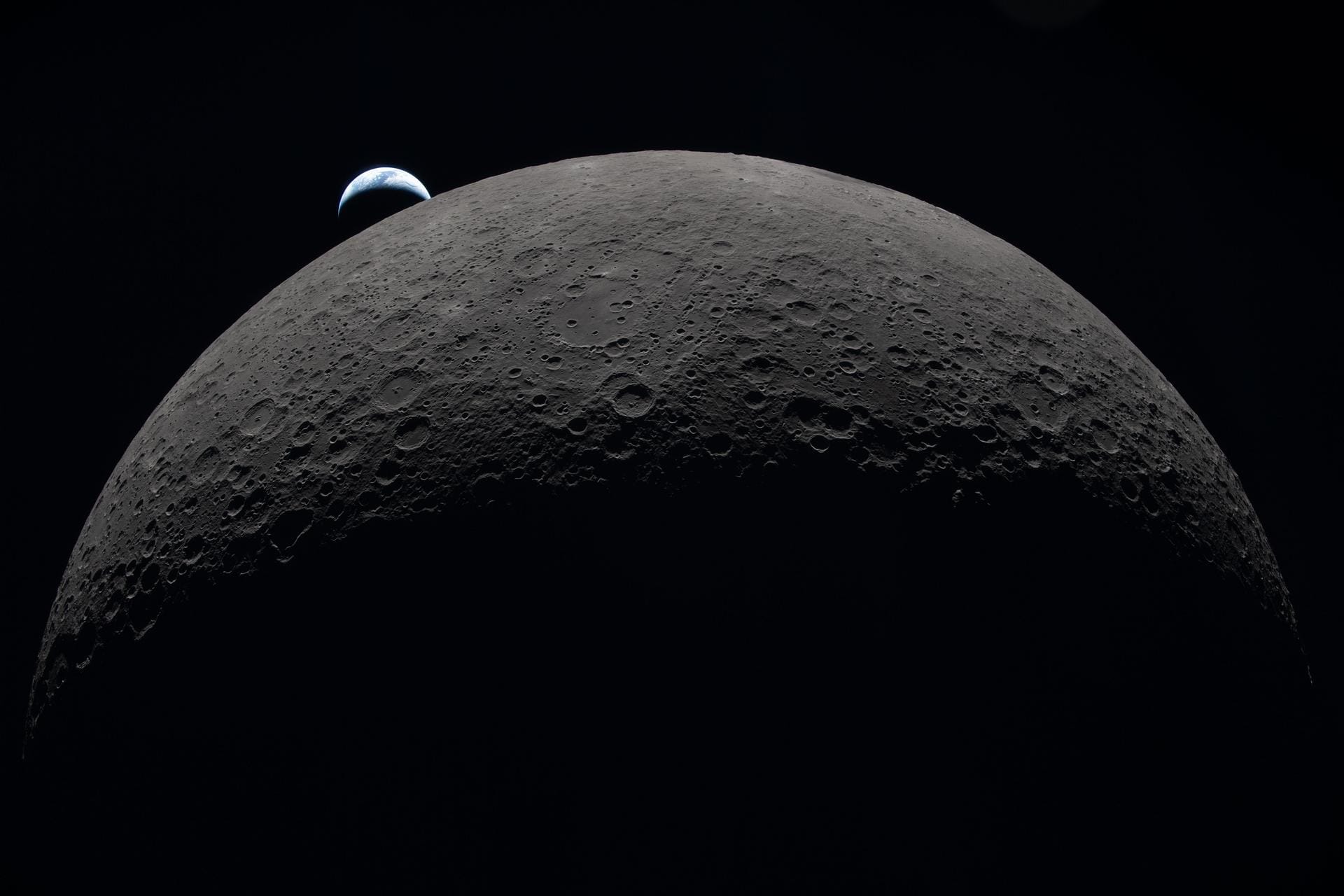
Poem notes: Even as NASA finally launched humans to the Moon for the first time in over five decades, its juxtaposition with the in-parallel US and Israeli military strikes killing and displacing children in Iran and the Middle East does not reinforce the mission’s propagated claim of going to the Moon “for all humanity”. Artemis II would’ve been way more exciting and one with integrity if it also didn’t overlap with a million children weeping.
Many thanks to The Orbital Index and Catalyx Space for sponsoring Moon Monday. If you too appreciate my efforts to bring you this curated community resource on global lunar exploration for free, and without ads, kindly support my independent writing: