China is building a lunar navigation and communications network. Lasers shine again in latest demonstration.
Moon Monday #291: A comprehensive review of each major component China has demonstrated towards such a lunar network.
China announced last month that it has demonstrated two-way optical laser communications between Earth and its DRO-A satellite, which was launched in 2024 and put in a stable Distant Retrograde Orbit (DRO). Earlier this year during NASA’s Artemis II mission, the Orion spacecraft demonstrated the same high-data-rate communications technology at 2.5 times DRO-A’s downlink speed of 100Mbps. The technology could be used by each country to get high quality streams of astronaut landings on the Moon of China and the USA respectively later this decade and early next. Jack Congram has reported additional context on China’s optical communications advancements with satellites in Earth orbit.

Optical communication is one part of the stack of technologies required in building a comprehensive lunar navigation and communications (navcom) network. Last year, China cemented and further advanced its multi-component lead in building and demonstrating parts of such a network, which included autonomous navigation at the Moon, and achieving the first ever daytime Earth-Moon laser distance measurements with a lunar orbiter. This article explains the rationale for building a lunar navcom network, and summarizes and contextualizes each major component China has demonstrated towards the same.
Queqiao, China’s ambition to build a lunar navcom constellation
Under the collective label Queqiao, Chinese technologists have been conducting studies for a phased constellation of over a dozen satellites around the Moon. [In Chinese mythology, Queqiao is a bridge formed for the reunion of lovers after a long separation.] Such a satellite constellation would provide high-precision navigation as well as high-bandwidth communications services to lunar missions, as a “bridge” between Earth and the Moon which touts high area coverage & redundancy. Earlier studies focused on a navcom constellation that optimizes coverage availability for the lunar south pole, where most of the upcoming major robotic and crewed missions are expected to take place. The primary intent of Queqiao is to support China’s ambitious crewed lunar surface missions and then a full-fledged Moonbase called the International Lunar Research Station (ILRS). Related work also involves China developing capabilities to monitor and track spacecraft across cislunar space, which is the region of space enveloping Earth and the Moon. The US intends to have similar capabilities, starting with the launch of Advanced Space’s Oracle spacecraft later this decade as a cislunar traffic monitor.
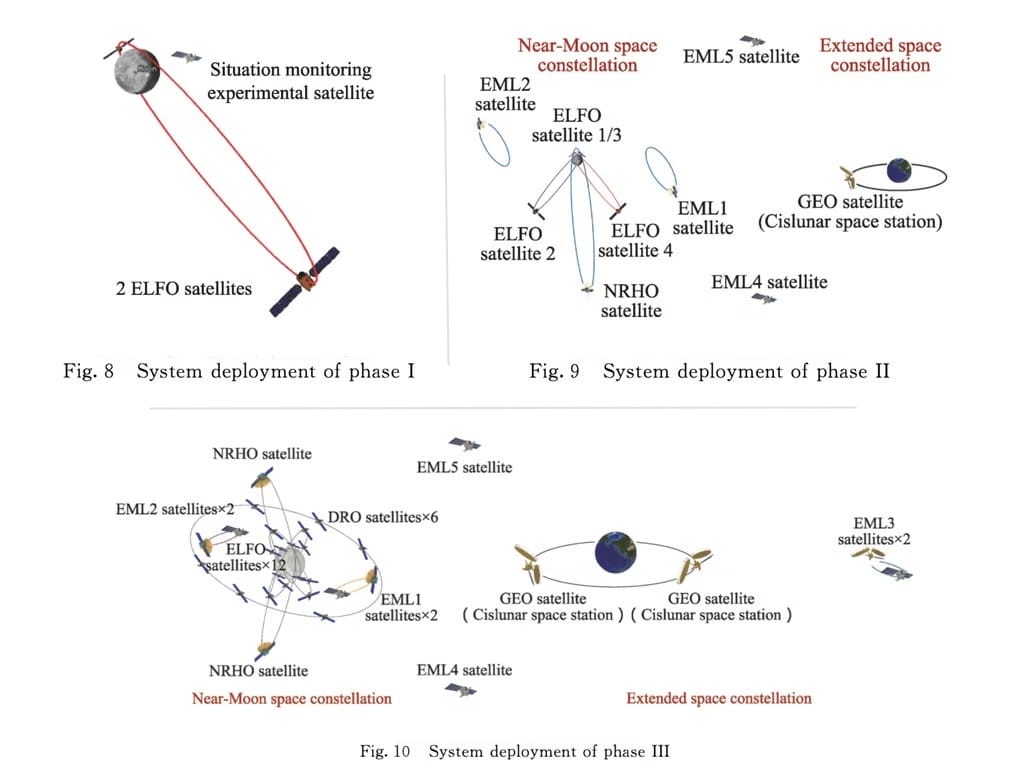
Since 2018, China has deployed two communications relay orbiters around the Moon, called Queqiao 1 and Queqiao 2. They relayed communications for the Chang’e 4 and Chang’e 6 missions respectively on the Moon’s farside. The US is yet to demonstrate this capability. Queqiao 2 will also relay communications for China’s upcoming Chang’e 7 and Chang’e 8 lunar landers, which CMSA (and not CNSA anymore) is now targeting to launch in 2027 and 2028 respectively. Also, the Queqiao 2 launch carried two experimental Tiandu CubeSats, which entered lunar orbit too to perform laser-based distance ranging and more, as elaborated in later in this article. In all, the Queqiao 2 mission has been testing and verifying technologies which will feed into China’s upcoming full-fledged navcom constellation.
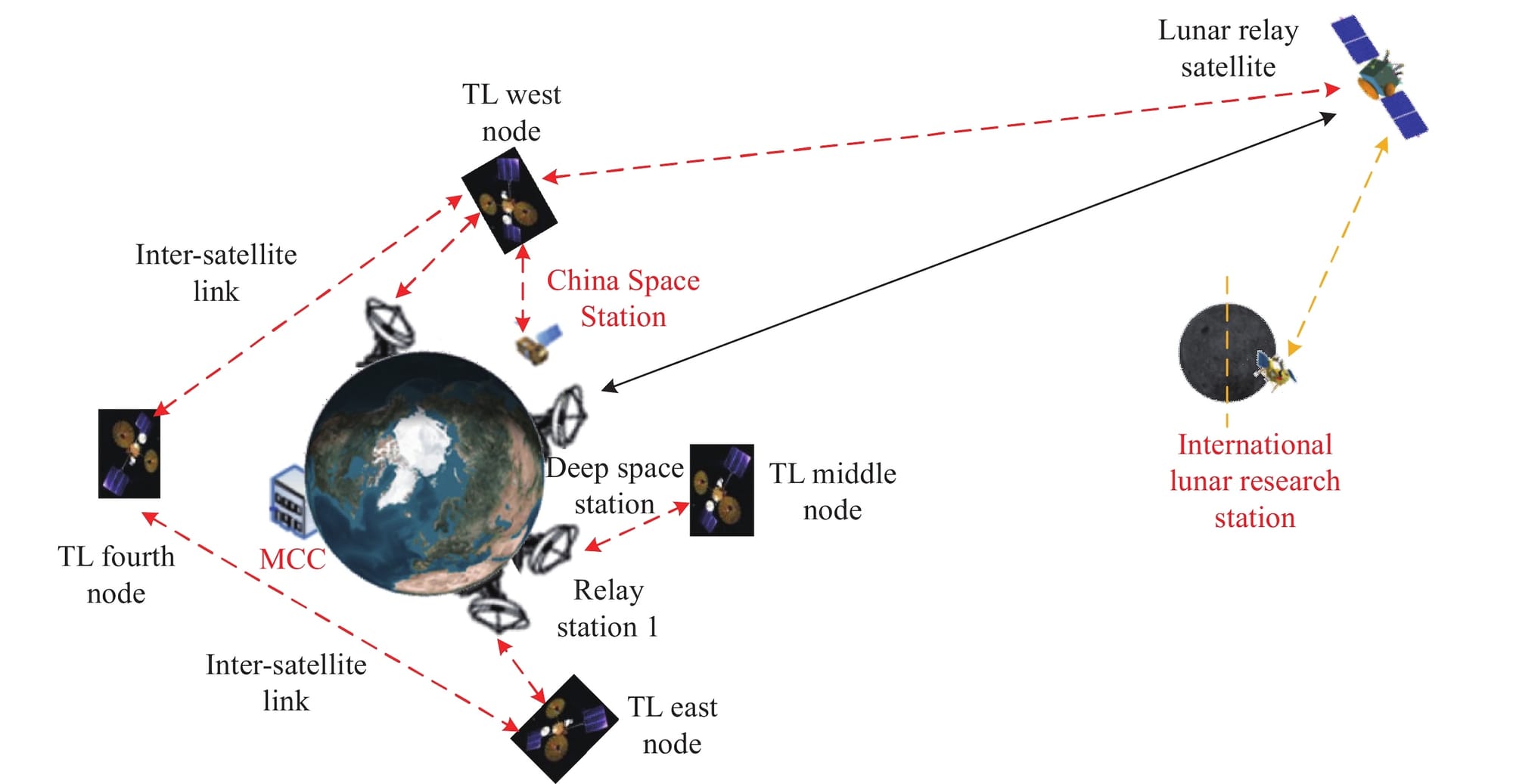
In a paper published in the Chinese Journal of Space Science, researchers proposed that China should integrate their Queqiao lunar satellites with the existing Earthbound Tianlian ones, which notably serve China’s Tiangong space station, among other things. As Andrew Jones had highlighted, the proposal’s driving rationale is to substantially improve surface coverage time and area for China’s upcoming ambitious crewed lunar missions and then for the ILRS Moonbase. It would also allow redundancy if and when China faces ground station availability issues from its terrestrial partners across the globe.
Why build a navcom constellation around the Moon?
For one, such a system can enable cost-effective Moon missions since several spacecraft would no longer necessarily need to carry hefty communications hardware and rent as much ground infrastructure. Partner nations with smaller space budgets can take advantage of such a network to send their own lunar missions at lower costs, including to the less explored farside. A navcom constellation can especially aid crew and hardware on the Moon’s poles by relaying communications, where direct Earth visibility is limited due to our planet being way lower on the horizon than for near-equatorial sites. A navcom constellation will also aid future rovers hunting for lunar water by allowing them to stay connected as they venture inside permanently shadowed regions, where direct Earth visibility worsens further. Moreover, lunar navcom satellites can provide a common time reference for the Moon, which would help swarms of lunar spacecraft operate safely. It would also improve the accuracy of lunar-based fundamental physics and astronomy experiments, including farside radio astronomy measurements.
Time synchronization between lunar satellites has become increasingly important to coordinate orbits in order to operate safely. But a common lunar time of some sort will also enable synergistic operations. To both ends, last year Chinese researchers released a first-of-its-kind software package to enable engineers to coordinate Moon and Earth times for multiple lunar missions in an integrated fashion. The authors consider the timing accuracy of this initial work to be sufficient for coordinating spacecraft over the next decade, and note that improvements will follow. What’s commendable is that the software is public on GitHub, and the paper describing the work and methodology open access. The project is being funded by the Chinese government institutions of CAS and NSFC.

Who else is planing lunar navcom constellations?
Other than China, ESA also aims to have a lunar navcom constellation with its Moonlight initiative. The UK’s SSTL-built, 280-kilogram Lunar Pathfinder orbiter will constitute ESA’s first Moonlight satellite out of five. It’s planned for launch onboard Firefly’s second Moon mission part of NASA’s CLPS program later this year or early next. ESA will be Moonlight’s anchor customer but expects European companies to actively commercially provide lunar navcom services to missions globally. On the US side, NASA is planning a navcom constellation called the Lunar Communications Relay and Navigation Systems (LCRNS). The first satellite in this network, Intuitive Machines’ Altus-1, will launch onboard the company’s third CLPS lander next year. Furthermore, ispace Japan and US-based Argo Corp had announced this year that the duo aim to deploy at least five lunar navcom satellites by 2030, with the first one aimed for 2027.
Against the odds, China achieved an Earth-Moon navigation link
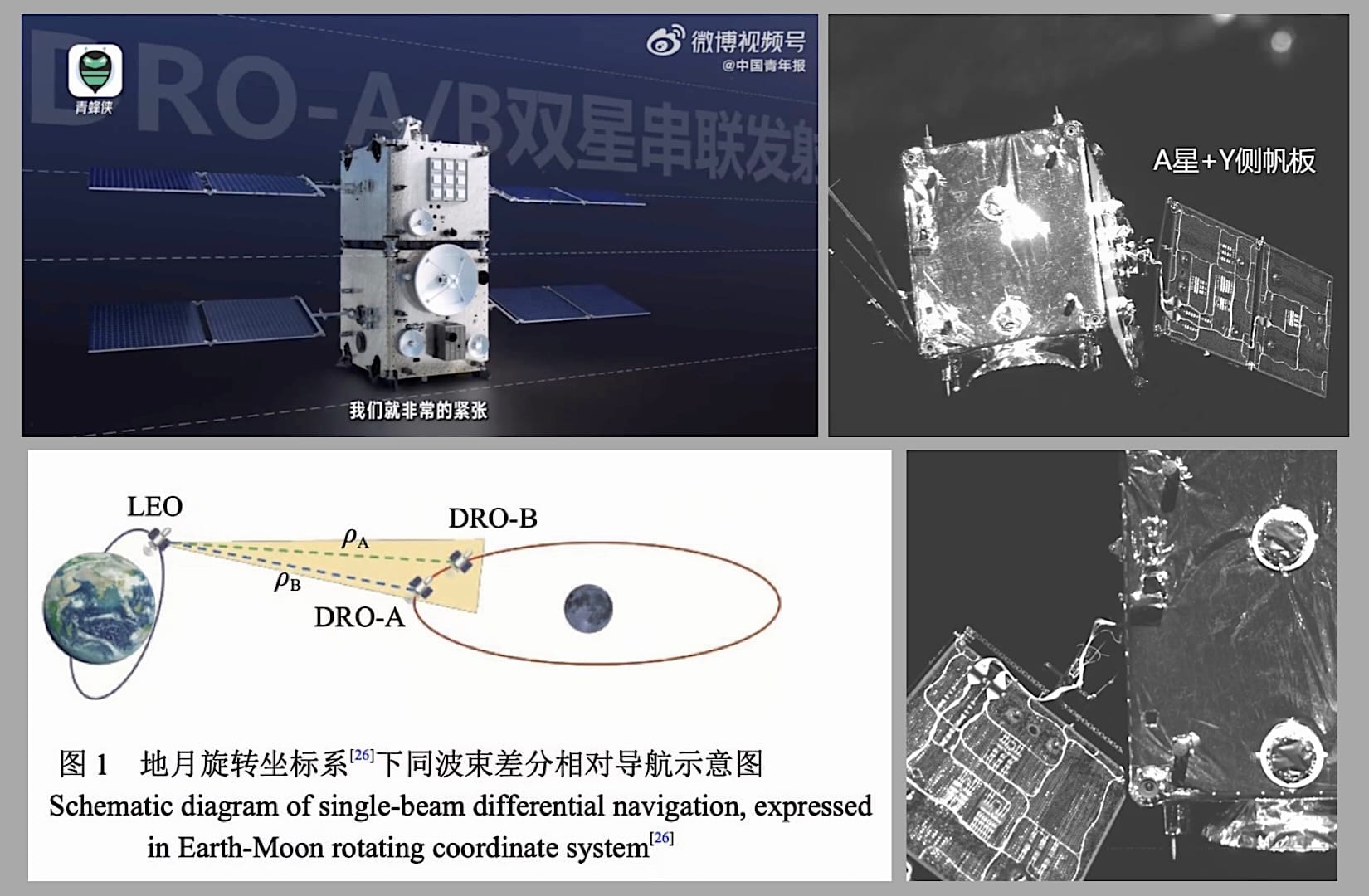
China managed to put the aforementioned DRO-A spacecraft and its twin DRO-B into their intended lunar distant retrograde orbits (DRO) in 2024 despite a failure of the upper stage of their launch vehicle Long March 2C. Qiu Chenhui of China Youth Daily reported based on a presentation in April last year by a Chinese Academy of Sciences (CAS) researcher Zhang Hao on how their team managed to achieve the feat.
The upper stage deployed the attached DRO-A-B craft with a high spin rate of once every 1.8 seconds, which bent and damaged their solar panels. While the satellite operators quickly stabilized the craft and figured out dynamic optimal solar panel orientations to stay power positive, the anomalous launch had also left the small satellites at less than half the distance from the Moon than intended. Within days, the team took a key decision to not separate the twin spacecraft and alternately use either craft’s engines to perform precisely timed orbit-raising maneuvers which conserve and balance fuel availability. It worked. Combined with this fuel-efficient, low energy trajectory to the Moon generated as contingency, the still attached DRO-A-B craft entered lunar orbit and DRO in August 2024. The two craft separated from each other shortly after. It was only days later that DRO-A and DRO-B fulfilled their primary mission objective: establish a laser-based navigation, timing, and communications link between themselves and the Earth-orbiting DRO-L satellite. Since then, the three craft have been able to track each other and navigate autonomously instead of relying heavily on, or choking, terrestrial ground stations.
This was a notable world first. And with it, not only did China avoid a mission failure but it cemented its lead in building a lunar communications and navigation network. The NASA-funded and Advanced Space-led CAPSTONE lunar orbiter has made some progress in cross-communicating with NASA’s Lunar Reconnaissance Orbiter (LRO) since over three years now to perform similar Moon-to-Moon demonstrations but with a relatively limited scope and success than the Sino-DRO trio.
As an unrelated but interesting tangent, DRO-A also touts all-sky detection of gamma-ray bursts from highly energetic cosmic objects. This is achieved through placing of five detectors across four sides of the craft. The same has thus been enabling extended mission objectives, and continued the trend of China maximizing spacecraft capacity and time.
Maneuvering with fluidity, lasers on target
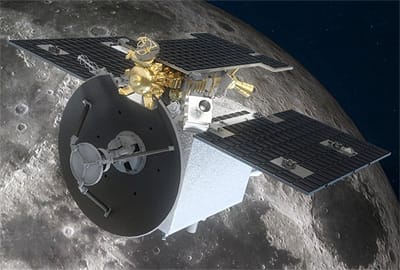
Last year, China successfully made daytime Earth-Moon distance measurements wherein a 1.2-meter telescope reflected an infrared laser off of a small retroreflector on the 61-kilogram Tiandu-1 lunar orbiter. This was the first ever daytime laser distance measurement using an orbiter, accomplished despite massive interference from our Sun. Tiandu-1 was launched alongside Queqiao 2 in March 2024. The CASC release about the daytime distance measurements stated that the demonstration will “support the argumentation and implementation of major deep-space exploration projects in the future, such as the International Lunar Research Station” [Moonbase].
Ling Xin had reported that last year in May, China moved Tiandu 1 from DRO to a 3:1 resonance orbit, where it loops around Earth thrice for every revolution of the Moon around our planet. It’s a stable orbit, requiring minimal maintenance. It reminds me of how in 2023, ISRO pulled Chandrayaan 3’s propulsion module from lunar orbit to Earth orbit, demonstrating a small but key capability that will be required to pull off a robotic sample return mission in the future with Chandrayaan 4. Coming back to China, another spacecraft was maneuvered out of DRO last year. As per graphics published by CAS and subsequently reported by others, CAS made the DRO-B lunar satellite depart DRO in April and enter a 3:2 resonance orbit—a world first.
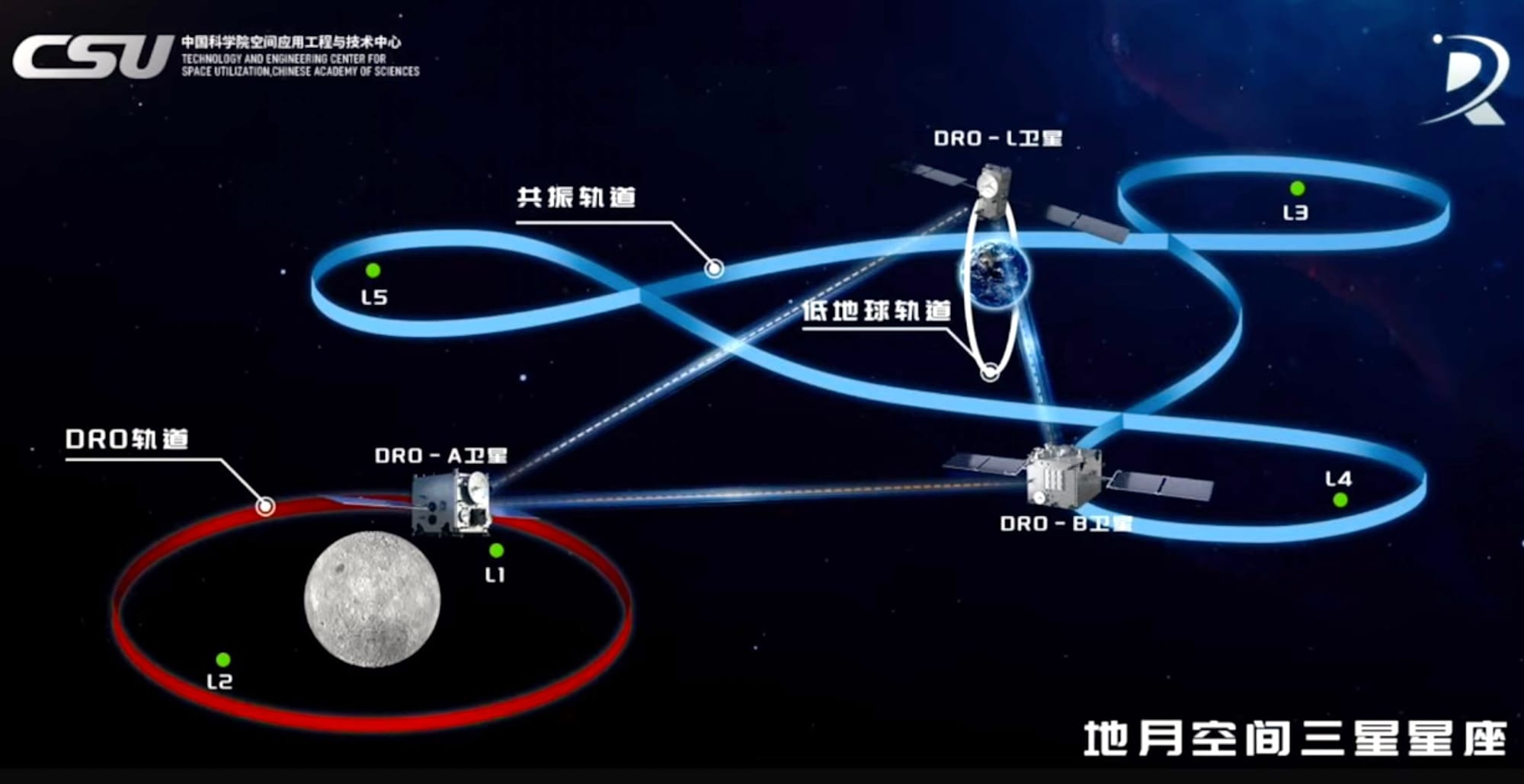
The damaged solar panels of DRO-B post its anomalous launch do reduce the extent of automated navigation the craft can perform in its new orbit with the other DRO satellites but demonstrations and spacecraft operations continued nevertheless. Enthusiastic spacecraft observer Scott Tilley, who has tracked Chinese lunar satellites and independently confirmed many of their orbits, has pointed out that Chinese researchers have published a paper on exactly these kinds of orbital maneuvers. From paper to practice, China has now demonstrated several low-energy orbital transfers as well as autonomous navigation in complex multi-body gravitational environments.
Queqiao 2 and looking beyond the Moon
China is doing more still in the Earth-Moon space. With the immediate mission of Queqiao 2 of enabling the Chang’e 6 spacecraft modules to fetch farside lunar samples being accomplished in 2024, the orbiter then began making observations to pursue its other scientific goals. This includes using it for the Astrophysics technique of Very Long Baseline interferometry (VLBI), which helps determine observer orientations with respect to celestial objects. CASC provided an update on Queqiao 2 last year in May:
The satellite has been stably operating in orbit for 14 months. [...] The satellite’s extreme ultraviolet camera captured the first global 83.4-nanometer ionosphere image, providing crucial data for studying the impact of solar activity on the plasmasphere. The satellite’s VLBI experiment system, in coordination with the Shanghai 65m Radio Telescope, extended the observation baseline to 380,000 kilometers and successfully observed deep-space targets like radio source A00235 and the Chang’e-6 orbiter.
At the time, Chinese researchers were expected to publish results based on these observations within a year. Checking in on the same, that has manifested. Chinese researchers have also suggested that when coupled with Earth-based ground stations, China’s lunar navcom network can help the country track its deep space missions with sub-kilometer accuracy all the way to Jupiter, and even beyond. As noted by Chi Wang, et al. in a December 2023 paper, Queqiao 2 will try testing an element of this during the upcoming Chang’e 7 Moon mission:
The LOVEX [payload] on the relay satellite is used [sic] to construct a 400,000-km baseline Moon–Earth VLBI measurement and observation experiment system to improve the accuracy of orbit determination in deep space and to carry out astrometry and astrophysics observation and study.
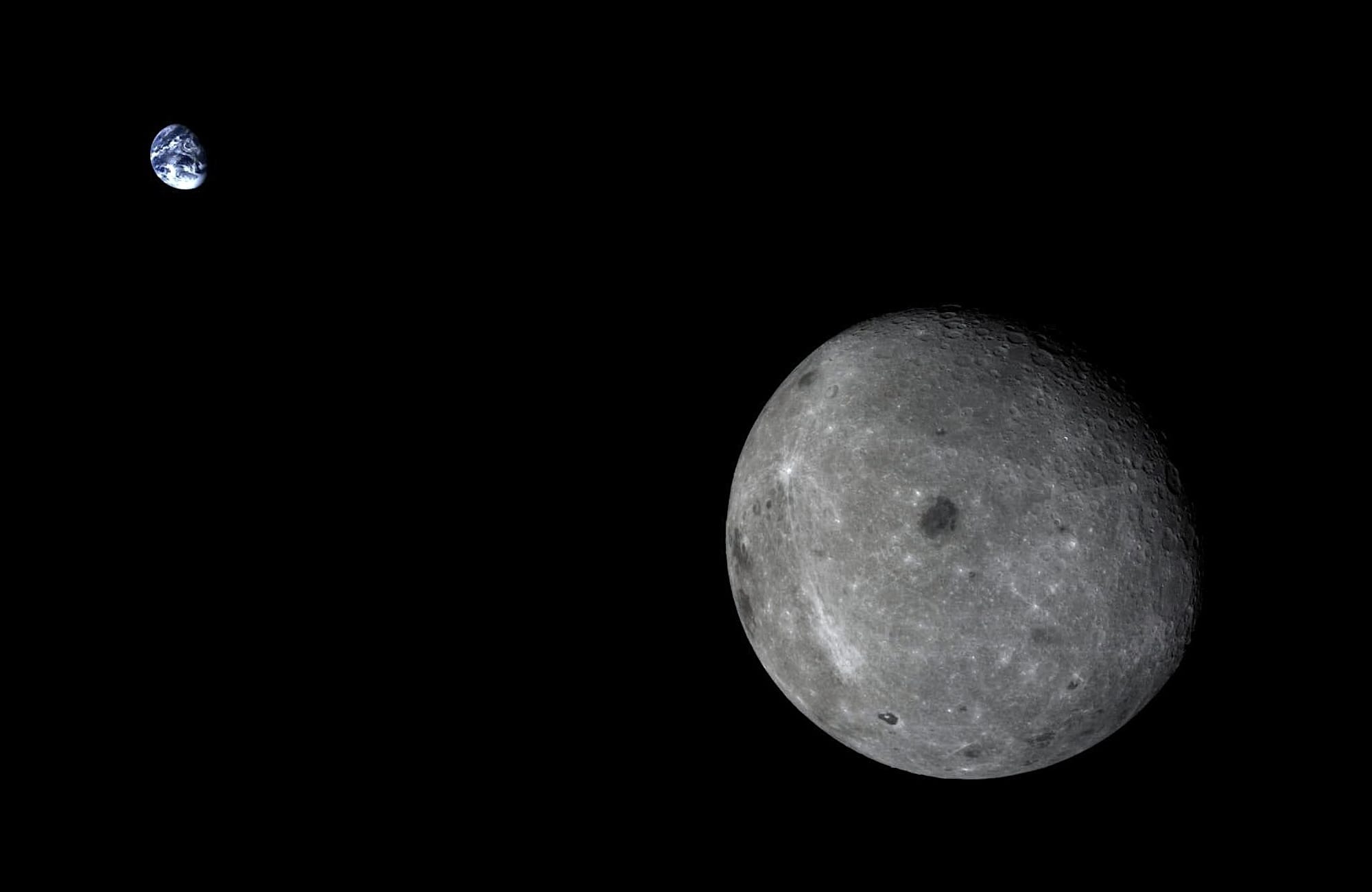
How China has an edge in sustaining future crewed Moon missions over the US
When considering all the developments above, it becomes clear that China has an extended, multi-component lead over the US in lunar navigation, communications, and related complex orbital operations. Other than Orion’s laser communications demonstration, the US did demonstrate a GPS lock on the Moon through private company Firefly’s first CLPS Moon lander last year but that’s pretty much it. The NASA-funded and Advanced Space-led CAPSTONE lunar orbiter’s autonomous navigation goals will have to be demonstrated firmly by the upcoming CAPSTONE 02 instead. ESA is yet to launch its first Moonlight satellite, and so is NASA its first navcom mission.
In contrast, China’s visibly great progress in building a full-fledged Queqiao lunar navcom constellation is bound to substantially improve both the surface coverage time and area for China’s upcoming ambitious crewed lunar missions, which along with robotic explorers will systematically lead up to the ILRS Moonbase. ILRS is a long-term undertaking, and the Queqiao constellation’s capabilities will afford China redundancy even if—or when—there are ground station availability issues from its terrestrial partners across the globe.
This year NASA rejigged the Artemis program elements & crewed missions, and has been catalyzing its Moonbase plans, in an effort to gain momentum after over a decade of lapses. While Artemis III is now supposed to be a test mission in Earth orbit ahead of attempting to land humans on the Moon with Artemis IV, the former won’t “test like you fly” since challenges confront NASA across aspects of both missions, including Starship’s repeated lapses and Blue Origin’s explosive delay chain. Even if the US somehow lands humans on the Moon first with Artemis IV later this decade, the long term game of sustaining human and robotic lunar presence currently favors China because it has demonstrated and achieved more complex capabilities in orbital infrastructure as well as modern surface missions, gaining valuable operational experiences therein.
Many thanks to Open Lunar Foundation and Ajay Kothari for sponsoring Moon Monday. If you too appreciate my efforts to bring you this curated community resource on global lunar exploration for free, and without ads, kindly support my independent writing as it’s purely reader-funded. I don’t use AI to write a single word and cite everything.