The Moon’s south pole is a place of promise and perils. Effective data sharing will benefit and save everyone.
Moon Monday #283: Some engineers and scientists are leading by example.
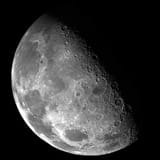
We may have gone to the Moon before but we haven’t been to its south pole. There’s a big difference. The south polar environment is far harsher than the near-equatorial or mid-latitude sites where Apollo astronauts and most robotic missions have landed. At the lunar poles, the slopes are far steeper, Sun and Earth visibility for power and communications respectively more limited, temperatures inside water-hosting permanently shadowed regions crossing into cryogenic realms, and smooth enough reliably lit patches for spacecraft to touchdown upon not just smaller but far fewer amid treacherous mountainous terrain. For all practical purposes, the lunar south pole is a different Moon-like planet that’s even more unforgiving than Luna.
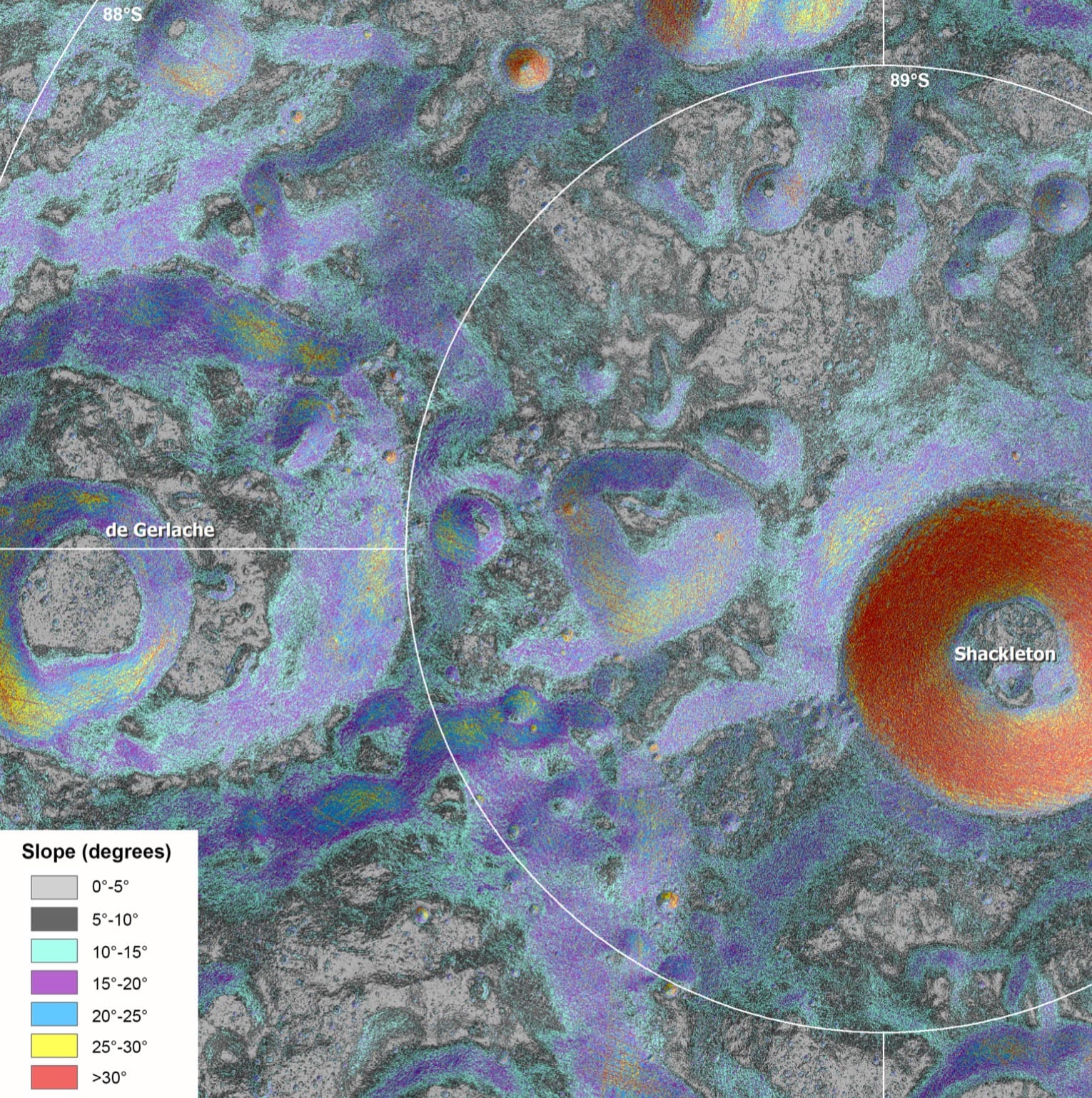
A giant chasm
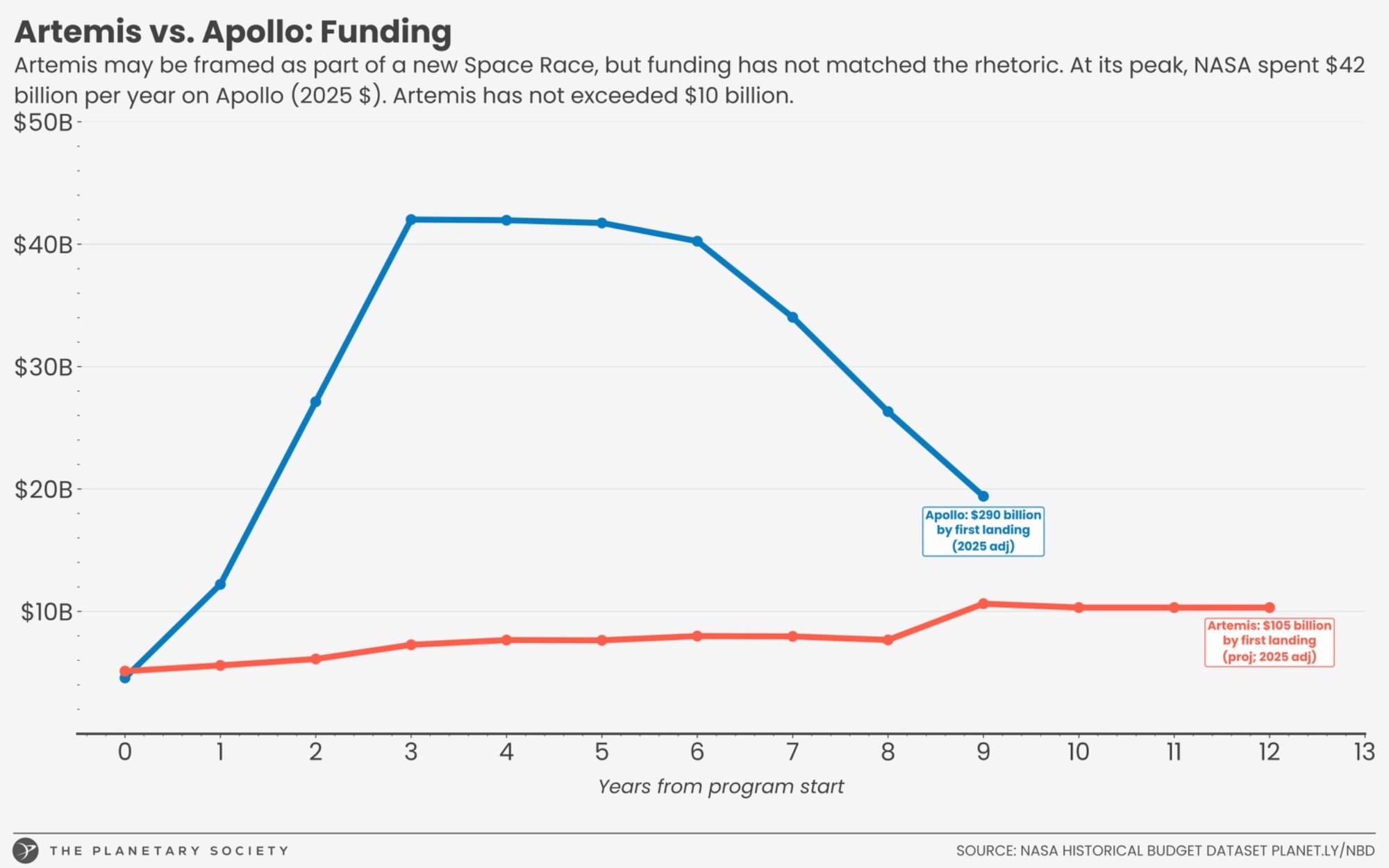
Despite facing a whole new plane of challenges, the global rush to the Moon this century is grander in ambition than even Apollo. Countries and companies wish to repeatedly land more humans and robots than before, operate for longer than past missions have, and eventually construct and operate Moonbases that can harvest local resources like water ice and oxygen & metals in lunar soil. In the meanwhile, the budgets available are far less than half of Apollo for Artemis as well as programs globally. Moreover, about half the world’s robotic lunar landing attempts still fail. The only exception to the latter is China, whose Chang’e 3–6 missions have bagged four out of four successful robotic landings, including two sample returns. One of the keys to Sino’s success at Luna is that institutional lessons and outcomes from each national space & Moon mission are made to flow fully and freely across the country. This is not the case with the US, where private companies compete to carry NASA’s payloads to the Moon as part of the agency’s CLPS program. Companies thus tend to be selective about sharing mission data, information, and insights, done only when deemed necessary or immediately beneficial.
Couple these budgetary and operational shortcomings with the fact that almost everything we know about the Moon’s south pole and its promise comes from orbital missions alone. Orbiters can only provide imagery and physical & chemical data at coarse resolutions compared to fine ground truths experienced by surface missions. Even the latest and next-generation orbiters from various entities globally are not planning coordinated observations beyond a handful of polar sites. Their data quality and availability will therefore not compound to inform the next set of advanced missions.
All robotic and crewed surface missions will have to operate cautiously to navigate the harshness of the lunar south pole. As many past space and Moon missions have shown, operational errors do terminate missions or severely degrade outcomes. As but one example, operators of the former Soviet Union’s Lunokhod 2 rover accidentally drove it into a crater amid tricky lighting conditions around sunset, which ended the mission prematurely. Such lighting conditions persist all-day, every day on the lunar south pole due to a perpetually near-horizon Sun. Since no mission has explored polar water ice directly yet, we have no idea of its true physical, chemical, and geotechnical nature. How exactly will its cryogenic environments treat our hardware over time? Will instruments work as intended? How about our space grade electronics and Moonbase materials?

Avoiding polar pitfalls
As we mount many lunar missions to the south pole, an ordeal of an engineering challenge, having prior access to more operational and scientific data from more missions will avoid us from losing multi-hundred-million-dollar hardware after they even manage to make it to the Moon in one piece. However, mission data and information sharing as it currently exists is largely fragmented, incoherent, and incompatible between various actors. Achieving herculean ambitions and having a lack of baseline information are mutually exclusive. Space experts like Marieta Valdivia Lefort of the Royal Astronomical Society have previously highlighted the barrier of technical interoperability for Moon missions:
These issues are especially important for lunar missions, which depend on accurate ephemeris data, surface coordinates, timing synchronisation, and environmental measurements. These are essential for safe operations, Moon-based astronomy, and studies of polar water ice. And yet space agencies, companies, and universities still use different data formats, reference frames, metadata, and procedures.
Amid competition, US private lunar companies will remain tightfisted about sharing information even on mission aspects that aren’t sensitive to intellectual property. When companies begin exploring the lunar south pole, withholding information will only grant them a temporary edge among each other while the harsh environment will continue to overpower collective progress. The current state of the US’ lunar information sharing and coordination is thus neither safe nor efficient for progress. It will also keep setting precedents and policies that are ineffective due to lack of full ground truth information.
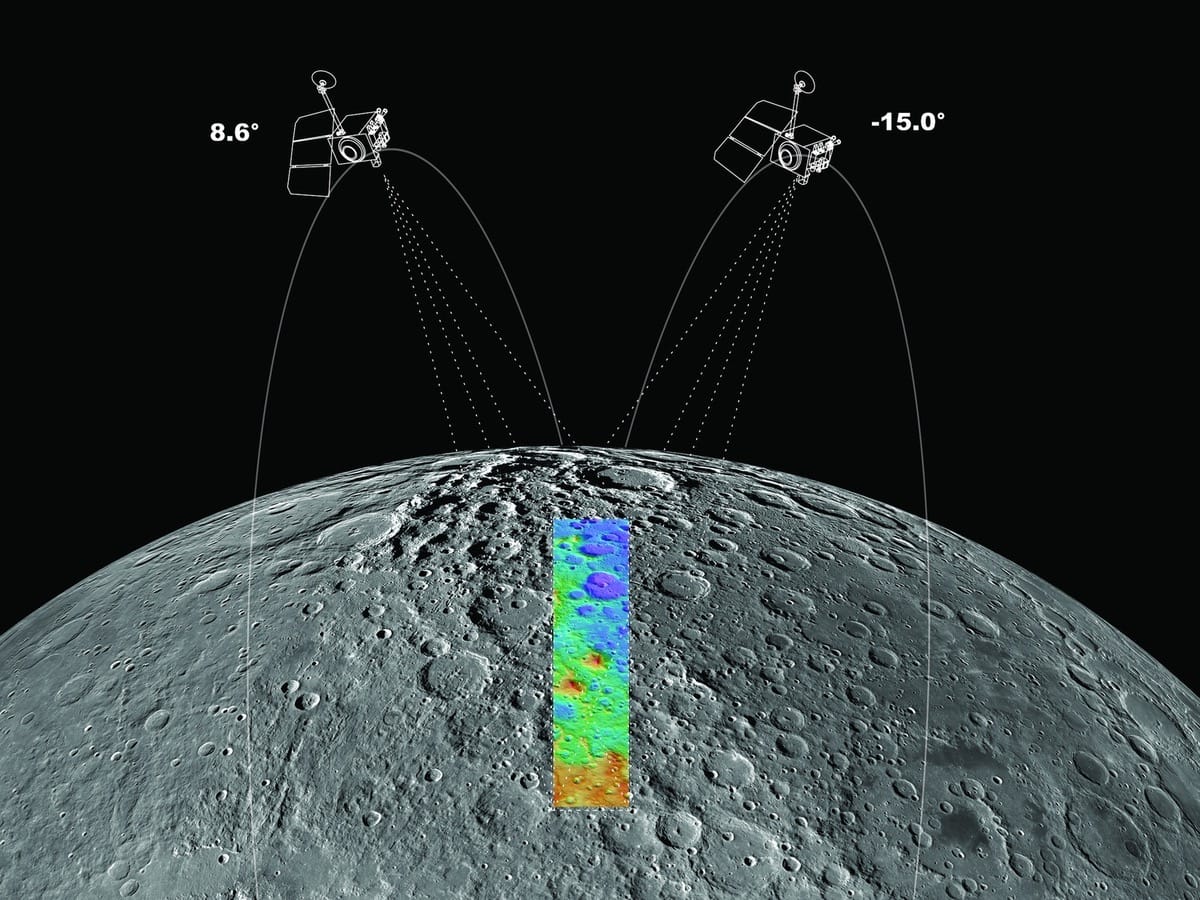
On the other hand, mutual sharing of polar resource prospecting data will not only bring down technical risks but also help grow the pie of potential customers and investments. Lunar science and exploration have always gone hand-in-hand. Chandrayaan 1’s discovery of water ice and its mineral mapping of the Moon is what catalyzed the global Moon rush. Then, the planning of all 21st century Moon landing missions—including China’s—was possible in part thanks to the over 1.6 petabytes of data shared freely by NASA’s Lunar Reconnaissance Orbiter (LRO) mission. LRO’s high-resolution imagery and topographic data has been the bedrock for filtering landing sites in particular. Likewise, scientific data from China’s Moon missions has been available through their Lunar and Planetary Data Release System, with Chang’e 5 lunar samples being shared with international researchers as well to better understand our Moon’s evolution.
Polar pathfinders
The next layer of multi-mission datasets that will enable the planning and execution of advanced Moon missions is yet to be gained. No single entity can efficiently tackle the unprecedented challenges of the lunar south pole. Instead of expending substantial time, effort, and money in independently re-inventing lunar polar wheels, multiple countries and companies could share baseline information sets about the perils of the lunar poles at a minimum. It would also be a way for actors with limited resources to reduce geopolitical tensions. To avoid future advanced movers at the Moon from unilaterally and selectively gating access to resources, land, and infrastructure, which would set dangerous legal precedents, independent actors can pool their data to play crucial swing roles in shaping space policies for broader benefit.
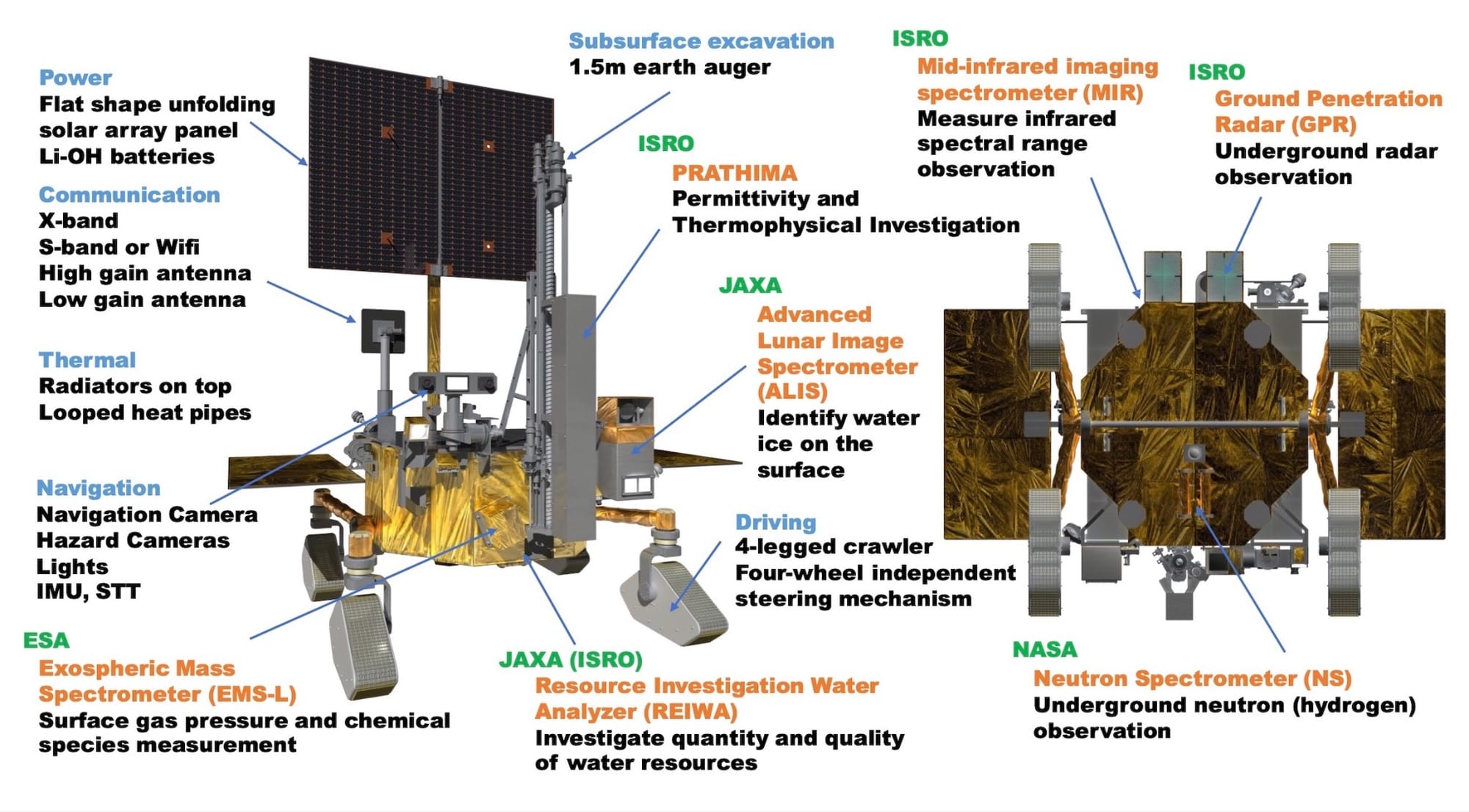
Two such upcoming missions planned to study and characterize the Moon’s south pole have exactly such potential: India’s Chandrayaan 4 sample return mission, and Chandrayaan 5 / LUPEX, a joint ISRO-JAXA mission to study shadowed polar water ice. With Chandrayaan 4 bringing lunar polar samples, ISRO has the potential to open up the samples and its findings with the broader international community while simultaneously gaining an ability to steer space governance norms. Chandrayaan 5 / LUPEX is notably a symmetric partnership between India and Japan, with India building the Moon lander and Japan the rover and launch vehicle while both countries contribute about half the mission’s scientific instruments. Because it’s such a tightly interlocked mission in terms of both engineering and science, ISRO and JAXA will not only share its datasets with each other but do so in standard, accessible formats from which globally shareable data products can be created. Tight collaboration thus ensures wider access to scientific and related technical data by its very nature, advancing the field faster than the sum of its parts.
On the shoulders of scientists and engineers
To encourage more entities to better share lunar mission data and information, the Open Lunar Foundation (a Moon Monday sponsor) soft-launched the Lunar Ledger project last year towards building a collaborative global database. Six companies signed up for the Ledger with an eye towards mission data sharing: ispace, Firefly, Astrolab, JAOPS, Dymon, and SpaceData. As the Ledger approaches a full public launch later this year, JAOPS and Dymon have agreed to share operational data from their YAOKI lunar rover, which flew onboard Intuitive Machines’ IM-2 lander part of NASA’s CLPS program, as open access.
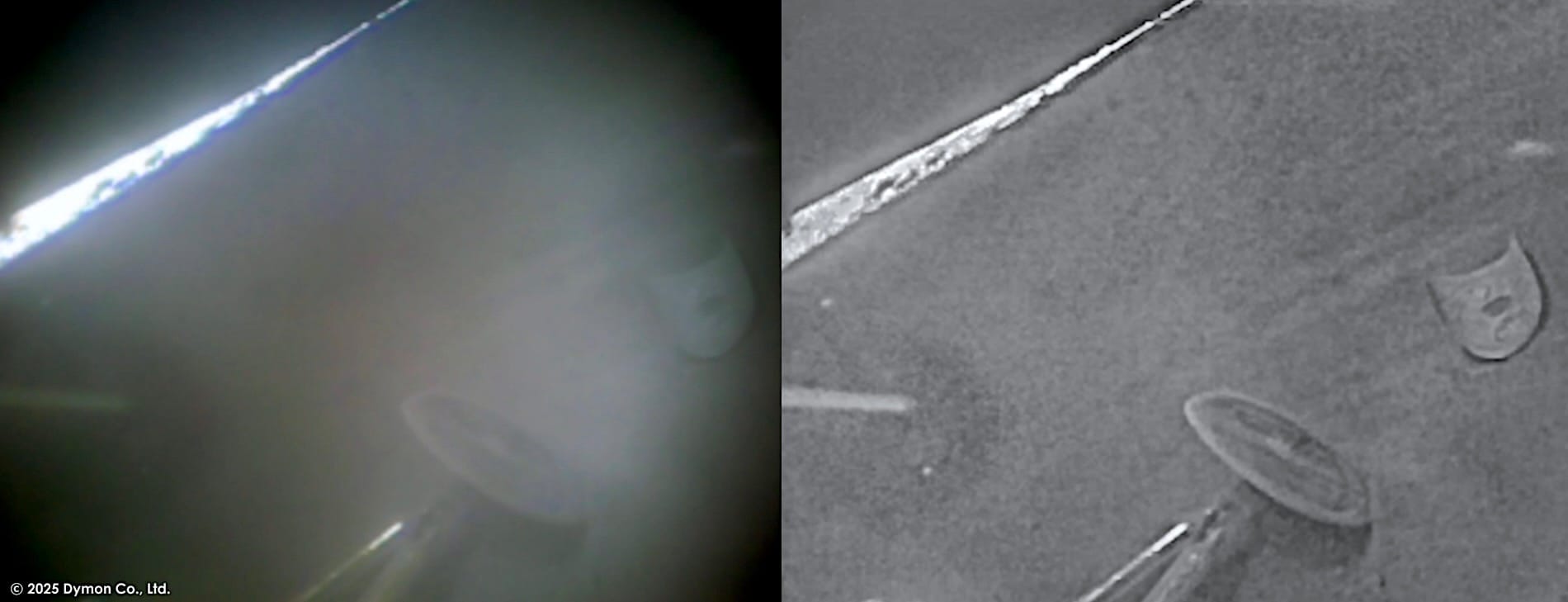
While YAOKI couldn’t be deployed on the lunar surface due to the IM-2 lander hard-landing sideways, the rover did manage to snap images from its hosted position. The team shared these online, enabling public analysis and showcasing how independent payloads can bring in more transparency to a mission.
“Opening up the images really spurred both citizen scientists and academics to analyze what happened more than we [the mission team] could’ve done alone,” said Louis Burtz, co-founder of JAOPS. In prep for the Ledger release, the YAOKI team has shared all the raw telemetry and telecommands from their mission through the same software which was used for mission operations, which is also open source on GitHub. “Through our approach, we hope to encourage future missions and payloads to do the same,” noted Burtz. “Honestly, it also provides credibility for our company and its mission to promote best practices in spacecraft operations.” Jonathan McDowell, an astronomer, spaceflight tracker, and the creator of the popular Jonathan’s Space Reports, said that “the more organizations that do this, the more we’ll all benefit.”
Gladly, the Ledger is gradually gaining global momentum. Recognizing the importance of free sharing of scientific and related technical data between polar Moon missions, COSPAR, the largest international scientific society dedicated to promoting space research cooperation worldwide, signed a Memorandum of Understanding with the Lunar Ledger on March 20 in support of its activities. “This development is an important step in giving Open Lunar Foundation both visibility and legitimacy as a real player,” noted McDowell.
This is an expanded version of an article published on the blog of Open Lunar Foundation (a Moon Monday sponsor) as their Science & Tech Communications Lead. The article is republished here on my blog because of its relevance to my Moon Monday readers as well as for archival.
Many thanks to Open Lunar Foundation for sponsoring Moon Monday. If you too appreciate my efforts to bring you this curated community resource on global lunar exploration for free, and without ads, kindly support my independent writing, which is purely reader-funded. I don’t use AI to write a single word and cite everything.