Moon Monday #223: International researchers to study Chang’e lunar samples, including US ones but without NASA funding
And more such interesting Moon exploration updates from China’s National Space Day on April 24.
I’m delighted to share that one of my favorite space outlets The Orbital Index is continuing to be a sponsor of my Moon Monday blog+newsletter for the fourth year in a row! 🚀
Not sponsored: Other than the crisp & curated technical space overviews that the Orbital Index dispatches every week, I particularly love how Andrew, Ben and Sarajane have recently published birds-eye-views of space activities in the under-covered regions of Africa, South America, and South East Asia. If you follow only the popular western space media outlets and “influencers”, your view of the global space industry is guaranteed to be wrong by light years. But with outlets like Moon Monday and the Orbital Index striving to cover truly global updates, it’s possible to elevate what you’re tuned into. 🛰️
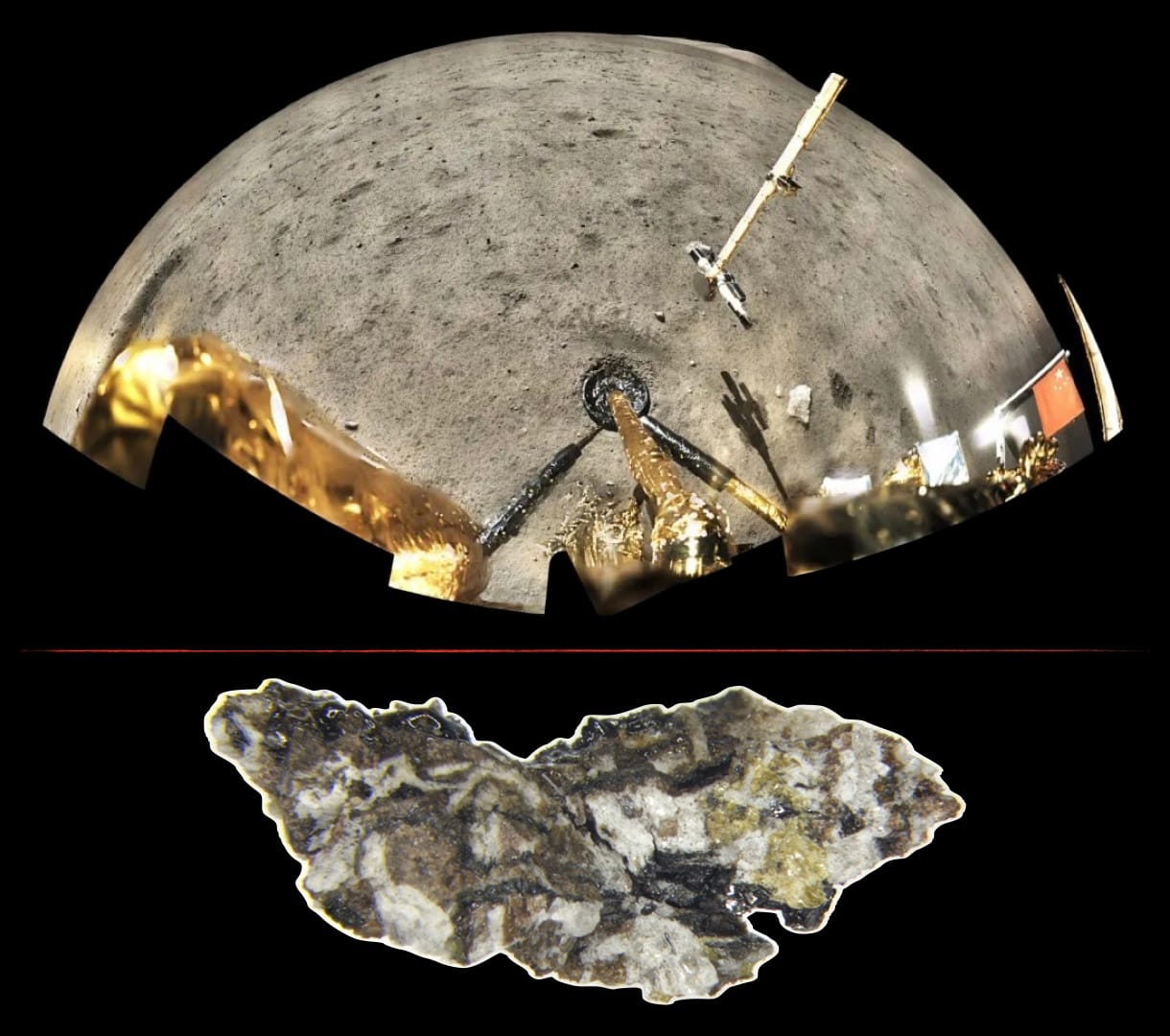
China announced selecting proposals from seven international universities to study unique Moon samples brought to Earth by CNSA’s Chang’e 5 mission in 2020. So far Chinese researchers have had first, exclusive access to the samples—a standard followed by most organizations worldwide for their missions or telescopes. The researchers have already produced several notable science results. To briefly summarize a review paper to that end:
Chang’e 5 samples have helped scientists determine truer ages of lunar features, refine the nature of impacts over the last two billion years in the inner Solar System, and shed light on young lunar volcanism while also finding 120-million-year young volcanic beads—which collectively opened up more enigmas about the Moon’s interior and its evolution.
It was in late 2023 that China opened up sample research applications to foreign scientists. The process has taken longer than expected but the international researchers whose proposals have been finally selected are from universities in the UK, Japan, France, Germany, Pakistan, and the US. The UK’s Open University (OU) is thrilled with its selection and eager to do science:
The Chang’e 5 samples will be analyzed using the OU’s state-of-the-art laboratories located on its Milton Keynes campus, where Professor Mahesh Anand and his team will carry out their research. The loan agreement is for a year, and during that time, the OU team is planning to determine the amount and isotopic composition of carbon, nitrogen, oxygen and noble gases in Chang’e 5 samples, results from which will be used to evaluate the giant-impact origin of the Moon and develop new insights into the history of volatiles such as carbon and nitrogen in the Earth-Moon system.
The proposal selections of two US universities—Brown and Stony Brook—are notable as well albeit for an underwhelming reason not tied to the universities themselves. Recall that in late 2023, NASA secured a US Congressional exception for researchers funded by the US government to be able to apply to study Chang’e samples despite the prohibitive Wolf Amendment. US scientists then applied for the same last April, including a proposal by lunar geochemist and Apollo sample curator Ryan Zeigler. But as Leonard David reports on his blog Inside Outer Space, the selections of Brown and Stony Brook are not a result of NASA’s efforts:
Timothy Glotch is a professor of geosciences at Stony Brook University in New York. He told Inside Outer Space that NASA and CNSA were unable to come to terms on the loan agreement for the Chang’e 5 samples. “As a result, due to the Wolf amendment, I am not able to use any NASA funds to carry out the work my team and I proposed to do on the Chang’e 5 samples,” Glotch said. “However, the Stony Brook University administration has provided me with internal funds for travel and to conduct our proposed analyses, which is exciting.” Glotch added that the Stony Brook contracts office still has to sign off on the loan agreement, and has been in touch with the CNSA representative about this.
The US and China had been taking long to finalize terms for US researchers to access Chang’e 5 samples after NASA got the aforementioned Congressional exception. And so it would seem that the desired deal hasn’t gone through—whatever it was. For US researchers, this is not an ideal outcome because it would likely also restrict or minimize access to the even more valuable Chang’e 6 samples, which CNSA brought from our Moon’s enigmatic farside last year. 🌗
In the meanwhile, another study of Chang’e 6 lunar samples was published in Nature recently, adding to the long march of notable scientific results from the mission which have been anchoring events in our Moon’s evolution. The latest study involved analyzing 578 particles weighing a total of 5 grams. It revealed for the first time that the Moon’s farside mantle contains less water than within the nearside, adding to the debate on the topic by lending firm and unique credence to the hypothesis that our Moon indeed lost most of its water during its fiery formation. CASC’s news release on the study noted how Francis McCubbin, NASA’s Astromaterials Curator and a peer reviewer of the paper, called the work “a landmark study on the water abundance of the lunar far side.”
Catalyzing the international long march to Luna
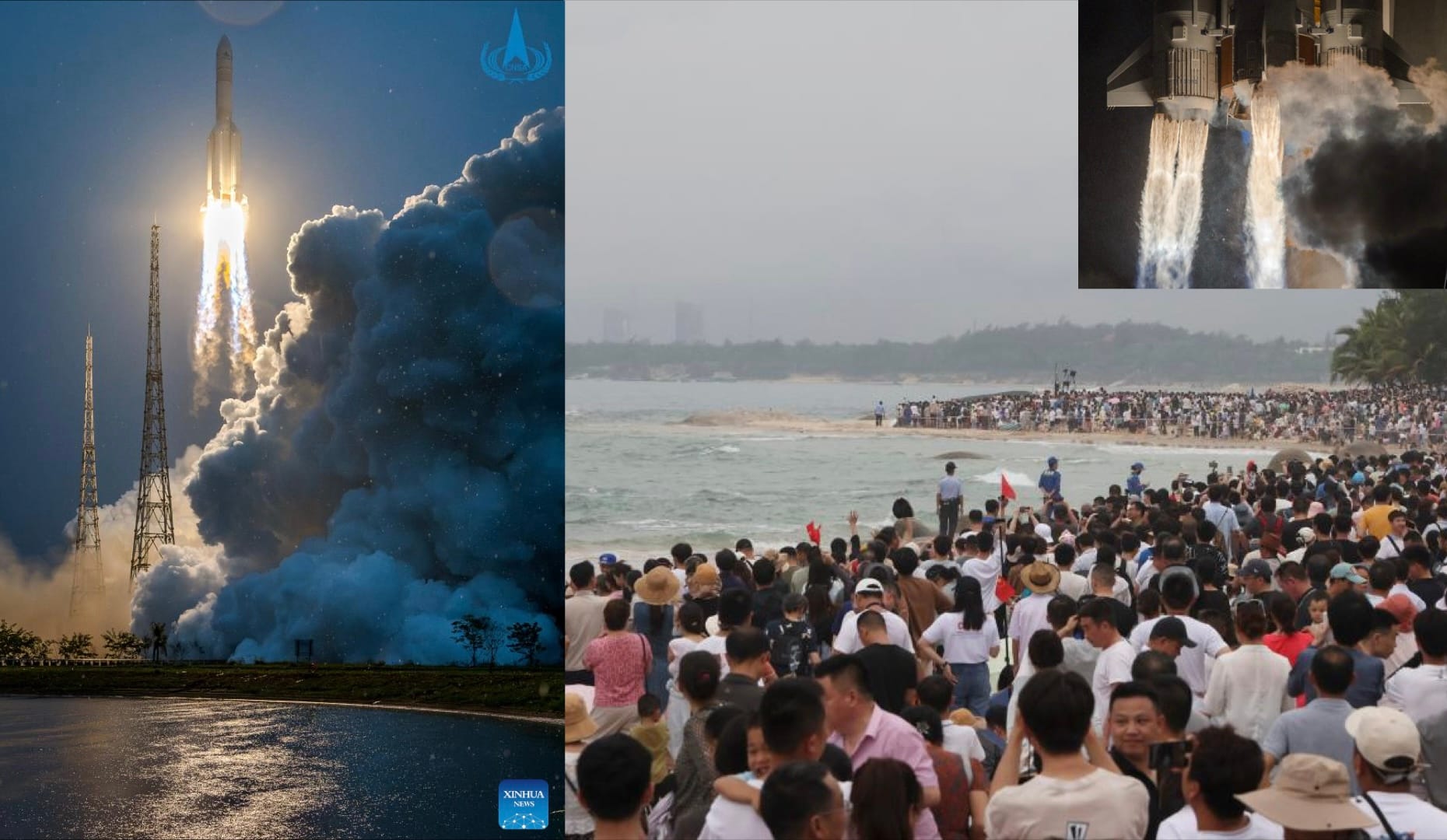
CNSA announced even more international payloads that will be onboard their upcoming Chang’e 8 mission to explore the Moon’s south pole for water ice and other resources. Other than the previously known payloads, the new ones comprise:
- a radio astronomy array from South Africa and Peru
- a retroreflector from Italy
- Russia’s lunar environmental radiation and charged dust monitors
- a hyperspectral mineral mapping camera from Egypt and Bahrain, and
- a “lunar potential monitor” from Iran
For many of these countries, it’s their first Moon mission, which is great. The currently targeted landing site for Chang’e 8 is in the Mons Mouton region at roughly 85°S.
CNSA also announced that 17 countries & international organizations as well as over 50 international institutions have joined the China-led International Lunar Research Station (ILRS) Moonbase project. Between April 24 to May 5, China is hosting an ILRS Developers’ Conference as well as the second lunar sample research symposium.
Overall, these developments of international researchers studying Chang’e samples, numerous foreign payloads flying on Chang’e 8, and sufficient global interest in ILRS are clear signs that China’s approach to scientific cooperation and collaboration at the Moon is working well.
Many thanks to The Orbital Index and Arun Raghavan for sponsoring this week’s Moon Monday! If you too appreciate my efforts to bring you this curated community resource for free and without ads, support my independent writing. 🌙
More mission updates

- With a successful engine burn on April 24, ispace Japan’s second Moon lander RESILIENCE continues to be on its multi-month low energy trajectory to the Moon. RESILIENCE will target entering lunar orbit on May 7. Originally launched on January 15, ispace is targeting June 6–8 as the landing date(s) for RESILIENCE.
- On April 16, ISRO gathered about 50 scientists from across India to deliberate on and help determine next steps for storage and scientific studies of lunar samples to be brought by India’s upcoming Chandrayaan 4 mission.
- Following US DARPA’s selection of 14 companies over a year ago to conduct lunar infrastructure studies with a focus on surface access technologies, the organization is now seeking proposals for a small orbiter that would hunt for substantial water ice hosting locations on the Moon’s south pole by mapping areas from as low as 10 kilometer altitudes. This is similar to Advanced Space’s SLALOM concept. Per DARPA’s solicitation milestones, such a spacecraft is not intended to fly until at least three years though, and its funding allocation is as yet unknown. If and when it does fly, it would finally allow the US to stop failing to meaningfully exploring lunar water as the central theme of Artemis.
More Moon
- Building on measurements made during Firefly’s Moon landing, NASA continues upping its efforts to understand exactly how spacecraft rocket engine plumes blow off lunar soil and rocks to inform future mission safety planning. The agency’s latest investment comes from its Langley center:
We’re bringing back the capability to characterize the effects of rocket engines interacting with the lunar surface through ground testing in a large vacuum chamber—last done in this facility for the Apollo and Viking programs. The landers going to the Moon through Artemis are much larger and more powerful, so we need new data to understand the complex physics of landing and ascent. We’ll use the hybrid motor in the second phase of testing to capture data with conditions closely simulating those from a real rocket engine. Our research will reduce risk to the crew, lander, payloads, and surface assets.
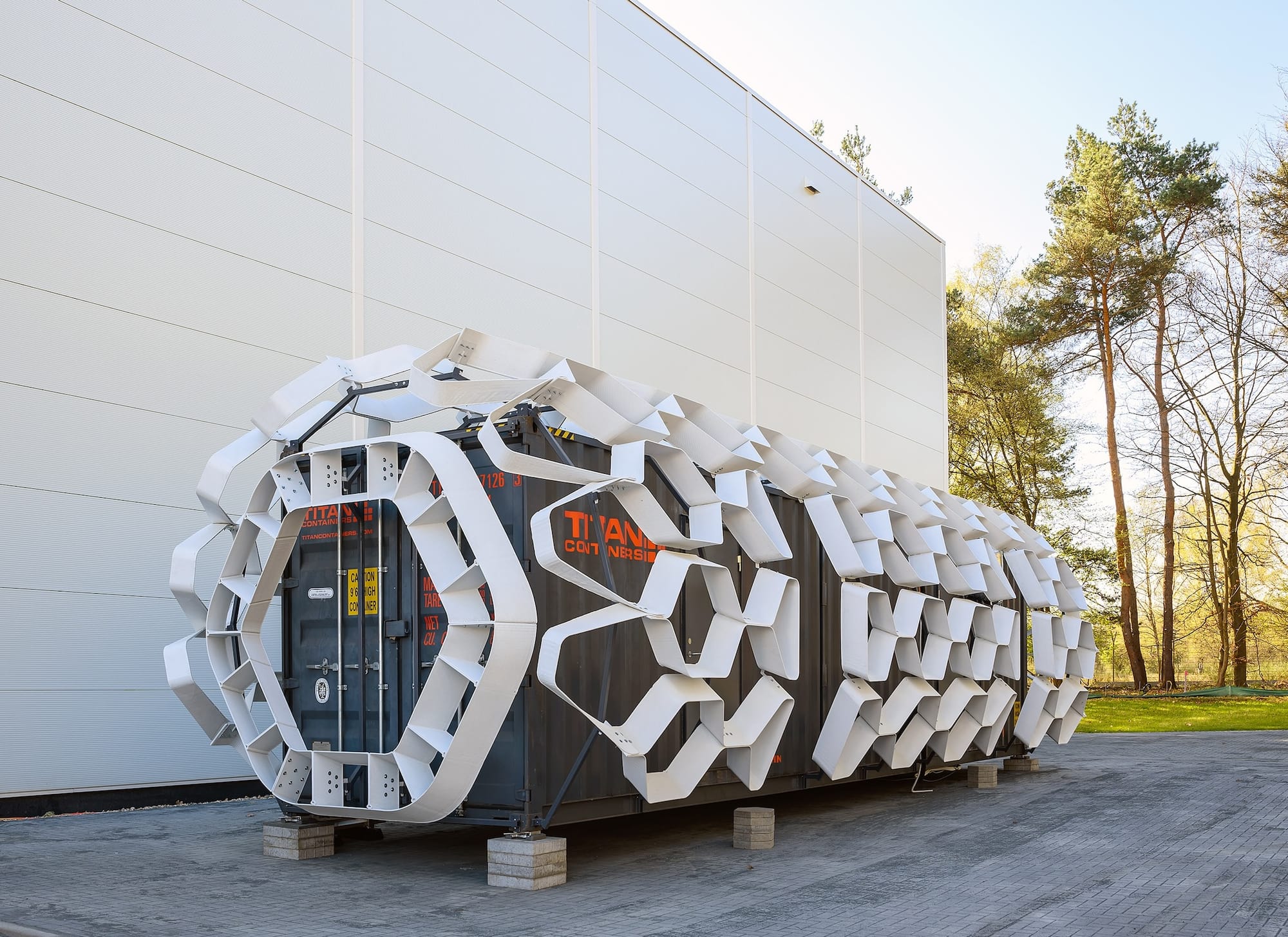
- A simulated habitat module now adjoins ESA’s recently operationalized Moon-simulating LUNA facility to better test complex mission scenarios where humans and robots are interacting in varied ways across prolonged periods.
- China continues to show a keen interest in engaging and inspiring the general public on lunar exploration. The Shanghai World Expo Exhibition and Convention Center is hosting a 10-day space exhibit for the public, including showcasing Chang’e 5 and 6 samples. The National Museum of China in Beijing is currently hosting a two-month exhibit on the extremely successful Chang’e lunar exploration program, with sample displays here as well. Last year, China showcased Chang’e 5 samples at the Beijing Planetarium. Moreover, China evaluated over 9,000 entries from the public to then announce in February the names of the spacesuit and rover to be used on crewed Moon landing missions as being Wangyu and Tansuo respectively. Wangyu means “gazing into the cosmos” and Tansuo means “to explore the unknown”.