Moon Monday #292: An obsessively linked rundown of recent global lunar exploration and cooperation updates
I link so you can click.
Mission updates
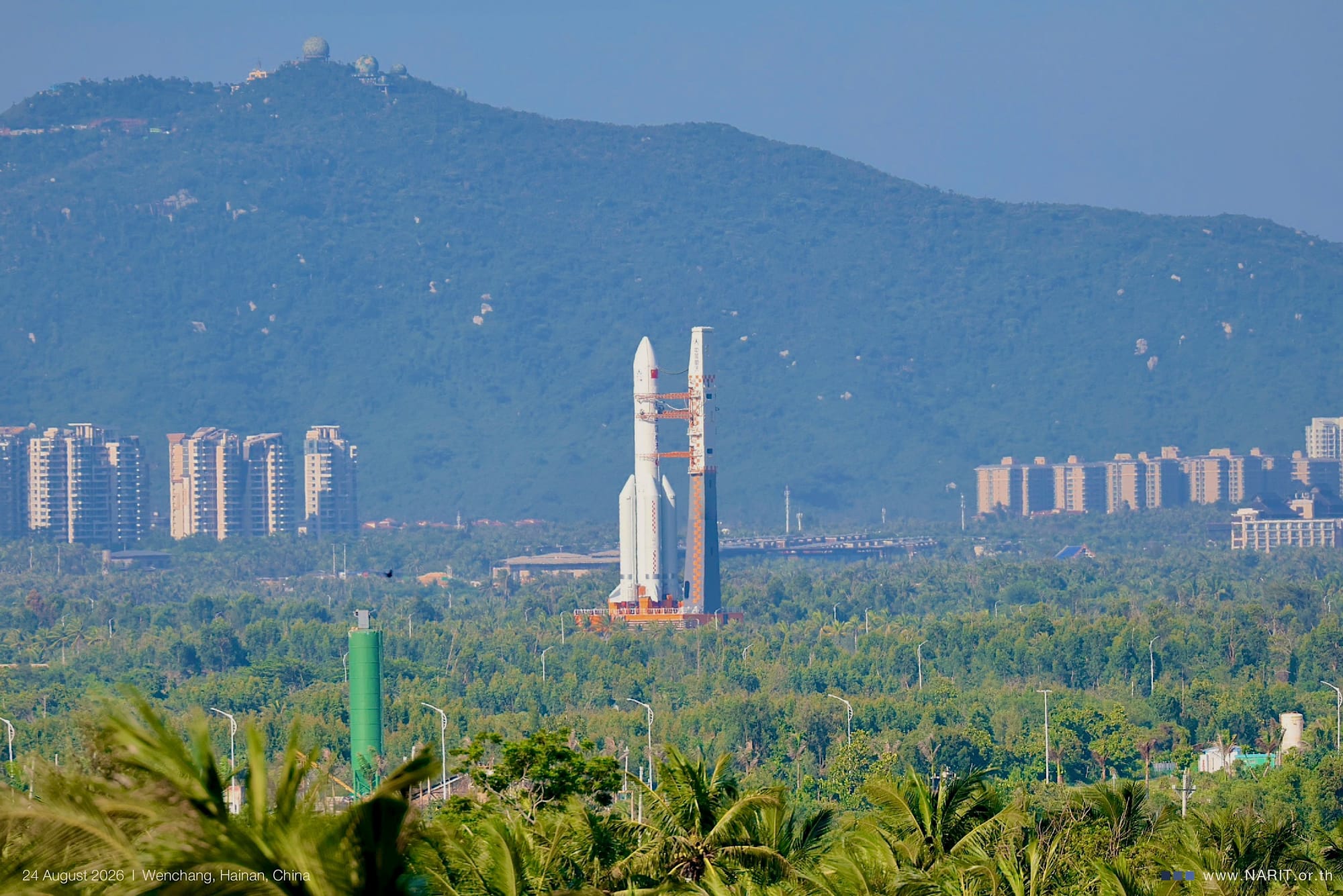
- The launch of China’s Chang’e 7 mission, intending to systematically study water ice on the Moon, was first delayed from late August 2026 to September due to poor weather conditions from a tropical depression but later delayed entirely to early next year without CMSA stating any specific reason. Jack Congram notes that the delay does take place against the background of quality issues facing China’s launch vehicles this year, amid otherwise successful streaks. The Sino government says it’s keen on resolving issues across the board.
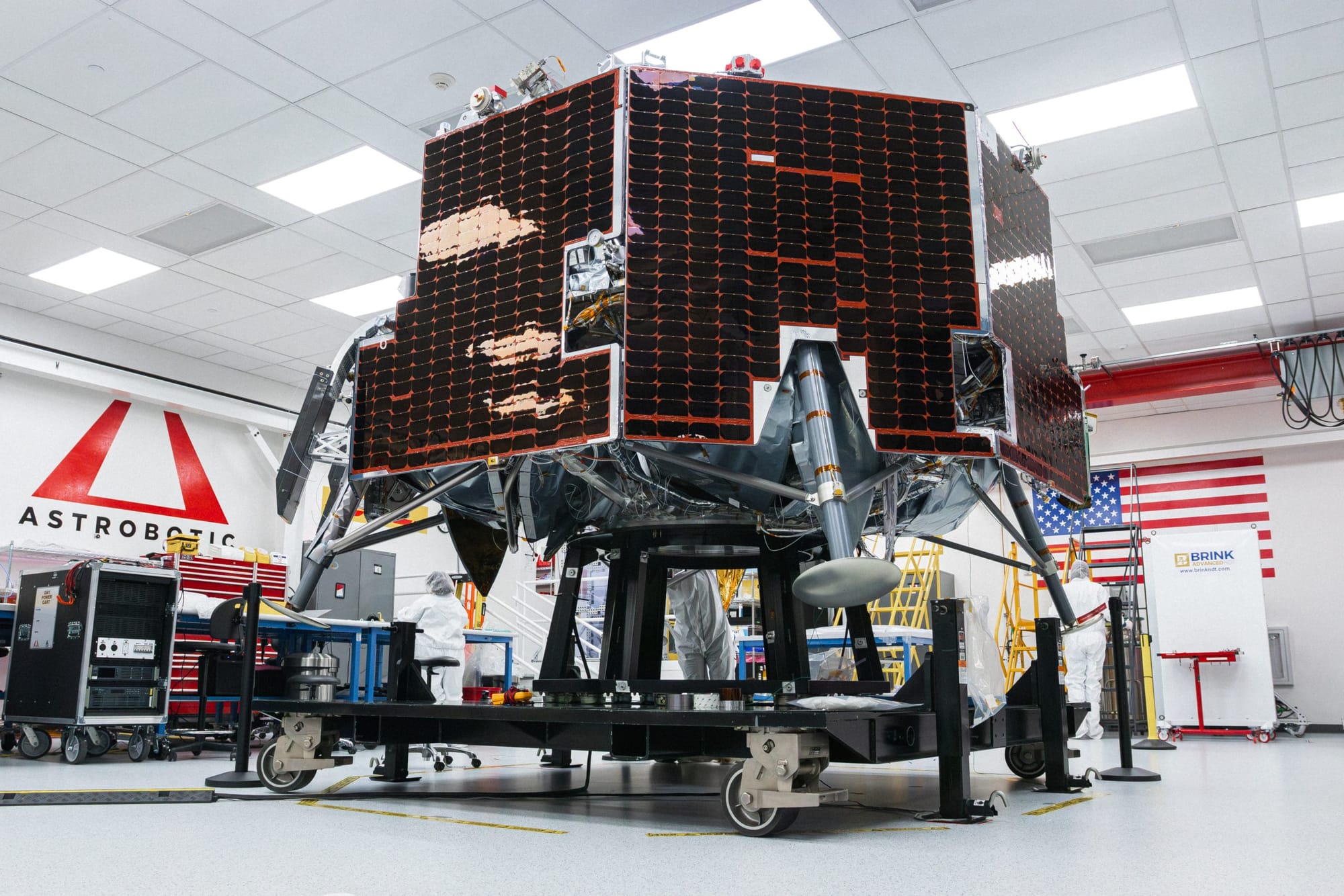
- This means the next lunar mission launching this year could thus be Astrobotic’s large Griffin CLPS lander, which aims to land on the Moon’s south pole. It will deploy the FLIP rover by Astrolab (a Moon Monday sponsor), who onboarded last year after NASA decided not to fly the critical VIPER rover for studying water ice aboard Griffin. FLIP is yet to be integrated with Griffin, which will take place pre-launch at SpaceX’s facilities. Astrobotic has so far shared that it has integrated three of the other lander payloads: NASA’s Navigation Doppler LiDAR (NDL) which will aid Griffin’s navigation, the company’s own CubeRover, and ESA’s LandCam-X which will help improve landing precision. Astrobotic was acquired by Voyager Technologies with a desire to position Griffin’s hoped-for success to bag more Artemis Moonbase contracts from NASA.
- Eric Berger reports on an independent review of the performance of the Artemis II Orion capsule’s heat shield during its April descent to Earth with astronauts. The review found that NASA’s decision to change the reentry profile for reducing the shield’s material loss worked quite well since said loss was about an order of magnitude lower than seen during Artemis I.
- China demonstrated optical laser communications between a lunar orbiter and Earth, as part of its efforts to build a lunar navigation and communications network. Here’s a comprehensive review of each major component China has demonstrated towards having such capabilities. China also announced a constellation of up to ~30 small satellites to monitor objects in cislunar (Earth-Moon) space and study the lunar environment, with foreign partners being invited to co-build satellites or payloads.
Related: A comprehensive review of each major component China has demonstrated towards having such capabilities. 🛰️
- US-based Zeno Power Systems will fly a 5-watt Radioisotope Heater Unit (RHU) on a Firefly lunar lander, possibly on a 2028 mission to the Moon’s nearside as part of the NASA’s CLPS program.
- The Advanced-Space-led and NASA-funded team behind the CAPSTONE-02 mission announced the successful completion of the Critical Design Review (CDR) phase. The mission aims to launch in 2027 and demonstrate rendezvous and docking of two satellites in lunar orbit as well as advance autonomous navigation capabilities.
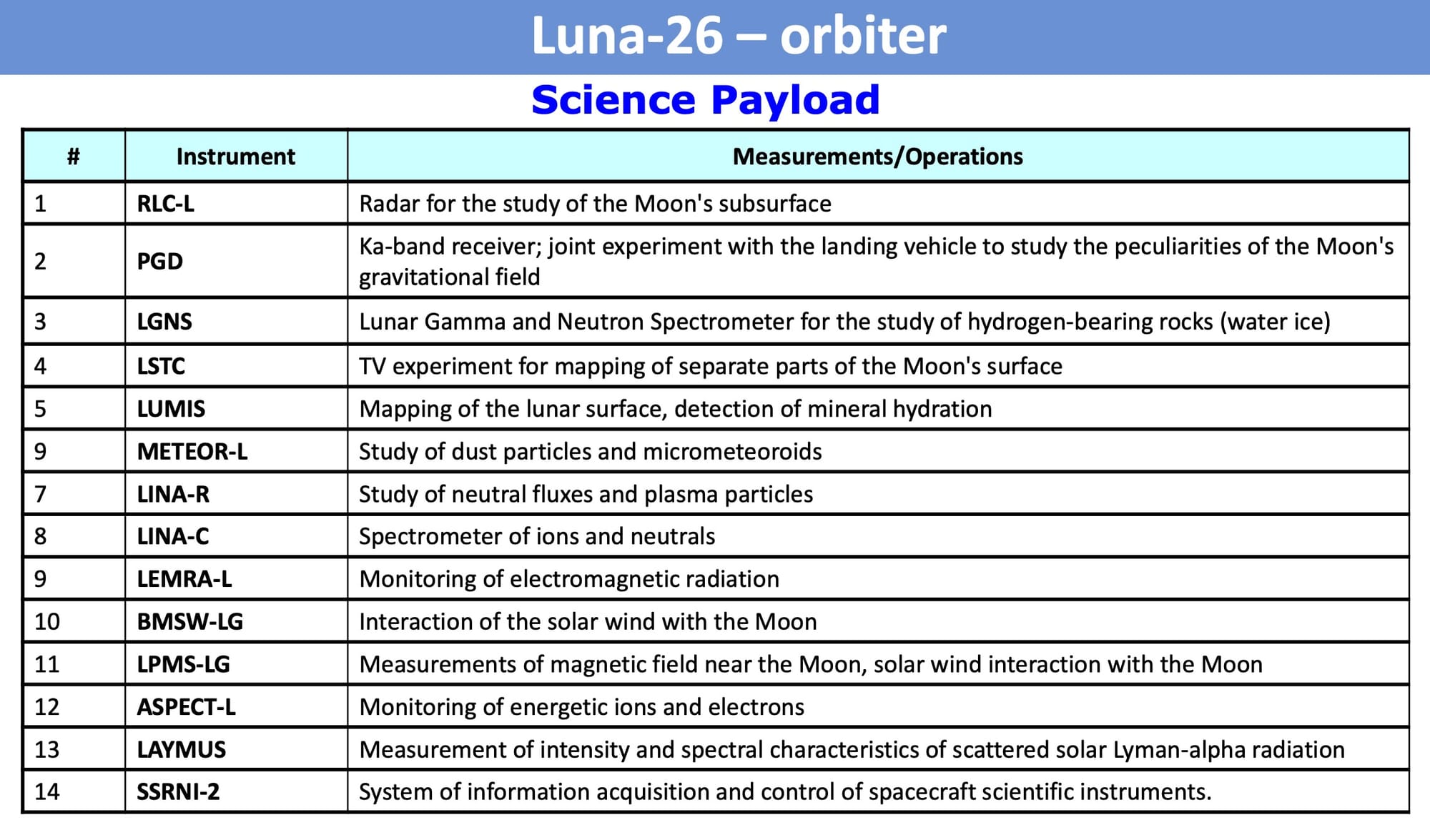
- Russia’s near-future lunar exploration plans still involve launching the polar reconnaissance orbiter of Luna 26. Its primary goal after launching circa 2027 is to map our Moon’s surface in multiple wavelengths at high resolutions. Luna 26 is expected to operate for one year in a low lunar orbit at 60 to 80 kilometers, and for two years in higher orbits of 150 to 200 kilometers. Luna 26 will particularly help scientists better grasp the distribution of water ice on the Moon’s poles, which will be useful data to help plan the China-led ILRS Moonbase project of which Russia is a member. Another major goal of Luna 26 is to measure and characterize the radiation and plasma environment around the Moon. Luna 26’s instruments are listed below.
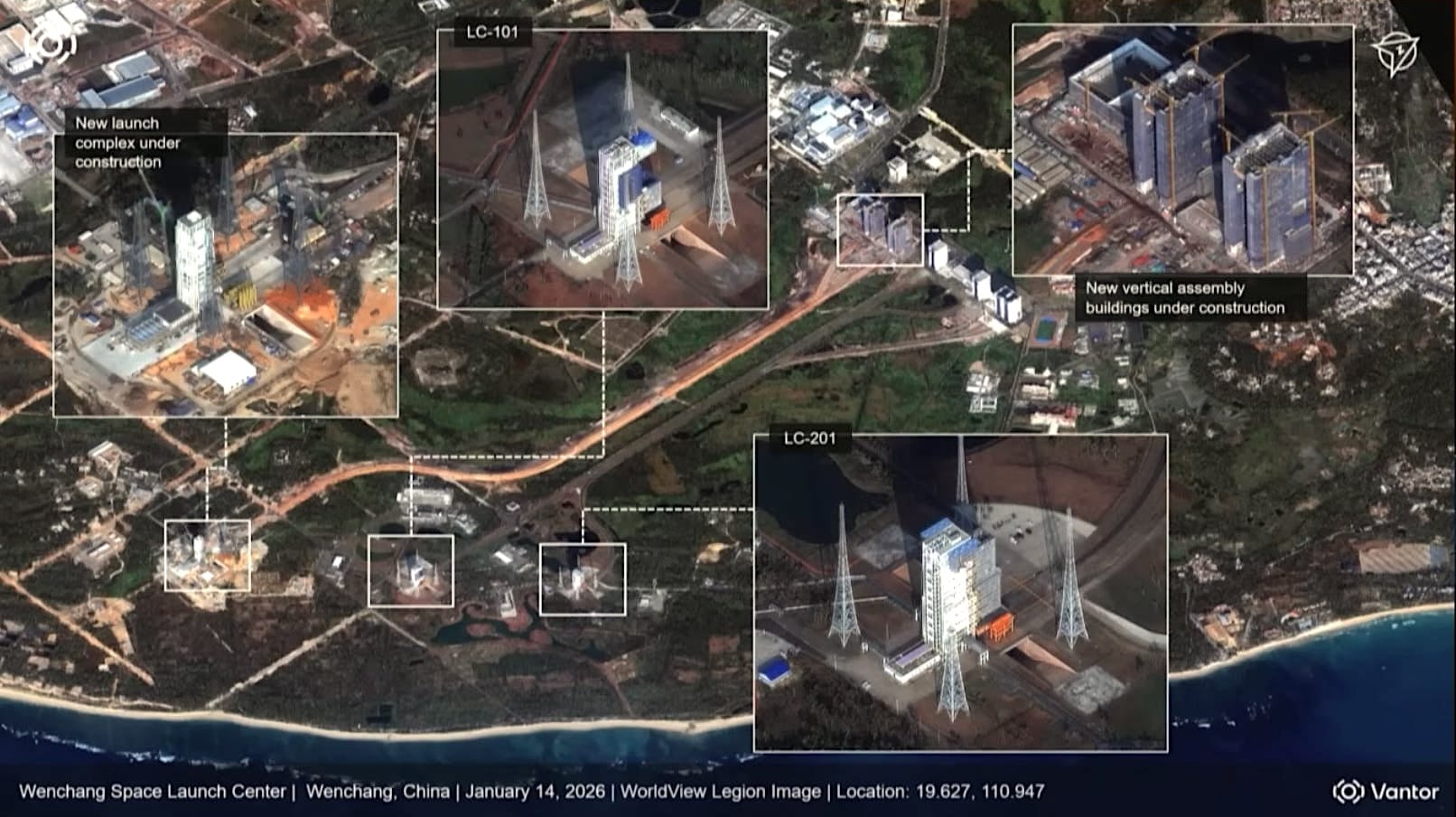
- Jack Congram reports that launch complex infrastructure at the Wenchang spaceport for China’s Long March 10 rocket, which will launch taikonauts to the Moon, has been progressing well ahead of a first robotic test launch in H2 2027.
Cooperation and collaboration
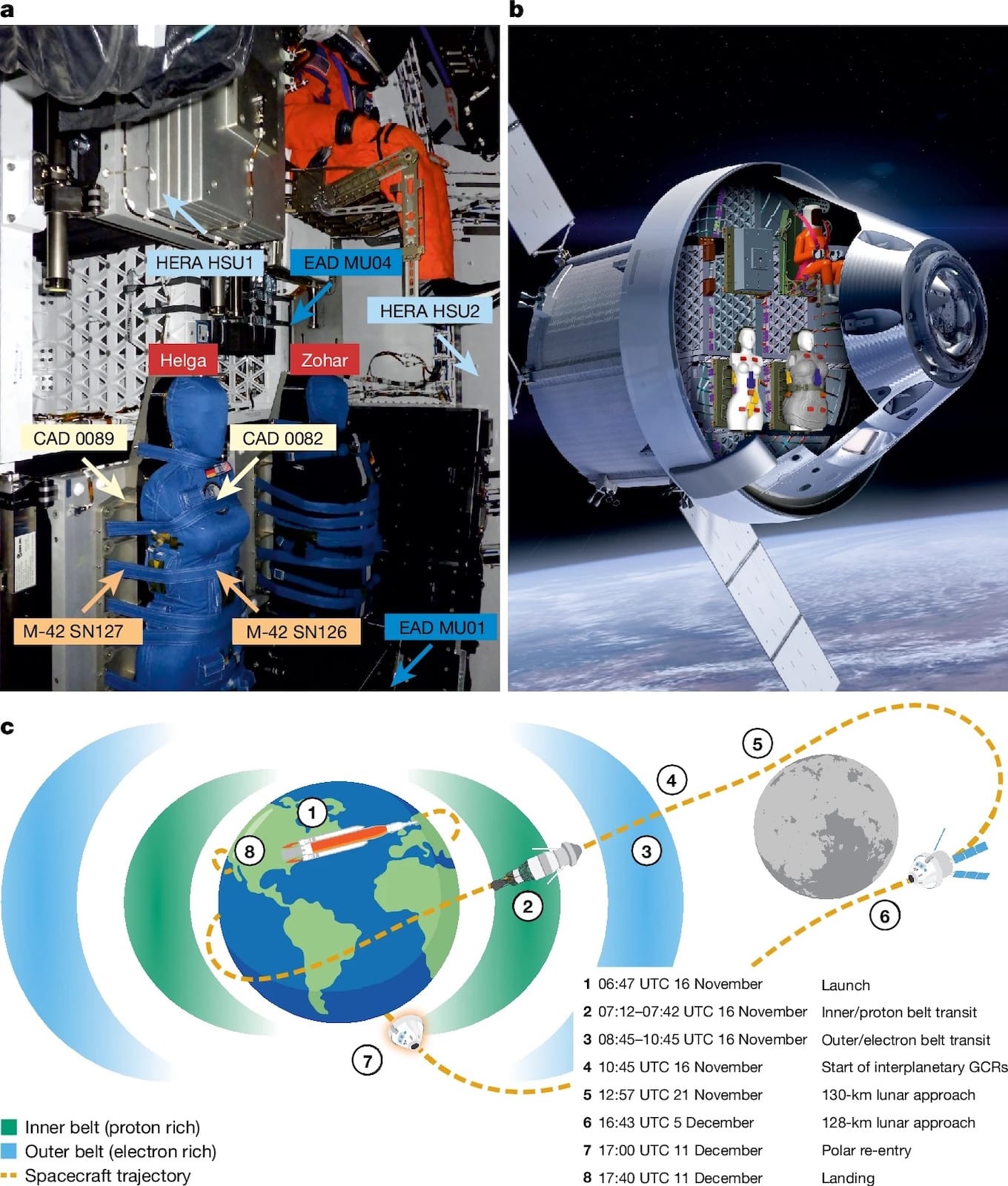
- A joint German-US-Israeli study has found that on NASA’s Artemis I mission, the test vest worn by a mannequin onboard the Orion spacecraft was effective at reducing radiation exposure by ~50%. The result is promising for using similar protective vests on long-duration lunar and deep space missions in the future, especially when solar storms pass through the Earth-Moon space. This study complements another Artemis I radiation evaluation, which found that radiation exposure to future astronauts will vary not only based on time spent at locations within the capsule but also on Orion’s orientation in space. For example, the paper said that when Orion’s orientation was altered during an engine burn, exposure levels dropped nearly in half due to the highly directional nature of the radiation in the Van Allen belt.
- The US-led Artemis Accords for cooperative lunar exploration and data sharing onboarded three more signatories—Serbia, Mauritius, and Turkey—while the US President claimed the Moon to be American territory. The latter went completely unreported by many western space and technology media outlets who otherwise cover equivalent statements by officials on the other side of the world. Anyway, the total number of signee nations of the Accords are now 71. The cancellation of the NASA-led Gateway international lunar habitat though has already previously demonstrated that the Accords have little bearing on preserving international partnerships in the Artemis program, much less flourishing them. ESA and Northrop Grumman are looking into repurposing their respective Gateway elements as independent lunar missions.
- NASA invited India to join the Artemis Moonbase program. As has China last year for the ILRS Moonbase. So far, India has signed the Artemis Accords but not China’s equivalent program. ISRO has been aiding NASA in crewed Moon landing site selections for Artemis. Any new cooperation intent though is only on paper for now so we will have to wait and see what actually manifests as time goes by.
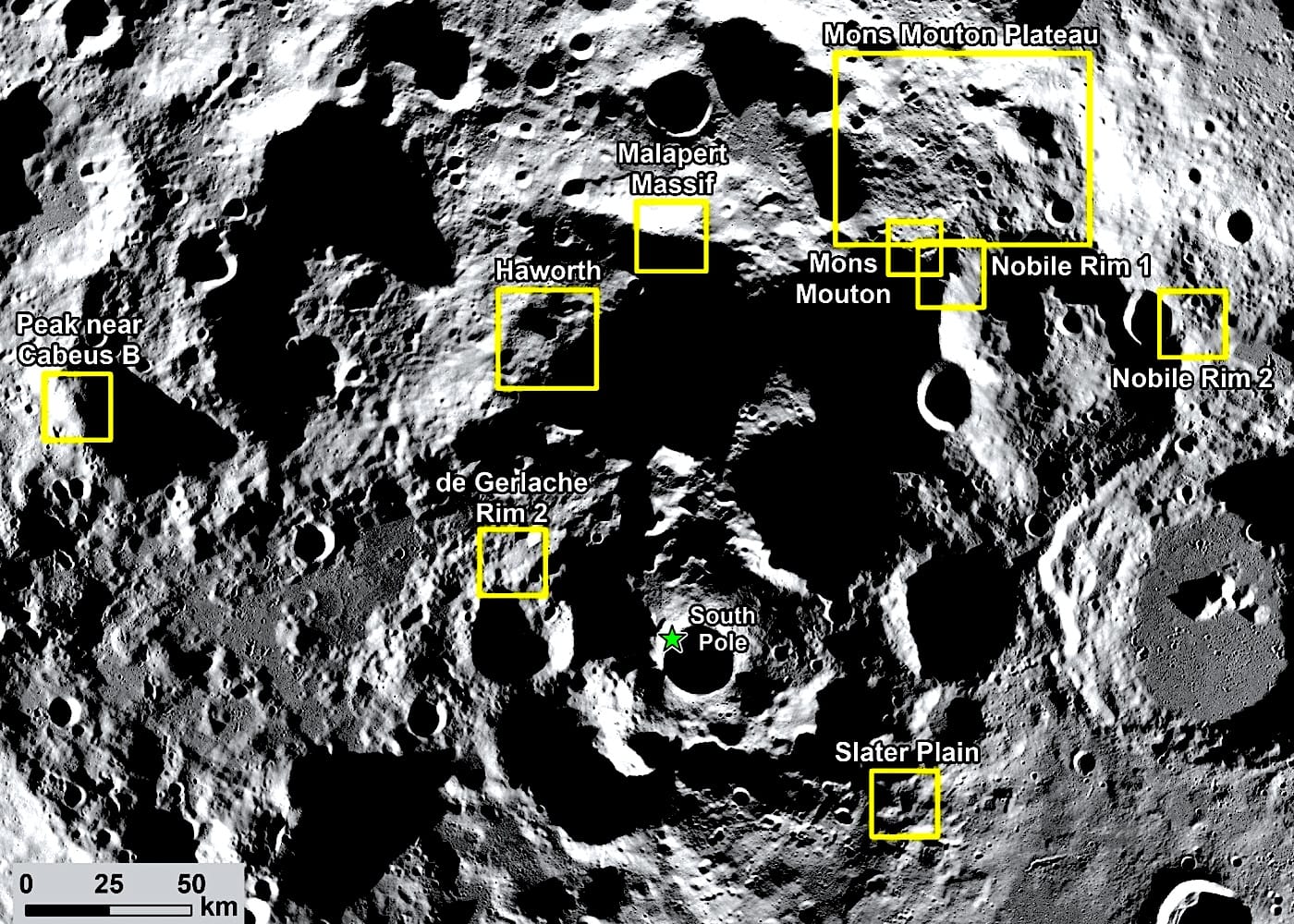
- In collaboration with IBM and several academic institutions, NASA has launched open-source AI models built specifically to aid lunar science. Trained primarily on sections of data from NASA’s Lunar Reconnaissance Orbiter (LRO), the agency claims that the open models will help accelerate geologic studies of the Moon.
- China has established joint laboratories with Thailand and Serbia for lunar science and exploration studies.
- An overview of international mechanisms related to the Moon
Many thanks to Catalyx Space and Elisa Perednia of ILOA for sponsoring Moon Monday. If you too appreciate my efforts to bring you this curated community resource on global lunar exploration for free, and without ads, kindly support my independent writing as it’s purely reader-funded. I don’t use AI to write a single word and cite everything.