Shining light on solar activity and the Moon’s exosphere—a Diwali gift from Chandrayaan 2
Moon Monday #247 and Indian Space Progress #32: The Moon-based Sun watcher
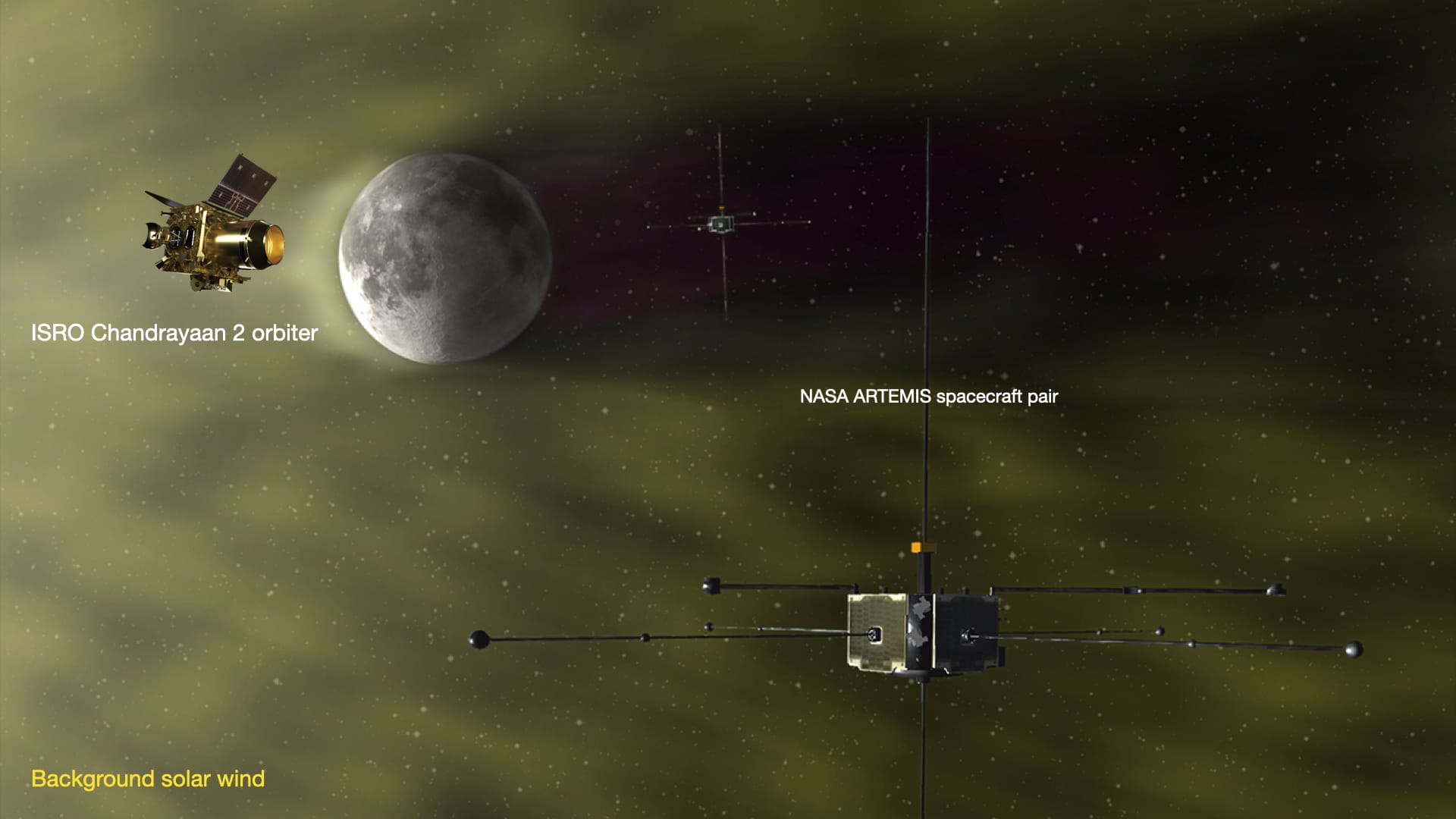
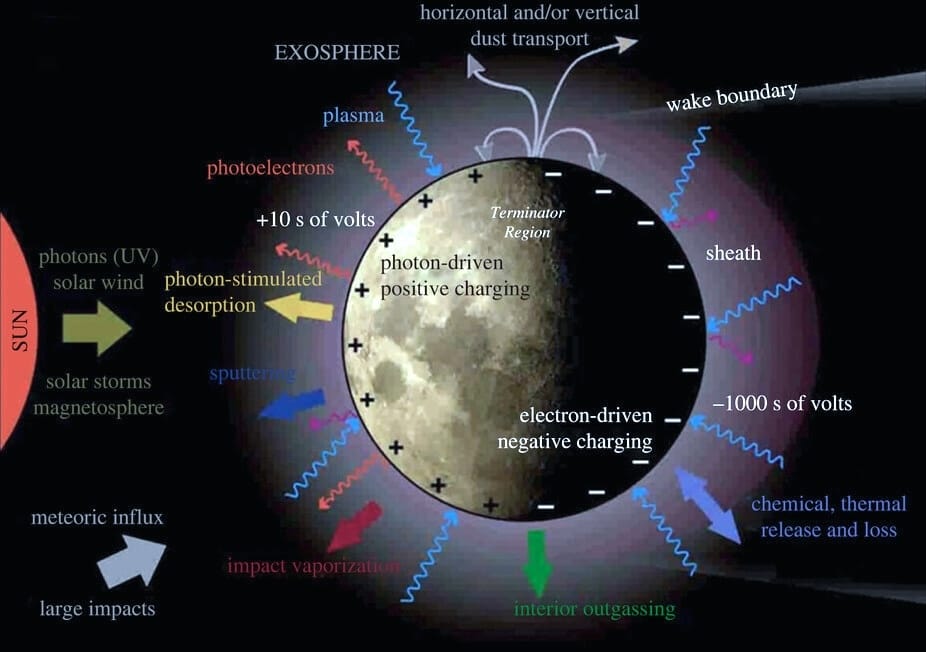
ISRO’s Chandrayaan 2 orbiter doesn’t just study the Moon’s surface and aid its exploration but observes the Sun too. In 2024, storms on the Sun caused highly energetic charged particles to gush out into the Solar System. It caused beautiful, widespread auroras on Earth. And out there at the Moon, the Chandrayaan 2 orbiter was observing the influx of these storms. Our Moon lacks a global magnetic field or atmosphere. Radiation bombards its surface directly, and solar storms release more of its atoms than the usual rate. Theoretical and computational models have predicted for more than a decade that the density of the Moon’s nearside exosphere must increase by at least ten times during solar storms. Understanding this also helps scientists better model changes in Earth’s atmosphere from solar activity.
Two instruments from the Chandrayaan 2 orbiter observed the storms of 2024 in particular: the CHACE-2 neutral gas mass spectrometer and the Solar X-ray Monitor (XSM). Through a published paper, CHACE-2’s particle detection during the heightened solar activity confirmed that the nearside lunar exosphere became at least tenfold denser. This discovery and process is part of a broader picture, in that it’s also relevant to future space exploration. A lunar orbiter studying the Sun may sound like an odd thing but the Moon’s vicinity, airlessness, and interconnectedness to Earth make it a grounded reference point.
You probably wouldn’t get a clear enough picture of this if you read ISRO’s only-jargon-filled release about the discovery on its website, which also needs multiple typo fixes. The release meant for science popularization does not even attempt to capture the unique importance of studying our Sun from the vantage point of our Moon as opposed to elsewhere. That ISRO does not even consider leveraging any of the fairly large number of science writers in the country for such releases, much less think about actively supporting the growing talent, is inefficient. In any case, with the aforementioned discovery explained in brief above, here’s my attempt at capturing its broader picture: why the Chandrayaan 2 orbiter studies the Sun from the Moon, what scientists have found through it, and why the endeavor is unique and relevant to space exploration.
The XSM instrument measures solar flares. This, in turn, provides a reference for the orbiter’s Chandrayaan-2 Large Area Soft X-ray Spectrometer (CLASS) instrument to map elements on the lunar surface based on their varying reflectance. Scientists have published multiple results in international journals based on XSM’s unique observations of the Sun’s surface and atmospheric activities. These include statistical measurements of micro-flares and nano-flares crucial to understanding our Sun’s dynamic nature.
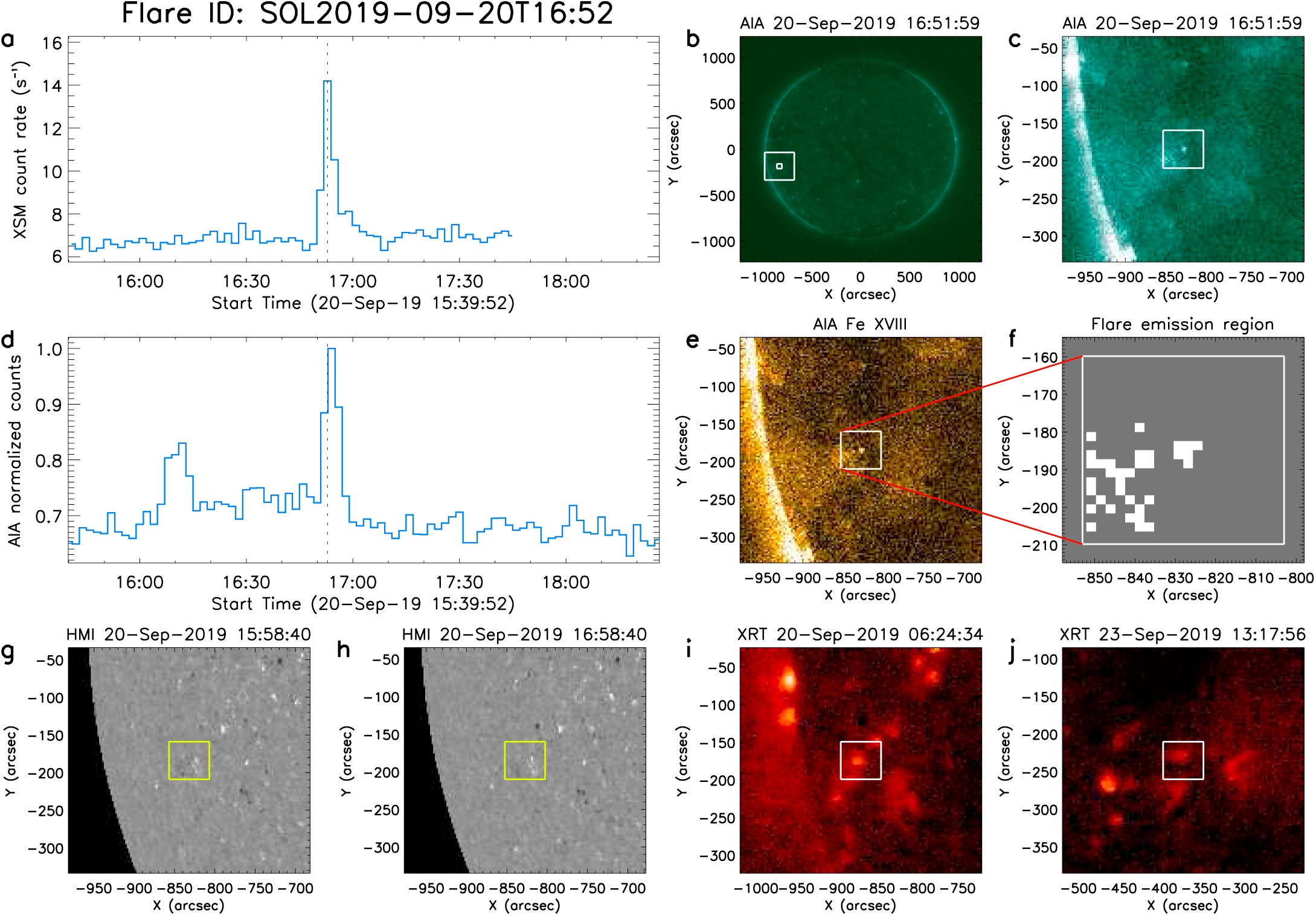
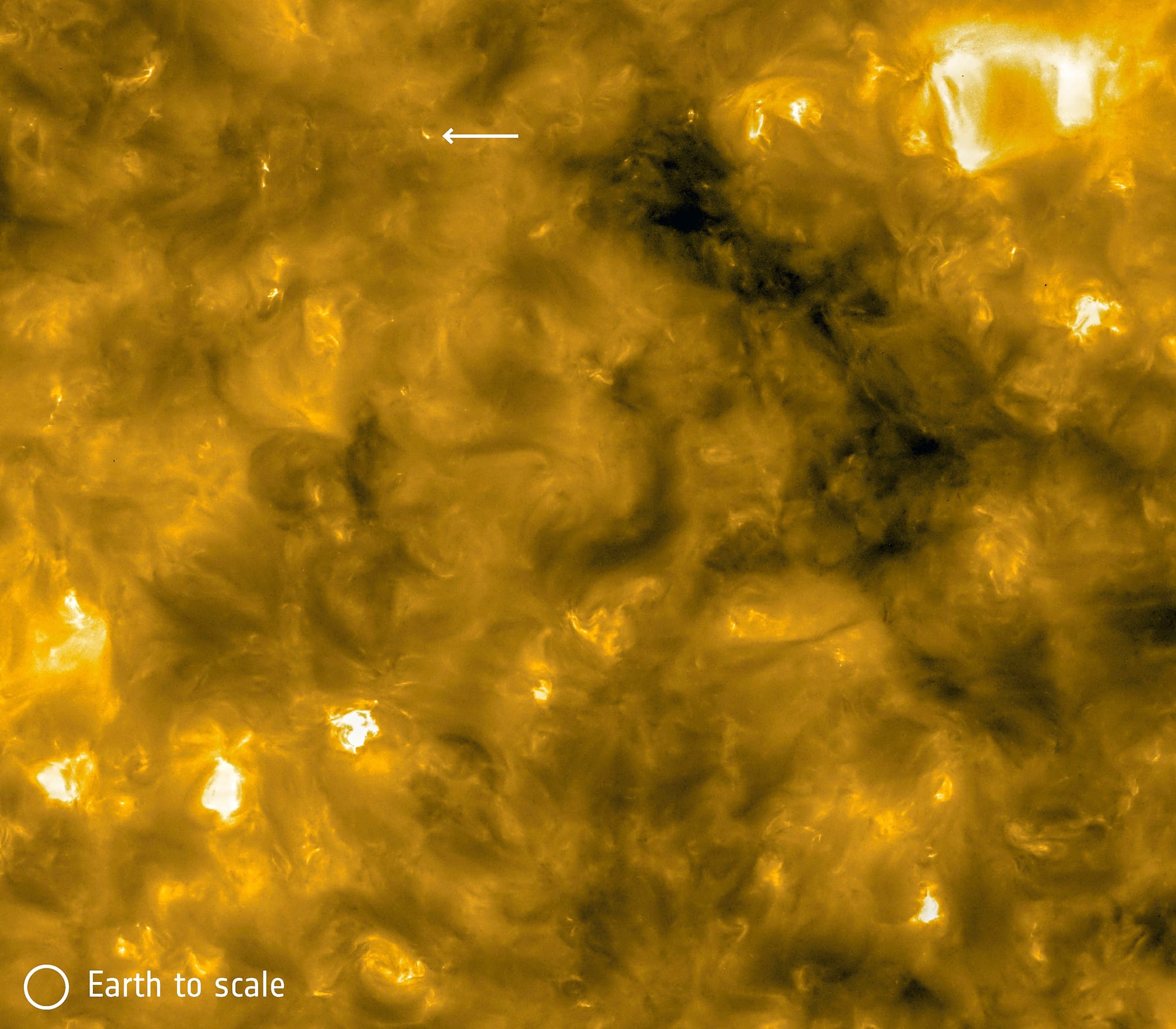
Studying micro-and-nano-flares is important because scientists think they’re relevant to unlocking a fundamental mystery about our Sun: why is its extended atmosphere, the corona, much hotter than its surface? Scientists have been debating since the 1940s how the Sun’s atmosphere is heated to a million degrees Celsius while the surface barely crosses 6,000. Recent close-up observations of many tiny eruptions across the Sun’s surface by ESA’s Solar Orbiter mission coupled with coronal measurements made by NASA’s Parker Solar Probe have helped scientists almost solve the coronal heating mystery. In that context, having abundant global-scale micro-and-nano-flare observations over time from other spacecraft at different vantage points, like the Chandrayaan 2 orbiter, has helped scientists better model, contextualize, and refine our understanding of the Sun. Furthermore, XSM’s high-resolution measurements of the Sun’s background X-ray emissions provided the first elemental abundances of magnesium, aluminum, and silicon in the Sun’s corona during quiet times, refining our understanding of its core nature.
Protecting future lunar explorers
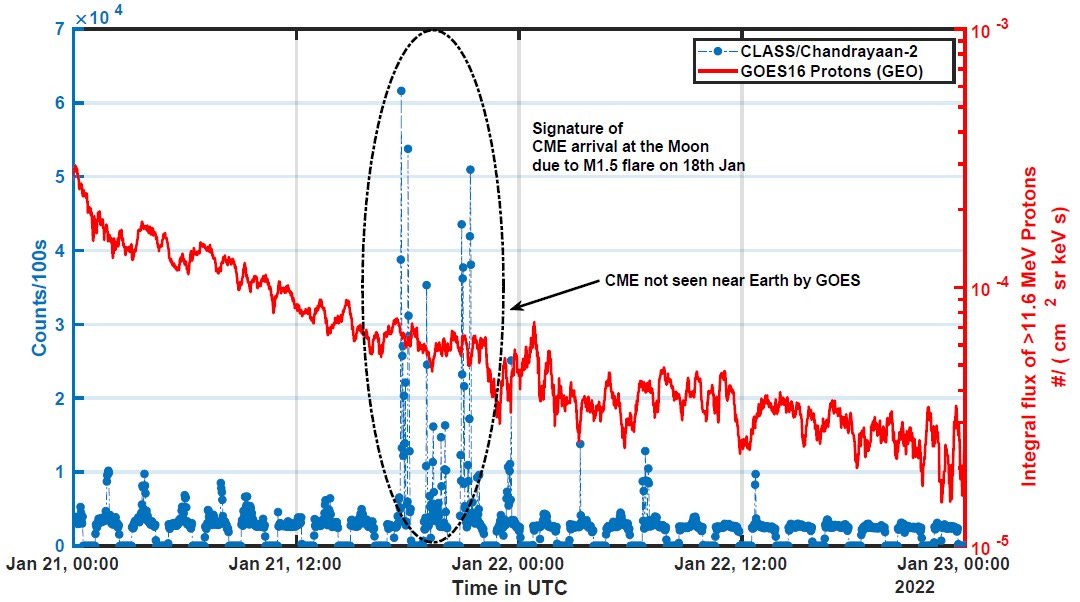
Other than XSM, the Chandrayaan 2 orbiter’s aforementioned CLASS instrument can detect some solar events too. In January 2022, CLASS detected two highly energetic proton emission events in the solar wind. NASA’s GOES-16 satellite couldn’t detect one of these two events because Earth’s magnetic field shielded it from said particles. The Chandrayaan 2 orbiter being at the Moon allowed for said detection, just as other Sun-studying spacecraft outside Earth’s magnetic field could.
The Chandrayaan 2 orbiter’s solar studies are pertinent for astronauts exploring the Moon and deep space. During August 4–7 in 1972, the Sun released several bursts of flares and associated energetic particles. This places its timeframe as being between the Apollo 16 and 17 missions to the Moon in the same year. The energetic particles slammed the Moon in a matter of hours. Had any of the astronauts been on the surface or in lunar orbit during the solar event, they could’ve faced damaging levels of radiation way beyond nominal rates, potentially being cancerous. As we prepare to send astronauts on much longer missions to the Moon and beyond this century, we’ll need to protect our explorers from such solar storms. It’s also to this end that NASA’s Artemis I mission in 2022 studied solar radiation effects and tested vest protection inside the Orion spacecraft for future crew on lunar and deep space missions.
India’s Chandrayaan 2 orbiter is aiding these safety efforts by not only improving our understanding of solar flares themselves but also helping scientists better model solar effects in the Earth-Moon space and the lunar exosphere & surface, all being places host to future human explorers. Dedicated efforts from India for studying solar weather also notably include data from the Aditya-L1 solar observatory and its ongoing contributions as well as specific institutional research such as from the CESSI lab in IISER Kolkata, which focuses on the fundamental physics of stellar dynamics and modeling of solar weather.
Many thanks to Takshashila Institution, PierSight, GalaxEye Space, Gurbir Singh and Catalyx Space for sponsoring this week’s special combined edition of Moon Monday and Indian Space Progress.
If you too appreciate my efforts to capture nuanced trajectories of India in space, support my independent writing:
Sponsored job listings: PierSight Space is hiring for 11 roles—and particularly a senior Embedded Software developer, a lead for Antenna Design, and AIT Mechanical & Electrical engineering leads—to join their teams in Ahmedabad and Bangalore who are building a constellation of SAR-AIS satellites for persistent, all-weather ocean monitoring.
Lunar water and exosphere
With the above context, let’s come back to the discovery we started with originally about the Sun’s wind affecting the lunar ionosphere. The notable fact is it affects water on the Moon too, whose presence and nature is central to sustaining future exploration.
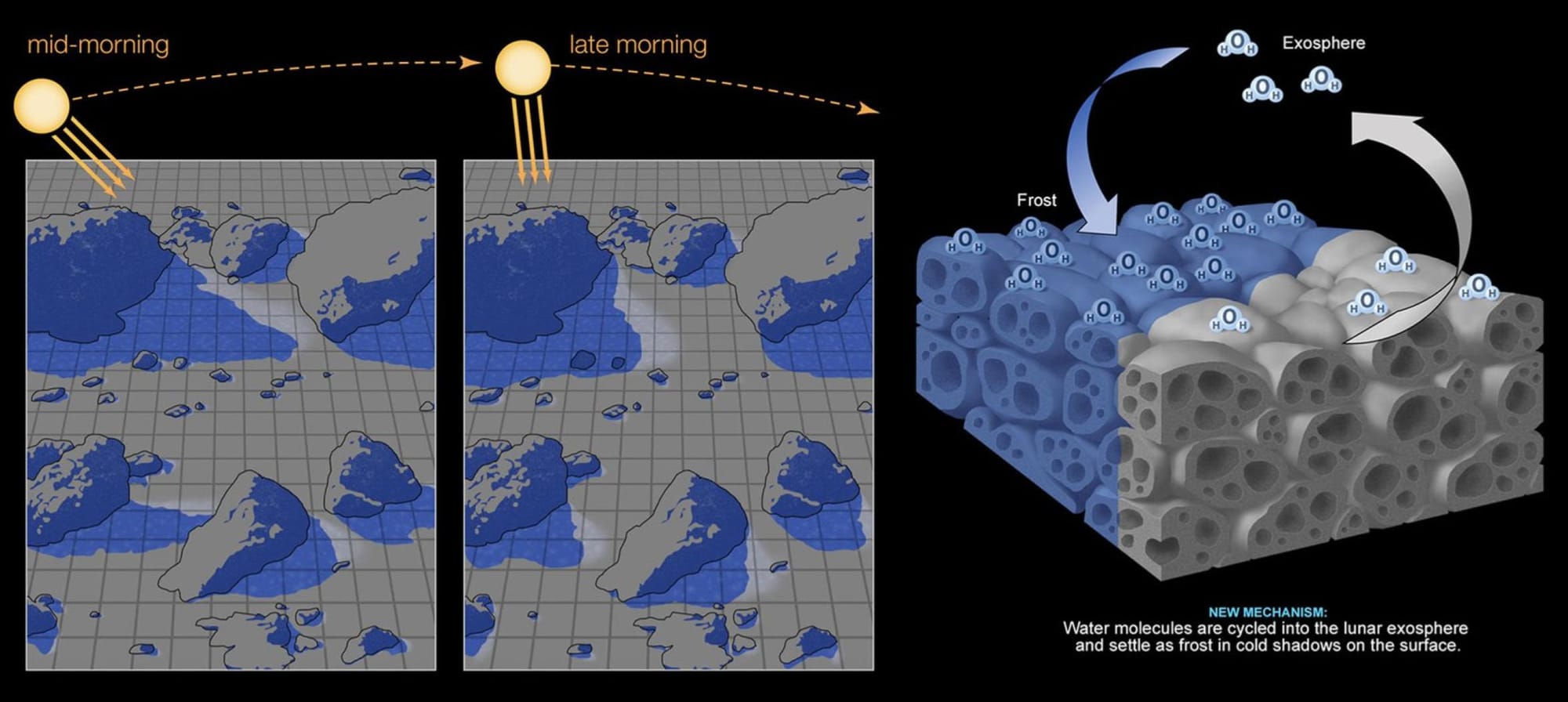
The Sun’s wind of charged particles is one of the key sources of lunar water, and so understanding how the solar wind shapes the lunar exosphere simultaneously helps us understand related fundamental processes like how water is altered and moves across the Moon, and how it’s lost. Lunar missions wanting to map and analyze surface water, like China’s upcoming Chang’e 7 craft or the joint ISRO-JAXA Chandrayaan 5/LUPEX, will be best served when accounting for all of this contextual knowledge. The overall work also enables planetary scientists to make better water cycle models on other airless bodies across the Solar System like Mercury, moons of gas giants, Ceres, and so on, punching yet again well above its weight.
Instead of explaining such interconnected aspects of the solar wind, the lunar exosphere, and human lunar exploration, ISRO’s aforementioned jargon-filled release about the importance of the discovery only states the following with no specifics or elaboration:
Apart from pushing the edge of our scientific understanding about the Moon and the lunar space weather (effect of the Sun’s emissions on the Moon), this observation also indicates the challenges of building scientific bases on the Moon. Lunar base architects need to account for such extreme events, which would temporarily alter the lunar environment, before the effects subside.
More lunar exosphere studies by Chandrayaan 2
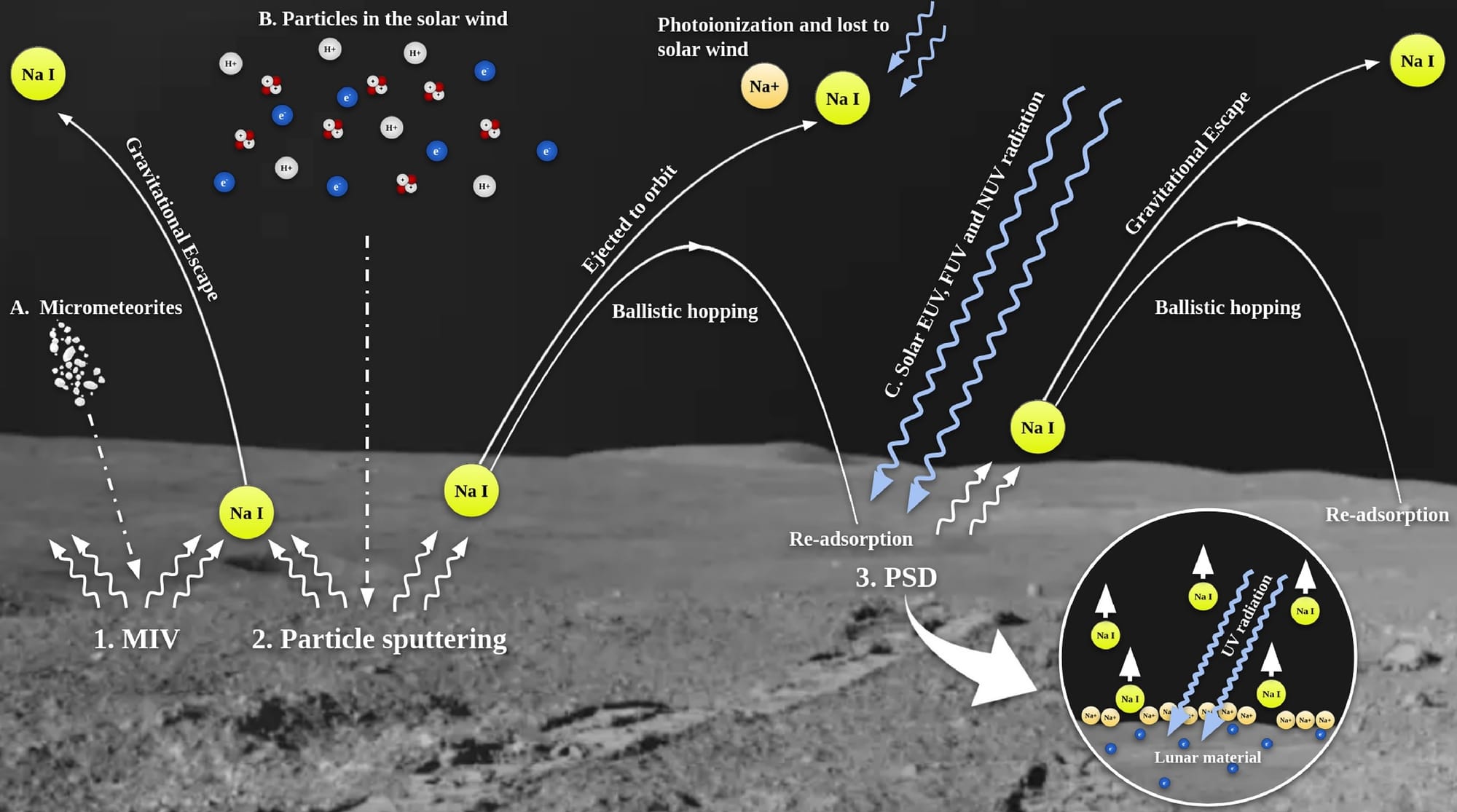
- Indian researchers finally recently made ground-based telescopic observations of sodium in the lunar exosphere, building up on the first ever global-scale sodium maps of the Moon as seen by the Chandrayaan 2 orbiter.
- Indian scientists analyzed how two-way radio signals between the Chandrayaan 2 orbiter and an Indian Deep Space Network antenna were affected, and used that to infer the first electron density profile of the Moon’s ionosphere for when the Moon passes through Earth’s geomagnetic tail. They found the density to be substantially higher than expected.
- In a related study, a probe on the Chandrayaan 3 lander has taken the first in-situ plasma environment measurements from near the Moon’s south polar surface. The study also begins the long process of characterizing the lunar polar environment for planning long-duration human and robotic missions as well as at Moonbases.
Read previous editions on Indian space
- Indian Space Progress #31: Chandrayaan 4 will bring unique Moon materials—and maybe a giant scientific leap for India
- Indian Space Progress #30: Notable nuances about NISAR and how it flows into planetary science for NASA and ISRO
- Indian Space Progress #29: Was Shubhanshu Shukla’s Axiom-4 flight to the International Space Station worth it for ISRO?