Skyroot Vikram-1, the least worst case scenario for India’s launch crisis
Indian Space Progress #41-42: A garden does not save the forest.

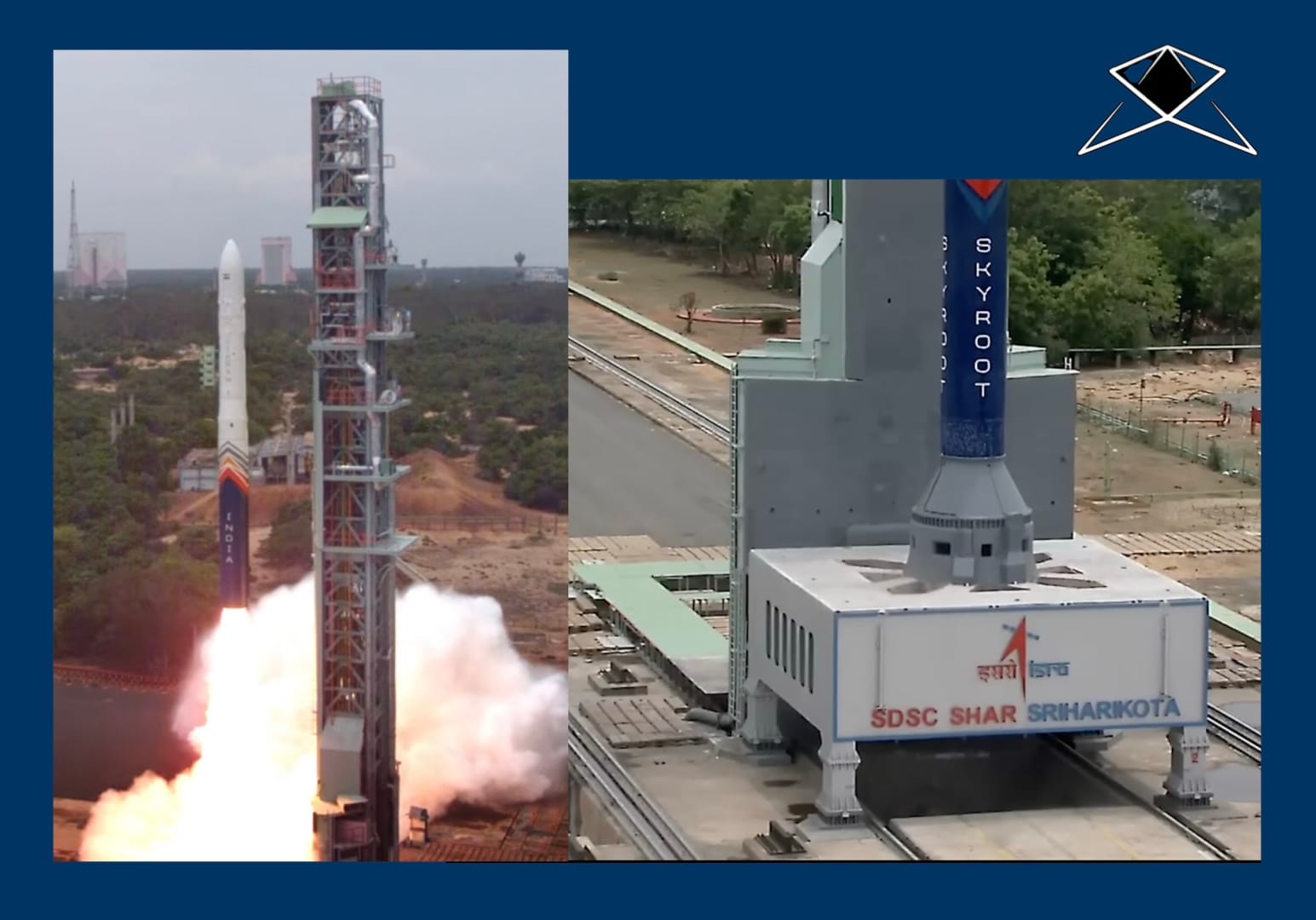
The successful launch of Skyroot Aerospace’s small Vikram-1 rocket on July 18, sans the mixed outcome for payloads, has been hailed as a revolutionary launch success for India by the company, ISRO, the Indian government, various media outlets, industry executives, and people at large. That it’s rare globally to achieve orbit on first attempt bolstered said outlook and emotion of Skyroot unequivocally making history. However, if India really wants to become a space launch power, we must differentiate between success for Skyroot the company and what it does or does not mean for the nation. A garden does not save the forest, as we’ll see in this article.
This article is Part 6 of my series on India’s launch vehicle crisis. A space program can only move as swiftly and flexibly as its orbital rockets, and India has been amid a grinding halt. As such, I’ve been focusing my Indian Space Progress blog & newsletter on fully exploring this situation before resuming coverage of national space activities at large.
- Part 1 of the series reviewed the state of India’s orbital launch vehicles, revealing a bleak picture of ambitious goals sliding to the right, in stark contrast to the incessant chest thumping about efficiency.
- Part 2 analyzed the intricacies of ISRO’s launchpad infrastructure, showing how every PSLV rocket failure cascades effects to all Indian rockets in direct or indirect ways.
- Part 3 assessed and concluded that India’s rockets will not be able to meet its civil space and strategic launch manifest by 2030 even at peak performance.
- Part 4 shows how Chandrayaan 4 is deeply tied to India’s launch vehicle and human spaceflight programs, and how the specific rocket it needs is also the catalyst required to better manage India’s launch crisis.
- Part 5 lists a multitude of causes slowing down India’s launch vehicles, and what would it take for the country to achieve an optimum “hat-trick” state given its many needs and ambitions in space.
- Part 6, this article, explains how even if we see an optimistic progression of flights from Skyroot, banking on the success of its first flight, India’s growing gaps in orbital launch capacity and manifest remain unresolved anyway.
Small launch is niche, and India’s manifest is hungry for big rockets
Vikram-1 is a small-lift launch vehicle, designed to launch satellites weighing around 300 kilograms to Low Earth Orbit (LEO). That places it in between the ~250 kilograms Rocket Lab’s Electron rocket has been pushing to the same orbit class and the ~350 kilogram range ISRO’s SSLV rocket can pull. Today Electron, the leader in the small-lift space, launches far less frequently than originally envisioned. What started out as a plan for 50+ launches annually has in practice hovered around a single dozen. That’s because medium-lift rockets like SpaceX’s Falcon 9 have launched the vast majority of orbital probes. Many upcoming market entrants like Rocket Lab’s own Neutron rocket are medium-lift vehicles too, hoping to slice the Falcon 9 pie. As such, it’s doubtful if small-lift rockets have a sizable market to begin with in order to be revenue positive. The fact that the Hyderabad-based Skyroot effectively also competes with ISRO’s own SSLV rocket, and both vehicles compete internationally as well, further constrains the chances of business success in a limited market.
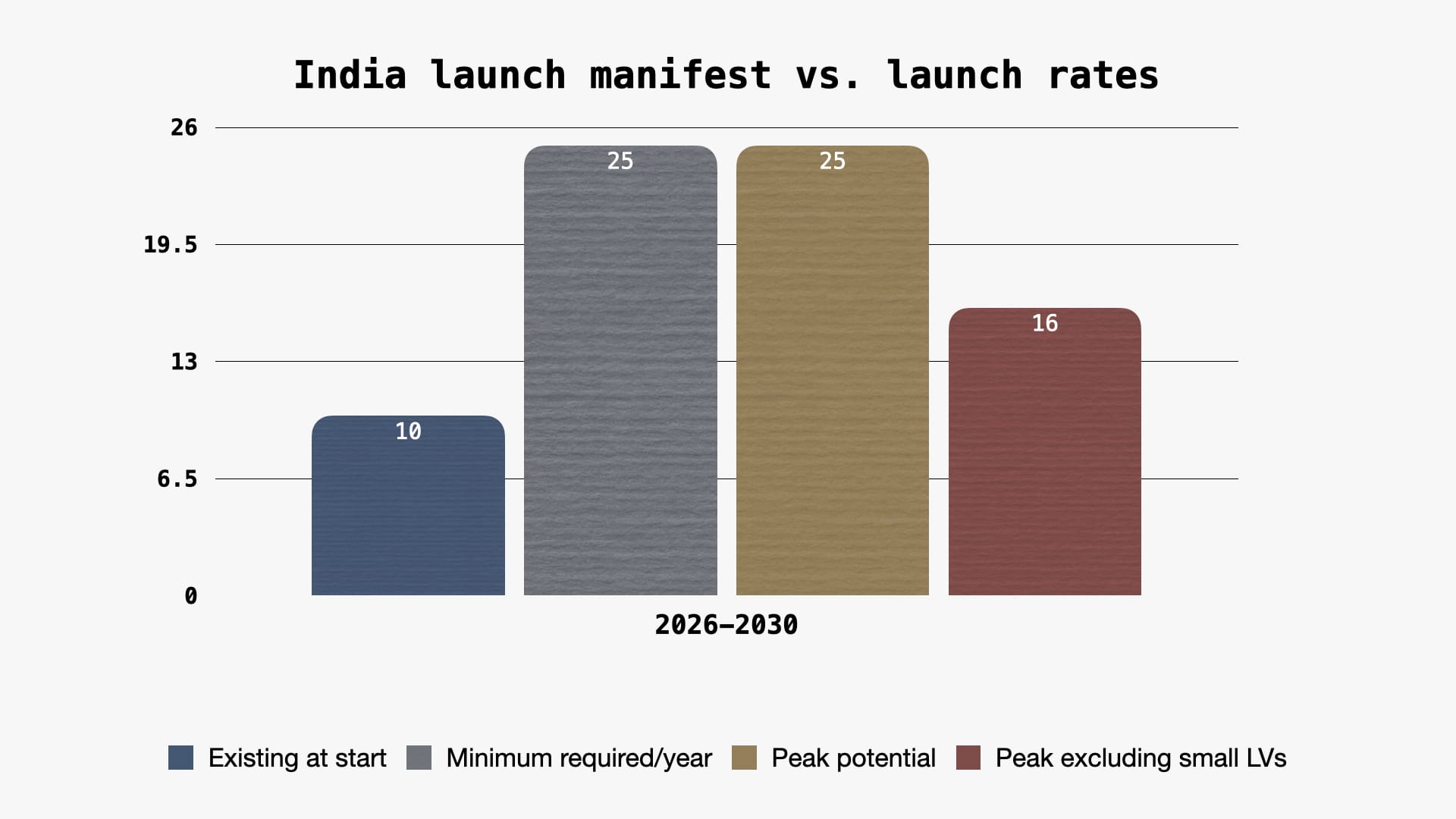
Even if we hope and assume that the thousand-plus people of Skyroot bag a commendable place in the small-lift launch market, that does not in itself solve India’s space access crisis. We saw in Part 3 that India’s rockets will not meet its civil space and strategic launch manifest even at peak performance this decade. A key observation from that assessment is that the major launch gap lies not just in frequency but in mass-to-orbit as well. Both for this decade and the next, India’s manifest leans squarely on the heavy-lift side in terms of mass. Even ISRO’s medium-lift PSLV rocket, with its six to seven times greater lift capacity than Vikram-1, can only cater to a smaller fraction of these mass-heavy launches. In the age of literal Moonshots and satellite constellations, the need for Vikram-1-class rockets is largely on the margins for achieving sovereign space prowess.
Vikram rockets are not even PSLV replacements
People in India have expressed hope that Vikram-1 and other such privately built rockets like from Agnikul will help resolve India’s launch bottlenecks soon, particularly by replacing the PSLV. It’s hard to reconcile this hope with reality, even when accounting for planned vehicle upgrades by Skyroot. To understand the niche-ness of their rockets beyond the aforementioned limitations of small launch, let’s look at the launchpads available for Vikram vehicles and place the planned performance upgrades in context.
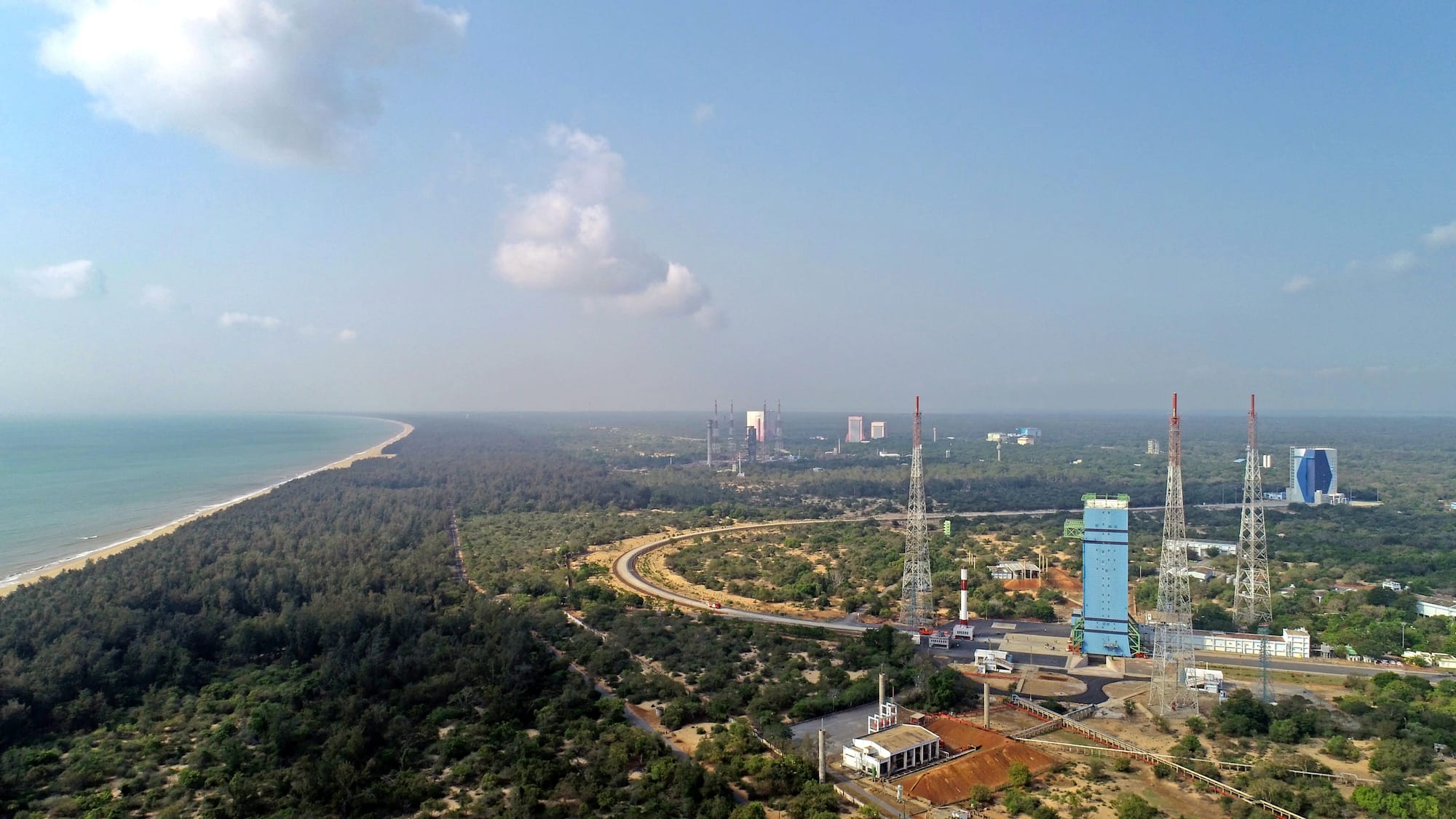
India’s only active orbital spaceport is the Satish Dhawan Space Centre in Sriharikota on the country’s south-eastern coast, a low-latitude location (13.7°N) suitable for many kinds of launches. The port primarily houses two launchpads, and their many associated facilities. The two pads are literally called the First Launch Pad (FLP) and the Second Launch Pad (SLP) respectively. India built the FLP in the early 1990s for ISRO to launch the then-new PSLV rocket. Today, the pad also supports launches of the SSLV rocket. Vikram-1 was launched from the FLP as well. The company does not have a pad of its own yet. As for ISRO’s SLP, it can also host PSLV or SSLV launches but does so less frequently as ISRO built that pad in 2005 to primarily launch the heavier rockets GSLV Mk II and LVM3. These latter two vehicles cannot be launched from the FLP due to them sporting cryogenic upper stages.
Given these launchpad availability dynamics, whenever a PSLV rocket fails, which has happened the last two times, India effectively loses the value of its First Launch Pad. The SSLV and Vikram-1 are small-lift launchers. Even a five fold increase in their launch frequency doesn’t match the amount of mass a single PSLV can lift off of Earth to equivalent orbits. In fact, because rockets launched from Sriharikota need to maneuver around the southern Sri Lankan mainland for safety, the SSLV and Vikram-1 rockets utilize a larger fraction of their fuel in this process compared to the PSLV. This reduces their practical lift capacity.
Skyroot’s planned upgrade to Vikram-1 with strap-on boosters, called Vikram-1U, only increases the capacity enough to remove this negation but doesn’t change its mass class. The SSLV’s equivalent upcoming performance boost with an upgraded first stage falls in the same category. While Vikram-1’s carbon-fiber composite structure and 3D-printed upper stage liquid engine help conserve mass and slightly increase performance, they do not change the fundamental penalty the rocket equation levies when maneuvering around a large landmass. In fact, open source orbital data from CelesTrak reveals that Vikram-1’s upper stage has not been deorbited, a maneuver necessary for the safety of others operating in orbit. This could be either due to Skyroot losing control of the vehicle or the lack of sufficient fuel onboard. For a small launch vehicle, any deviation from a nominal flight quickly results in this possibility of leaving an uncontrollable upper stage in orbit post satellite deployment.
Coming back to Sriharikota, the fact that the SSLV and Vikram rockets utilize the FLP to launch means they will effectively keep blocking PSLV’s FLP launches due to pre-launch planning and post-launch refurbishments; all while also reducing the nation’s overall lofted mass to orbit. The dynamic is thus a tradeoff between the PSLV’s greater lift capacity and the swiftness of small rockets. Even when Skyroot makes and flies the more powerful Vikram-2 rocket with a cryogenic upper stage later this decade, it would not come close to the PSLV’s prowess as the latter would still lift about three times more mass to space at once. And it’s a vehicle that already exists.
Now, yes, ISRO is building a dedicated launch complex further down south in Kulasekarapattinam for small-lift vehicles such that they don’t need to maneuver around the Sri Lankan mainland post-launch. Paired with a higher frequency of annual launches through dedicated facilities at this complex, at roughly a dozen per vehicle, SSLV and Vikram can become more competitive relative to their current states when launching from here. But the fruits of these efforts are not expected to begin until at least 2028, which is when the new launchpad is supposed to host its first orbital launch. And that’s assuming no further delays for the pad that’s already slipped past an originally intended 2025 debut. The ramp up for optimal usage of the complex will also take time. In any case, improvements through India’s second launch complex will only be so in the small launch space. They do not close the gap against the performance delivered by the medium-lift PSLV. If anything, the major contribution of the second launch complex will be to keep the small rockets out of the way from the FLP at Sriharikota so that the facilities there to increase PSLV’s launch rate can be efficiently utilized after all.
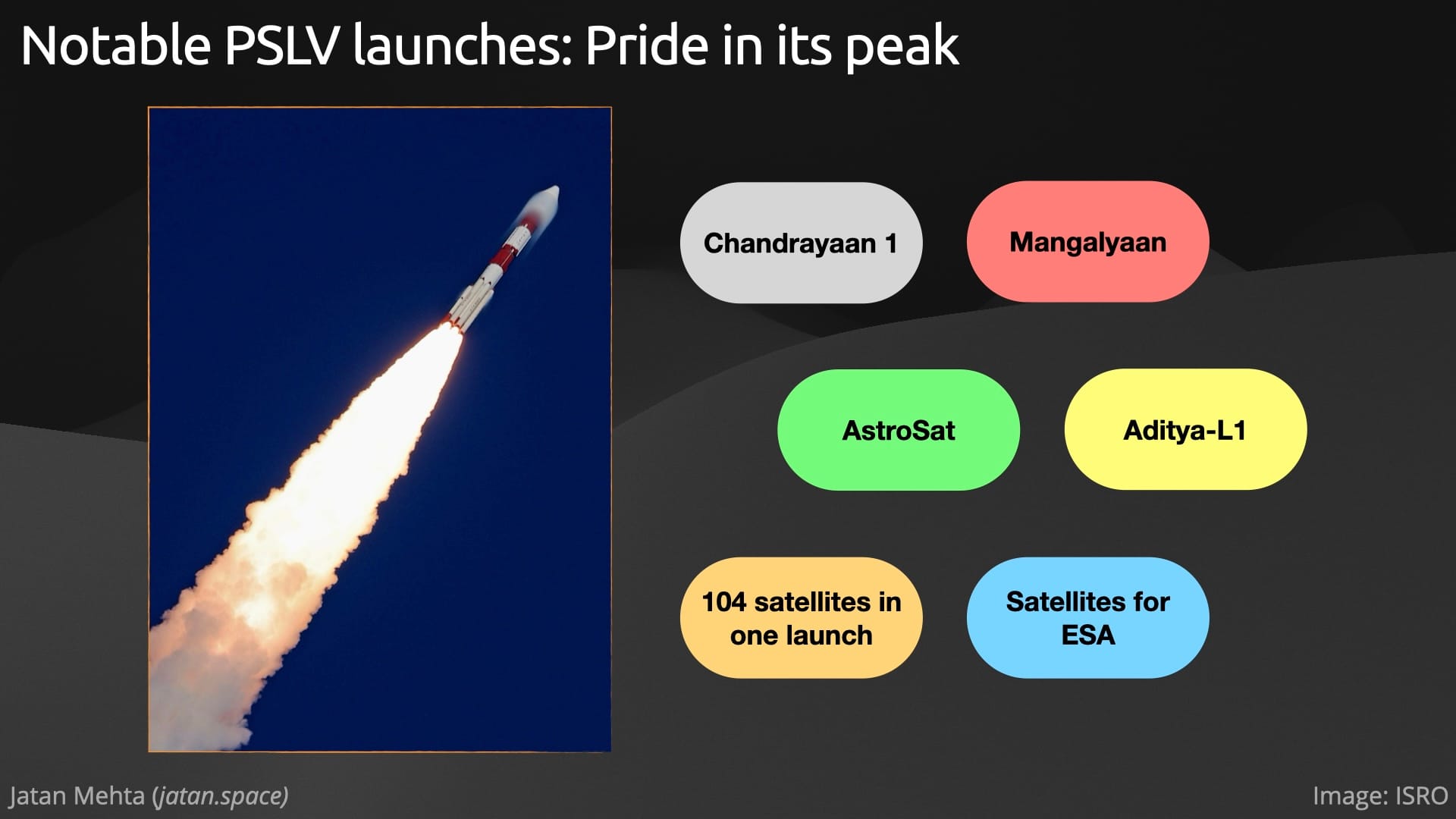
But if India wishes to forget the PSLV, which still hasn’t returned to flight after two back-to-back failures, and lean on the SSLV and private Indian rocket companies instead, the country will end up launching far less useful mass to orbit this decade and next compared to doing so on PSLVs, ultimately meeting even less of our space manifest. There is simply no place in India building a PSLV replacement. For Skyroot or any other India-operated company to build and operationalize a PSLV-class vehicle will take time.
ISRO support is great but only a baseline
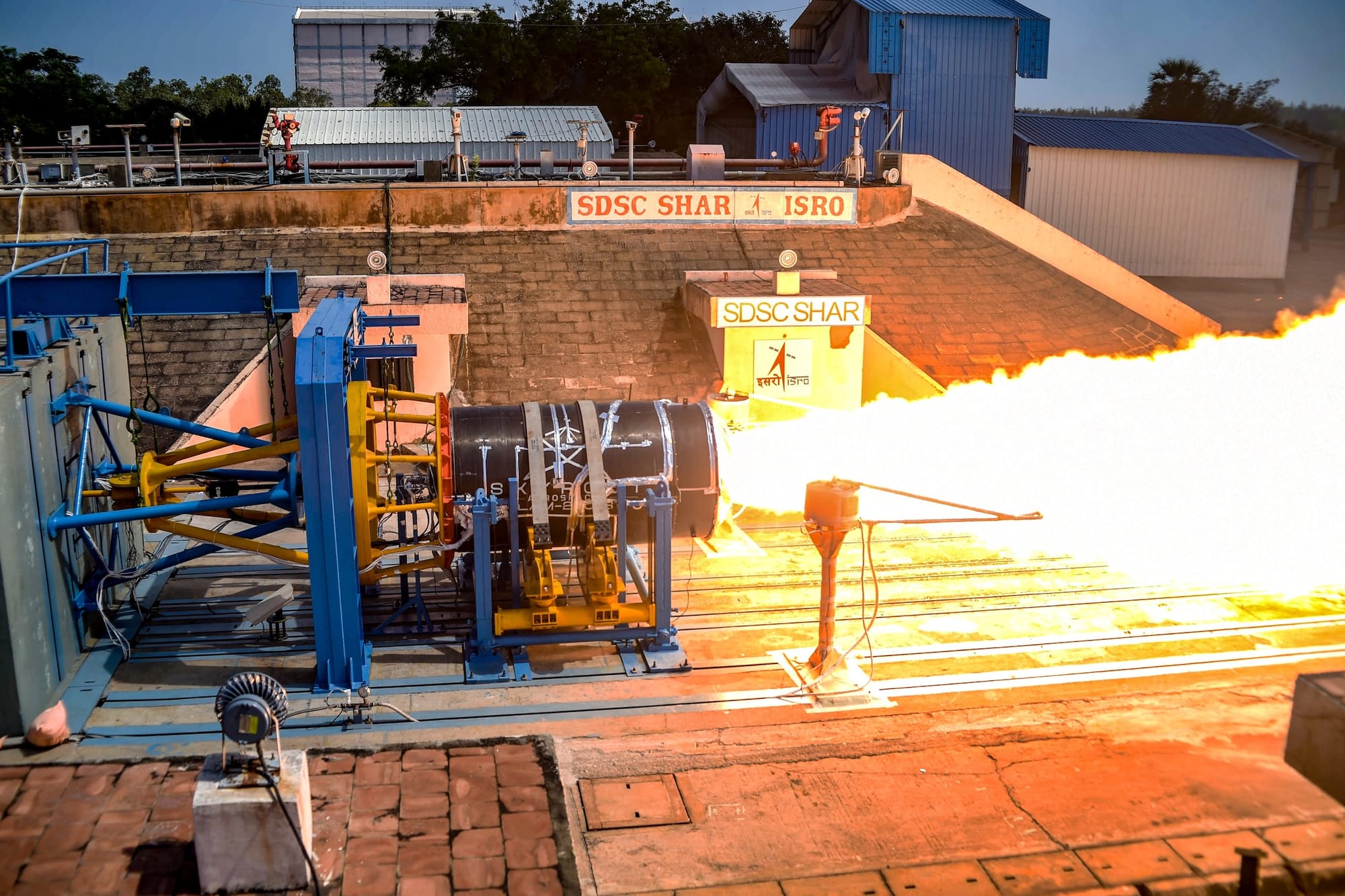
Skyroot and its ex-ISRO founders received good support from the Indian government, including from ISRO via sister organization IN-SPACe, whose mandate is to enable, promote, and somehow regulate private space activities in the country. Particularly for Vikram-1’s launch, ISRO through IN-SPACe provided comprehensive technical support to the company. This includes motor casting and testing of the rocket’s solid stages, liquid upper stage testing, support in vehicle assembly and transport, use of the FLP for launch, safety reviews, and in-flight tracking and commanding. By any measure, this is a huge list of things. It underscores the need for ISRO, as laid out by Mukunth in an article, at a time when the organization is facing challenges in retaining talent, as reported by Chethan Kumar.
But all of this support from ISRO is essentially of a singular, technical nature. Between the aforementioned low demand gaps for small-lift rockets globally and the Indian government not being an anchor customer node, national companies have been fighting an uphill battle for customers, funding, and talent base. This partly reflects in the fact that India’s private rocket development timelines have been much longer than global competitors, as the following chart shows.
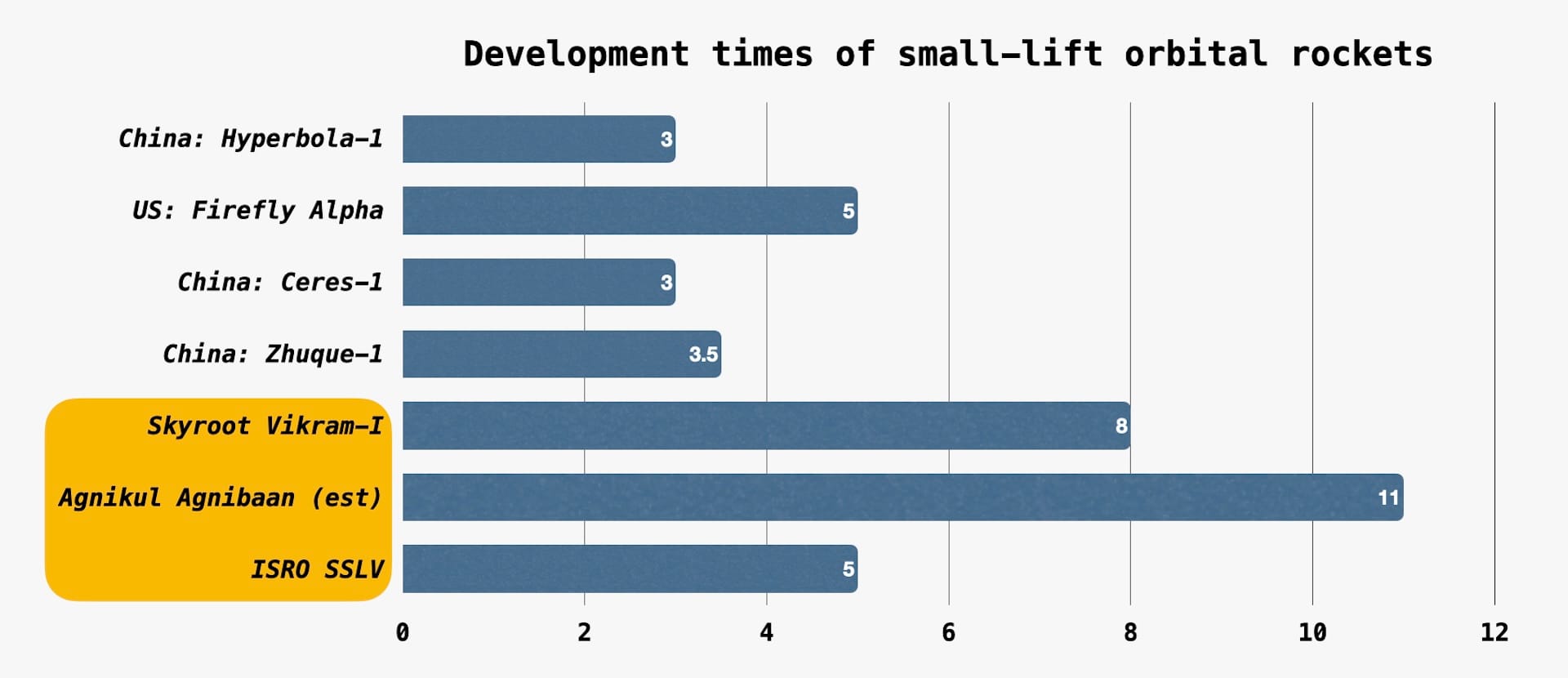
Similar to how NASA fetches foreign commercial payload customers for its lunar CLPS companies, ISRO’s sister institutions NSIL and IN-SPACe meant to aid space commercialization should fetch customers for India’s private launch companies other than only doing so for ISRO. Obviously, this is to be done only on a competitive basis rather than through nepotism.
Broadly in India, there’s also a lack of a thriving space research & development base across industry and academia, especially for propulsion. ISRO and the private sector have to nurture talent more than leverage it. In contrast, NASA funds and orchestrates the SBIR/STTR and GCD programs to provide a boost to the US commercial industry while tapping into emerging, advanced technologies early on. ISRO’s RESPOND program for academia offers orders of magnitude lower funding and lack of mission integration. And unlike China, ISRO’s support doesn’t extend to technologically catalyzing national rocket companies to let them innovate faster.
Taking these steps together would expand collective national launch offerings instead of companies being left to reinvent wheels that may not even be round while also having to compete with ISRO’s own rockets.
Private companies do not, and should not, replace ISRO
At the same time, support for private launch companies in India might be going too far astray in the other direction. IN-SPACe Chief Pawan Goenka has said that going forward “ISRO will not make any launch vehicles and will not manufacture any launch vehicles.” Goenka added, “That will all be done by the private sector or PSU.” This also includes handing over operations of the upcoming second launch complex to the private industry. I’ve already assessed and demonstrated in Part 3 and Part 5 of the launch vehicle series that ISRO’s role and responsibility in building and flying launch vehicles cannot be relinquished if India is to even come close to meeting its national goals across civil, defense, planetary, and human spaceflight programs. Handing over launch to the private sector completely would be a grave mistake for several reasons, including national security.
As established above, neither Skyroot nor another such launch company in India is currently building a replacement for even ISRO’s PSLV. It’s impossible right now for Indian private companies to realistically think about building the even bigger LVM3-and-NGLV-class rockets. At the moment, to put it pithily, ISRO designs and the industry assembles. But planning technology transfers of ISRO’s launch vehicles to the industry and/or their production-ization through the industry will catalyze more possibilities for the future. However, the onus of orchestrating both increased launch capacity of national vehicles and catalyzing industrial innovation remains with the Indian government’s Department of Space, not with individual companies like Skyroot.
A key thing the Indian government can do at some point is to let ISRO and private players compete for national launches to ensure that critical national missions are not delayed too much. The US Space Force’s National Security Space Launch (NSSL) program and NASA’s Launch Services Program (LSP) have enabled innovative commercial launch vehicles to be built and flown frequently. SpaceX’s Falcon 9 is the most well known example but there are others too like the New Glenn and Vulcan Centaur. The US government acts as an anchor customer for launching both NASA’s civil space missions and the country’s strategic ones. Companies vie for these lucrative contracts, in turn competing, innovating, and accelerating.
However, it’s important to note that India doesn’t have enough parallels with the US for this solution to make direct sense here. ISRO was not structurally built to be scalable like Western space industries. And India’s unique defense needs, the kind the US doesn’t have, cannot be reliably outsourced to private companies without ensuring the government is in command of the loop—of which ISRO is one part. That Skyroot’s Indian co-founders do not own the majority of their company should be an important consideration. Of course, due diligence on the board structure of any such companies would be needed before handing out any national contracts. Blindly following the US model would risk India losing national capacity to private firms altogether, firms that may not even be or remain Indian. But having ISRO itself compete with Indian private companies or even other national organizations for appropriately graded national space launches could work. In other words, India should eventually decouple national space satellites from necessarily launching on ISRO’s rockets. At least some of India’s civil launches or even just scientific payloads can certainly be offloaded to Indian commercial rockets to ease the load on ISRO’s own vehicles, which will be busy meeting higher national priorities amid a growing backlog. The move would incentivize ISRO to improve their launch vehicle capabilities and cadence.
China has already announced something along these lines for their own programs. The country is planning to expand competition for national launches from the current internal state competition—which has already produced good outcomes—to soon between state-led companies and the private sector companies, greatly expanding the pool of options and incentivizing fierce innovation. More importantly, this will allow China to maintain high national launch capacity while touting a flourishing private sector, avoiding the pitfalls of having mostly only commercial launch vehicles like in the US. India too needs to ensure that ISRO’s own launch capacity stays alive and is competitive while the private sector is being nurtured.
In the last few years, China has offered much greater support to its private launch sector than India has to its own, including personnel and tech transfers, having clarity on standards and legal regulations, access to infrastructure like ground networks and nationally-built launchpads, and even state-supported investments in companies as well as provincial & policy support. This has allowed operational commercial launchers to enter the turf in China, which have successfully supplemented the country’s launch capacity and frequency. In turn, companies too have invested in infrastructure facilities near national launchpads like in Wenchang. Indian companies lack such strong incentives to build their own infrastructure due to the lack of national co-investments. Skyroot doesn’t have a true launchpad of its own at the moment. India should encourage, allow, and incentivize the private sector to build dedicated, independent launch infrastructure of their own outside of ISRO’s complexes.
Take all the above factors together, and it becomes clear that Skyroot’s success with the first flight of Vikram-1 is only the least worst case scenario for India’s launch vehicle crisis. It’s not at the peak alongside people’s emotions but at the bare minimum level to cater to but a fraction of India’s needs in space. The Indian government should enhance its support for private launch companies but not at the cost of effectively losing national launch capacity. Instead of relying on a single flagship rocket like the Falcon 9 and privatizing launch altogether, China’s resilient, multi-launcher and mixed orbit access approach is more suitable and desirable for India to draw aspects from to achieve a true orbital launch trifecta. A trail has been left in the forest, and we can only notice it if we step outside the garden.
Many thanks to The Takshashila Institution, PierSight, Catalyx Space and Gurbir Singh for sponsoring Indian Space Progress. If you too appreciate my efforts to capture nuanced trajectories of India in space, provided to space communities worldwide for free and without ads, kindly support my independent writing as it’s purely reader-funded. I don’t use AI to write a single word and cite everything.
My series of articles on India’s launch vehicle crisis spans an analysis timeframe of two decades. It has taken me about a year of work to research and publish. If you found the series useful or insightful, please support it through donations and sharing.