A pressing PSLV rocket failure and orbital congestion to brood over | Indian Space Progress #28
Plus more mission updates.
I’m delighted to share that PierSight Space is continuing its sponsorship of my Indian Space Progress blog+newsletter for another year! 🚀
Ahmedabad-based PierSight is building a private constellation of SAR satellites equipped with AIS sensors for persistent, all-weather ocean monitoring. With $8 million raised in funds, and building on the recent spaceflight of its Varuna technology demonstrator, PierSight is targeting a mid-2026 launch for its first commercial satellite. The company is hiring across subsystems at Ahmedabad as well as Bangalore. 🛰️
PSLV’s failure could trigger multiple mission delays for India
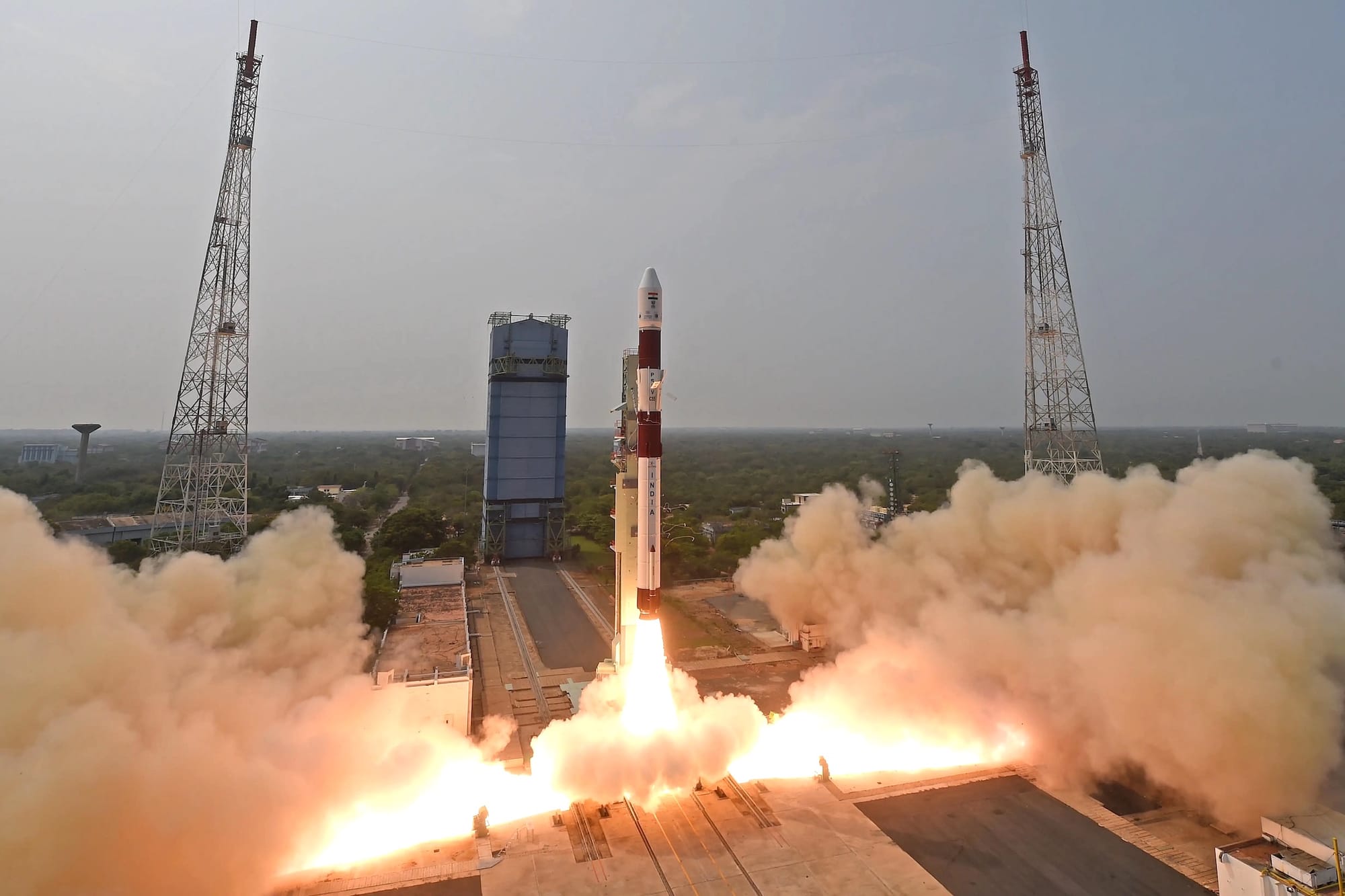
On May 18, India’s PSLV rocket failed for the second time in this century. ISRO’s Chief V. Narayanan said during the post-launch media briefing that “a fall in the chamber pressure of the motor case” of PSLV’s solid-fueled third stage prevented the dual-use 1700-kilogram EOS-09 radar imaging satellite onboard the rocket from attaining orbit. PSLV’s failure comes as a shock to many in the space industry because this is the rocket that has notably launched a lunar orbiter, a Mars orbiter, a space telescope, a solar observatory to the Earth-Sun L1 point, a record 104 satellites in one flight, and also important missions for other space agencies such as last year’s launch of the Proba-3 Sun-studying craft for ESA.
A failure analysis committee is examining PSLV’s failure. Between solid rocket motors being a staple element across ISRO’s entire rocket family and the PSLV notably sharing the liquid fueled Vikas engine with the more powerful GSLV Mk II and LVM3 rockets, one of the first things ISRO will try to get clarity on is if any aspect of PSLV’s failure would affect its other launch vehicles or not. While the PSLV’s Vikas engine performed fine on May 18, a Mk II is soon slated for a high-profile launch of the joint Indo-US NASA-ISRO Synthetic Aperture Radar (NISAR) Earth observation satellite. Every process tied to it will be scrutinized, and NISAR’s launch might get delayed again purely out of abundant caution.
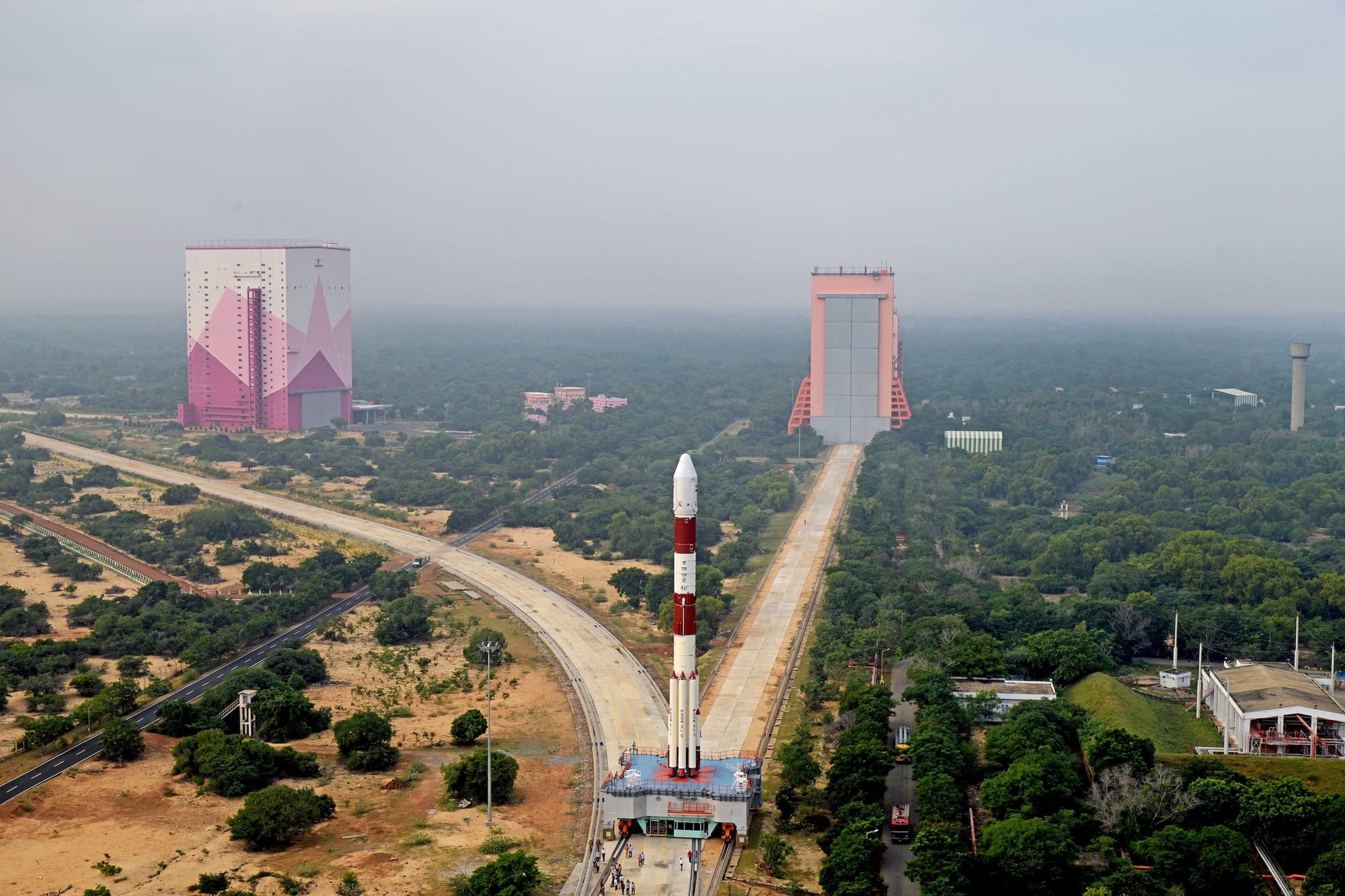
More directly though, the May 18 PSLV failure means the launch of the PSLV N1 will now be delayed further. N1 is the first industry-led PSLV to be launched as part of a $104 million contract awarded by ISRO to the bid-winning HAL-L&T consortium. It’s a national effort to improve the rocket’s production rate by privatizing it. The N1’s launch was originally targeted last year.
ISRO’s new and nimble SSLV rocket is also affected. The next SSLV launch might take a while because the PSLV’s third stage motor is virtually identical to the SSLV’s second stage one. Note that the SSLV’s direct competitors in the global small lift commercial market already moved ahead last year given the SSLV’s slow operationalization pace.
What makes the PSLV’s loss more aggravating is that this is the second failure for India’s national space program this year, following that of the NVS-02 navigation satellite in January. The Mk II that deployed NVS-02 into orbit worked well but the satellite’s own propulsion system failed, leaving India’s strategic NavIC navigation constellation of a handful of satellites operating below expected performance levels. ISRO has not found the root cause of NVS-02’s failure so far, and the next navigation satellite might face delays to address issues found.
ISRO will certainly return the PSLV to flight and make it more robust, just as it methodically achieved Chandrayaan 3’s success after Chandrayaan 2’s landing failure, and how it re-flew the GSLV Mk II and maintained consecutively successful launches after its failure in 2021. What makes this particular wait feel longer is the more fundamental place of the PSLV in India’s space progress.
Dodging orbital debris, congestion, and collisions
India currently chairs the UN’s working group on long-term space sustainability. And, ISRO, based on its experience of launching and operating varied space missions, has helped manage the growing orbital congestion and risk of high-velocity collisions in Earth orbit by contributing updated guidelines for debris mitigation as part of the Inter-Agency Space Debris Coordination Committee (IADC)—whose participating members include the major spacefaring national agencies of NASA, CNSA, Roscosmos, and more. Now, ISRO has released its internal Space Situational Assessment Report for the year 2024. It’s public executive summary published this May has several interesting things of note:
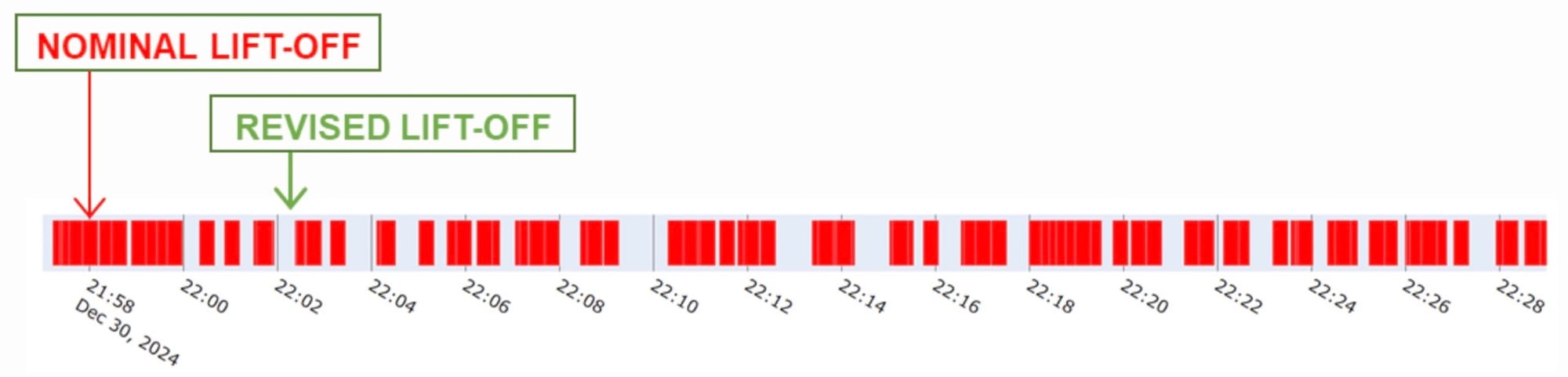
The PSLV rocket which launched the twin SPADEX satellites on December 30, 2024 was intentionally delayed by 2 minutes and 15 seconds based on collision avoidance analysis for known orbital objects.
The upper stage of PSLV-C3 underwent an accidental break-up in 2001 and generated 371 debris. While most of these fragments have re-entered the atmosphere, 41 PSLV-C3 debris were still in orbit by the end of 2024. [...] Among the intact Indian upper stages, 34 rocket bodies re-entered the Earth's atmosphere till 2024 end, and 5 of such re-entries took place in 2024. All LVM3 rocket bodies have decayed, only the one from LVM3 M2 OneWeb mission remain in orbit. Among GSLV rocket bodies, only GSLV-F12 and GSLV-F14 rocket bodies are in orbit.
The number of CAMs [Collision Avoidance Maneuvers] was less in 2024 compared to the previous year. This is because improved close approach analysis methodology with larger conjunction screening volume and usage of more accurate ephemerides helped to meet collision avoidance requirements by adjusting orbit maintenance maneuvers on several occasions and avoiding exclusive CAMs.
Based on the projected deployment of multiple large constellations, active satellites are likely to outnumber space debris population within the current decade, making Space Traffic Management (STM) an indispensable part of spaceflight safety. As of now, there is no accepted framework for STM, hence on-orbit close approach between two active space assets needs to be resolved on case-by-case basis through inter-operator coordination, with non-trivial operational overheads. Consequently, spaceflight safety in future scenario is expected to involve more intensive coordination and cooperation between various spacefaring entities, it is desirable that a suitable collaborative framework evolves for meeting STM requirements.
Beyond Earth orbit, at the Moon, ISRO, NASA, and South Korea’s KARI continue coordinating lunar traffic for their respective orbiters. From the aforementioned report summary:
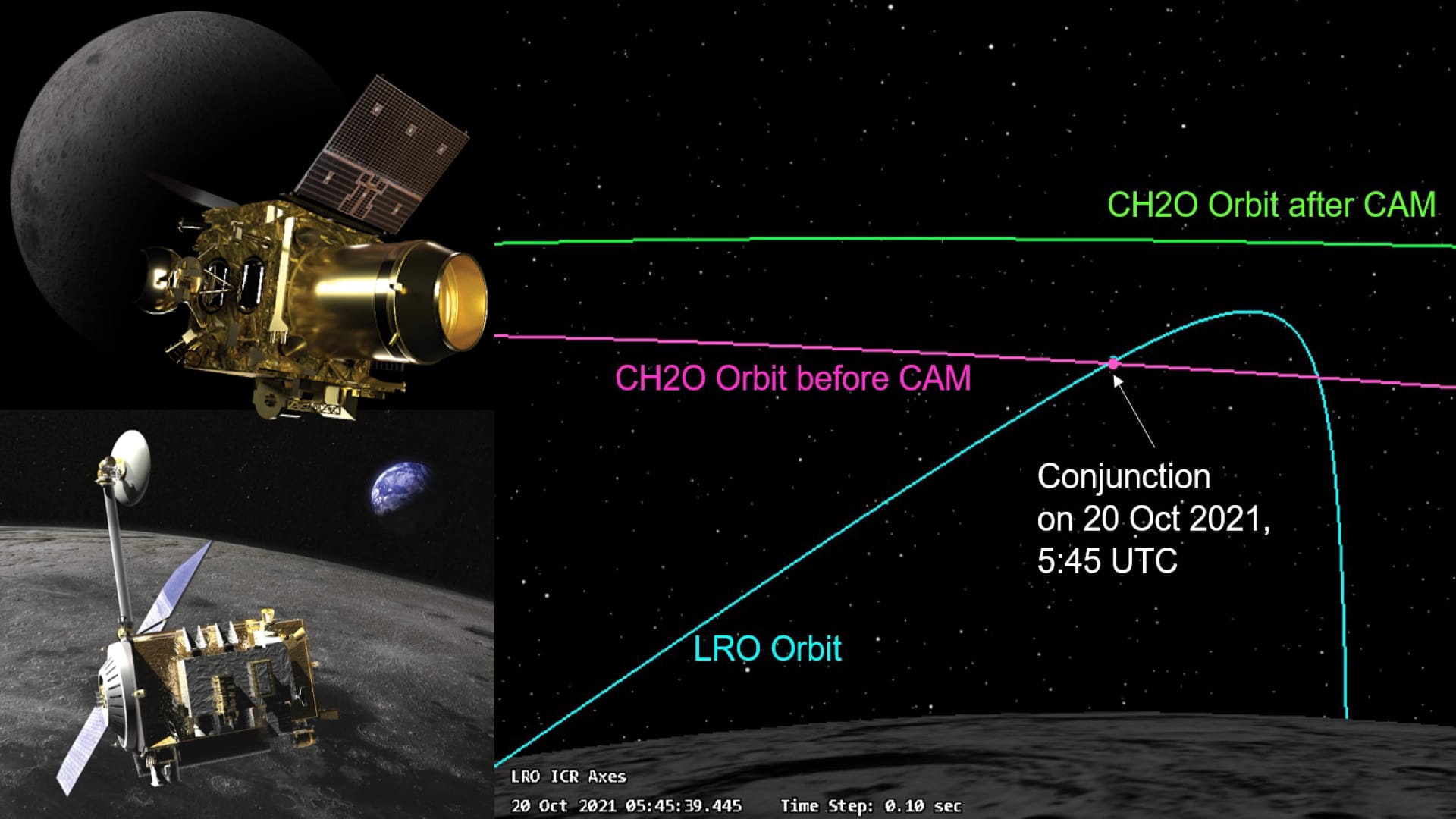
14 OMs [Orbital Maneuvers] were carried out for the Chandrayaan-2 Orbiter, the plans were adjusted on 8 occasions. On one occasion, a scheduled orbit maintenance manoeuvre was advanced to avoid a close conjunction with Lunar Reconnaissance Orbiter of NASA. [...] An orbit maintenance manoeuvre was originally scheduled on 26 Nov 2024 but advanced to 11 Nov to mitigate conjunctions with LRO which were predicted to occur on 15-16 Nov.
Many thanks to the Takshashila Institution, PierSight, GalaxEye Space, Gurbir Singh and Arun Raghavan for sponsoring this month’s Indian Space Progress edition. If you too appreciate my efforts to capture true trajectories of India in space, support my independent writing. 🇮🇳 🚀
Chandrayaan updates
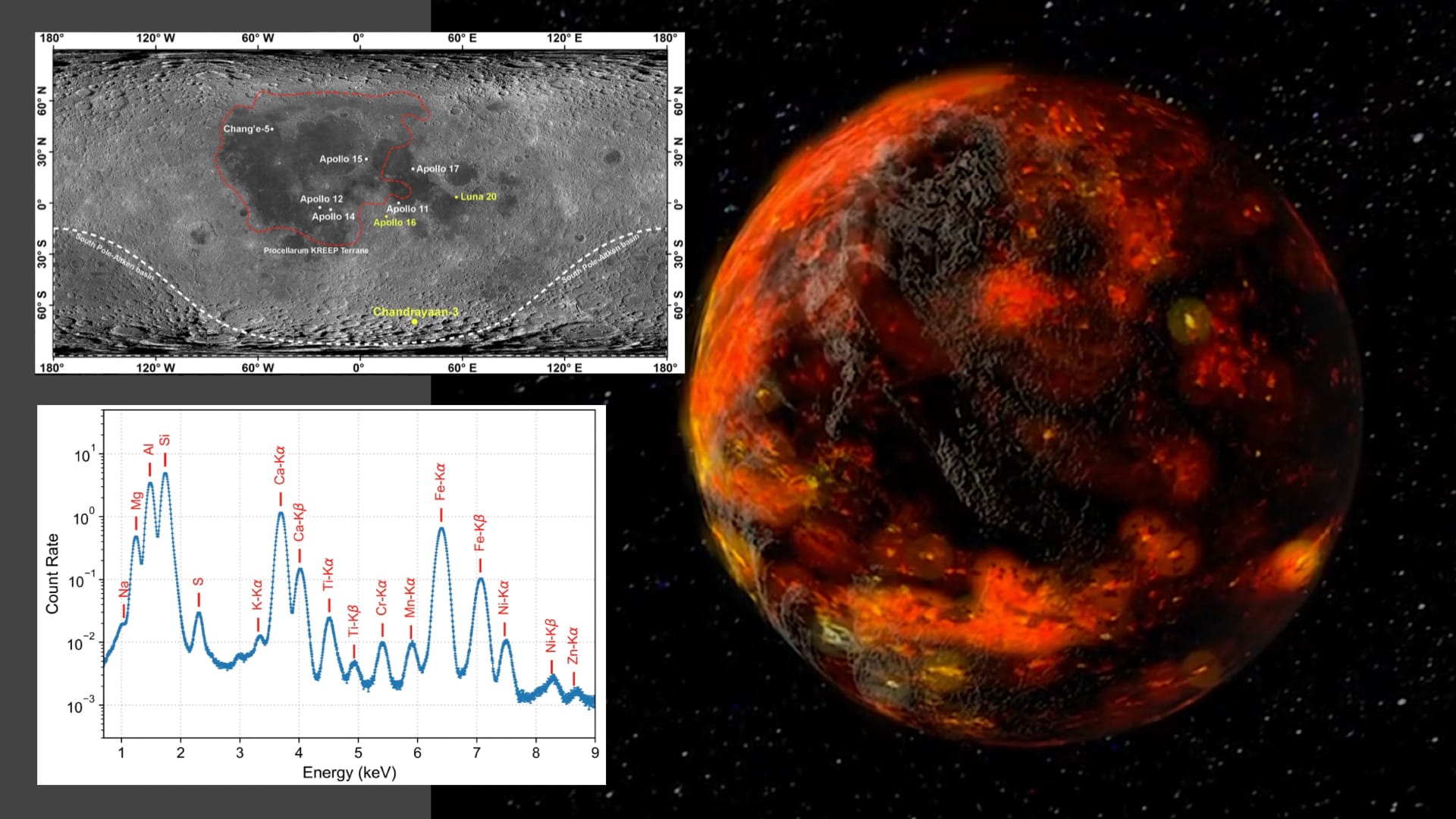
Scientists analyzing the elemental composition of our Moon’s southern high-latitude surface as measured by ISRO’s Chandrayaan 3 rover have surmised that the excess sulfur detected in the landing site’s soil and rocks compared to other regions may have originated in the Moon’s ancient mantle.
The IAF organized the latest international Global Space Exploration Conference (GLEX) in New Delhi, India last month, which ISRO hosted. I covered notable updates from GLEX in Moon Monday #225, of which two things are most relevant to India:
- China formally welcomed India to cooperate on Moon missions. Wu Weiren, the Chief Designer of China’s extremely successful Chang’e lunar exploration program as well as the Director General of China’s Deep Space Exploration Laboratory (DSEL), said during a panel of various national space agency heads that China “especially welcomes India to participate in cooperating and collaborating on the ILRS” Moonbase project. Considering the not-so-great relations between China and India, and their mutual space activities being nearly nil, China’s invitation can be interpreted to be likely a formality. Nevertheless, it’s good to have the invitation explicitly said than not.
- ISRO and ESA are enhancing their collaboration in space exploration across scientific collaboration, human spaceflight, and lunar exploration. For the Moon in particular, the agencies are discussing “alignment on payloads and robotic scientific missions”. Nigar Shaji, Associate Director of ISRO’s key satellite integration and testing center URSC, told during her GLEX panel that ISRO is open to flying ESA payloads on India’s upcoming lunar missions.
Despite the many cuts in NASA’s FY2026 budget proposed by the US Trump administration, the agency is thankfully continuing its funding and commitment to provide and operate a neutron spectrometer for the upcoming joint ISRO-JAXA Chandrayaan 5/ LUPEX mission to study water ice on the Moon’s south pole.
More Indian space
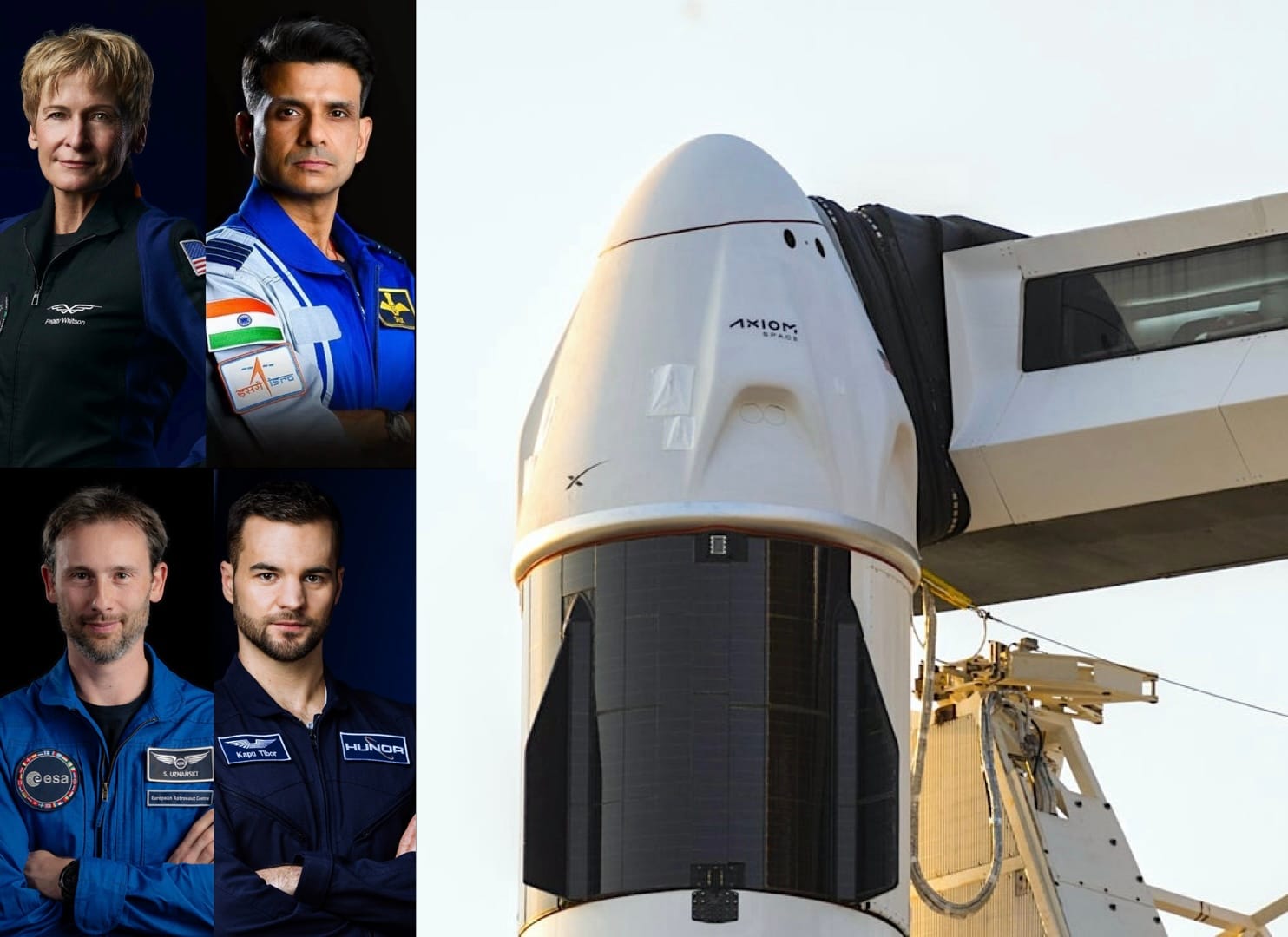
India’s Shubhanshu Shukla’s flight to the International Space Station (ISS) through the Ax-4 Axiom Space mission aboard a SpaceX Crew Dragon capsule as Mission Pilot is now delayed and rescheduled for June 10. Shukla underwent astronaut training for the 14-day mission arranged under a NASA-ISRO partnership. ISRO and Shukla will conduct seven out of sixty experiments aboard Ax-4. As part of a broader ISRO-ESA agreement, Indian institutes will conduct two joint microgravity experiments with ESA.
Chethan Kumar has reported the ISS mission’s cost to ISRO being at least $68 million. ISRO seeks to leverage this experience into India’s ambition to indigenously send humans to Earth orbit. The next major milestone to enable that end is Gaganyaan G1, the first of three uncrewed test flights required to be successful before ISRO deems all systems being safe enough to launch astronauts. ISRO is targeting G1’s launch later this year although timelines have been uncertain until now.
Read last four editions
- Indian Space Progress #27: Three months of mission updates, and fixing ISRO’s monthly summaries
- Indian Space Progress #25-26: Newly approved Chandrayaan 5 LUPEX mission will drill for water on the Moon and aid Artemis
- Indian Space Progress #24: High on docking, low on navigation. Cool new projects, same old budget