China surfaces details of spacecraft to land humans on Luna by 2030 | Moon Monday #267
From landing system development to trajectory design and landing site selection to abort scenarios.
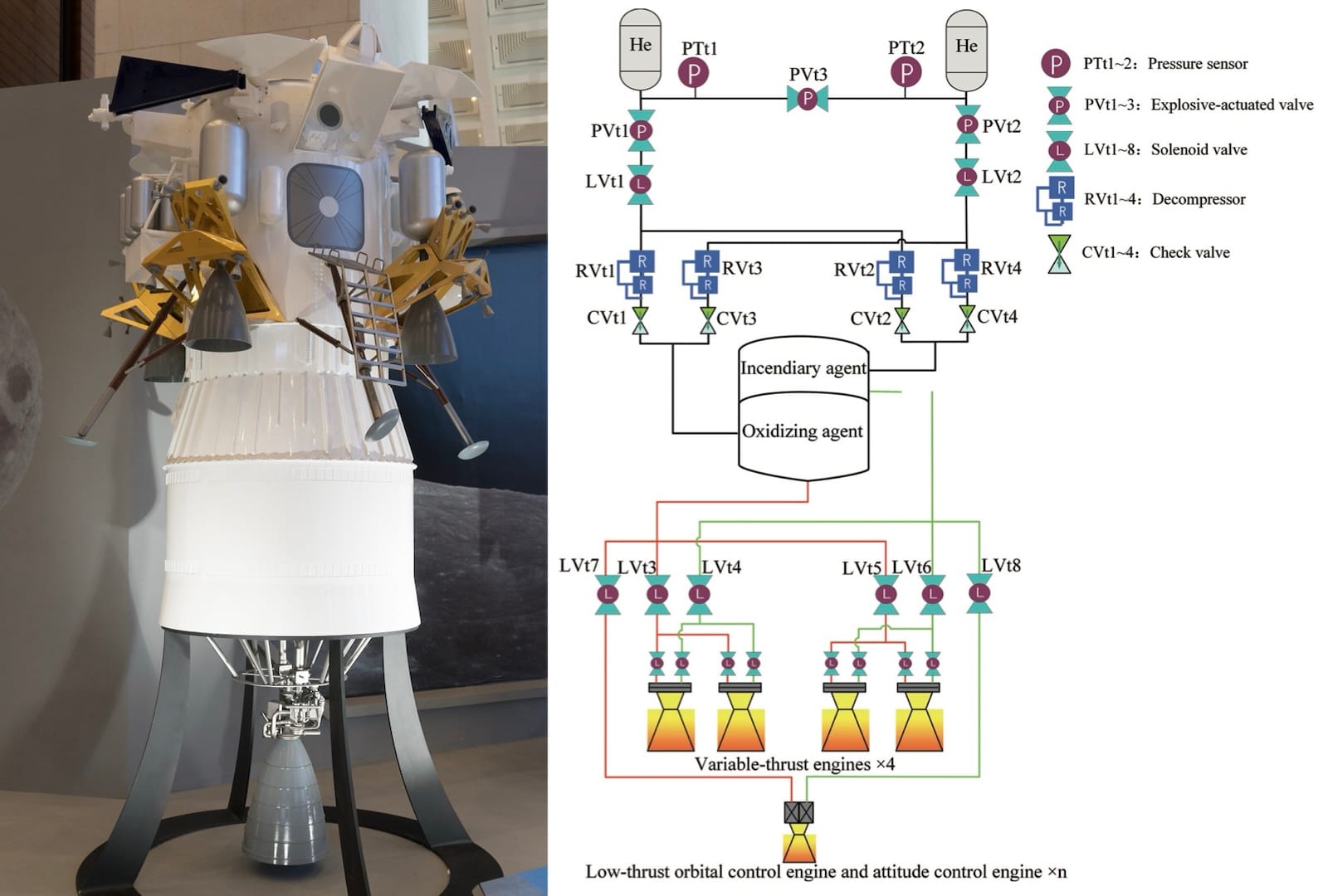
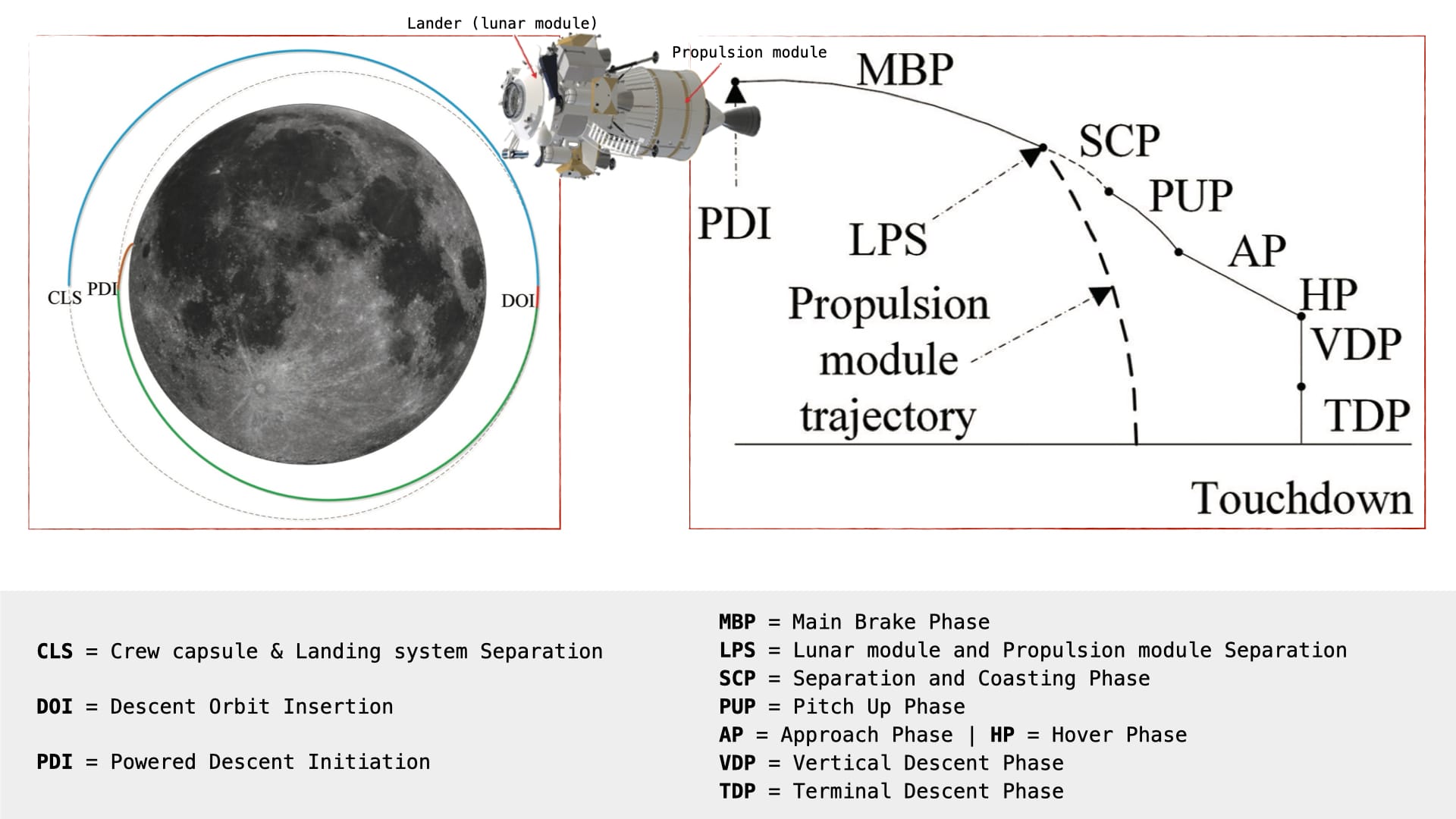
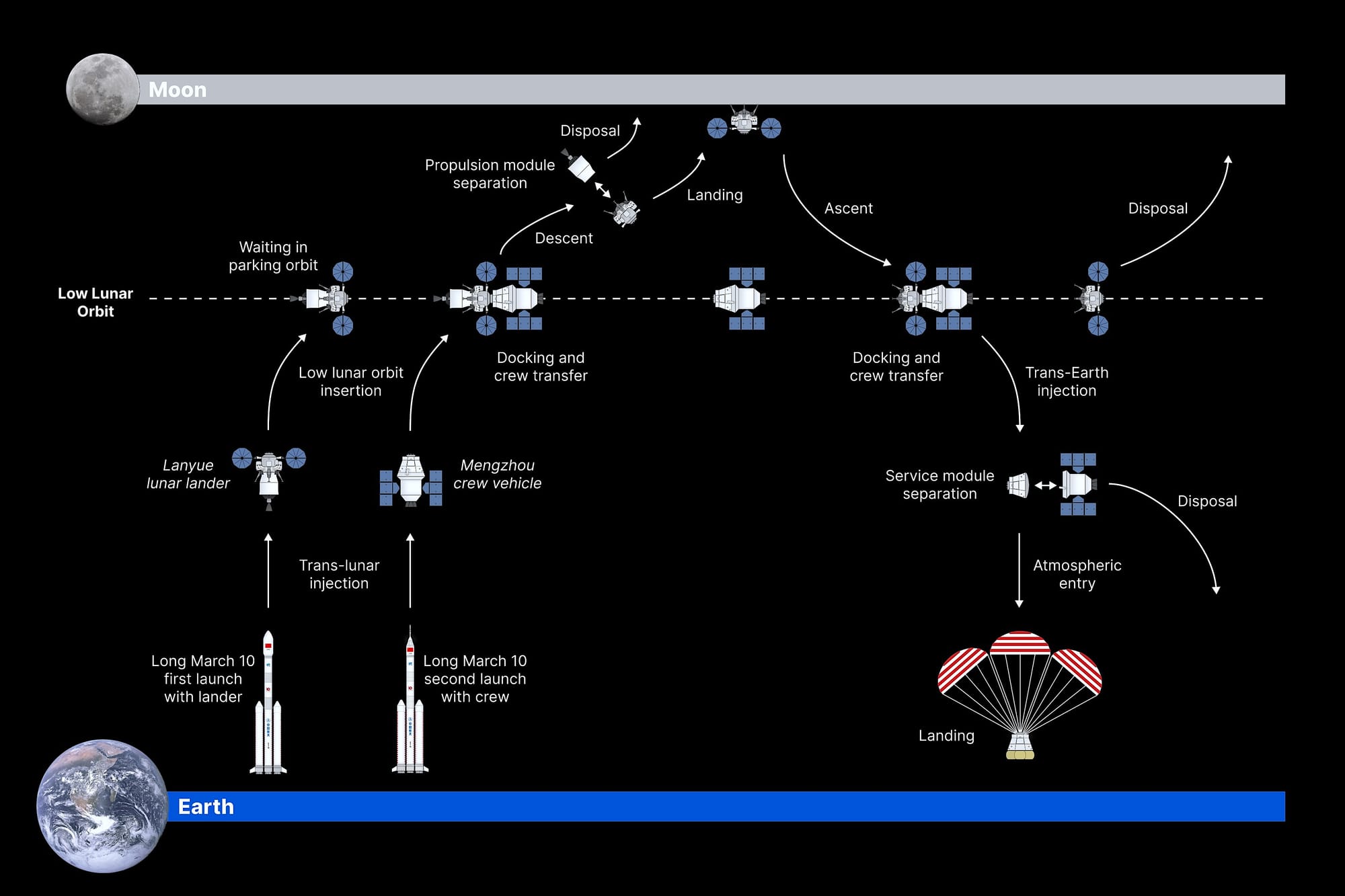
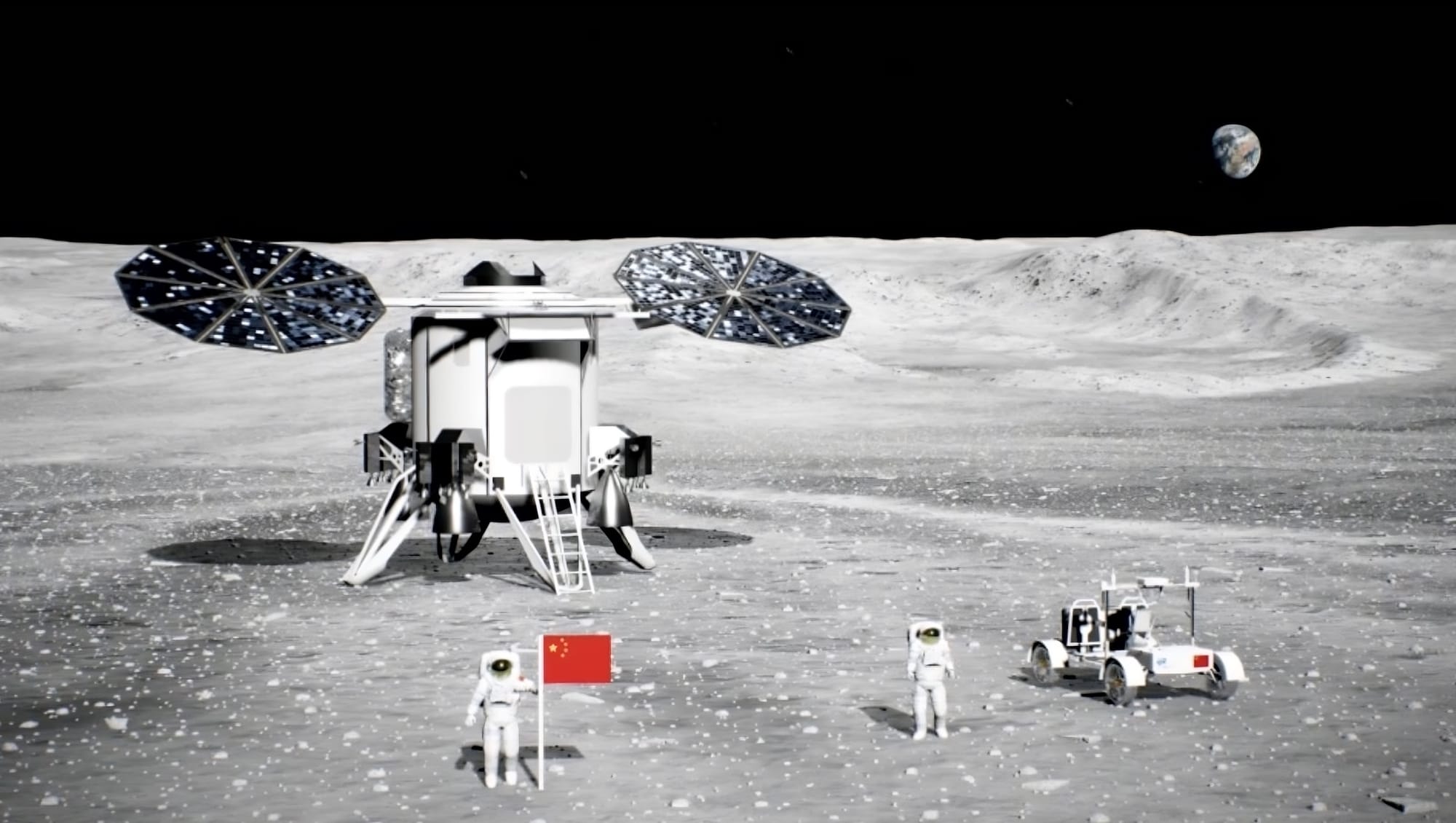
The Chinese-language research journal “Chinese Space Science and Technology” has published a special issue on the development of various elements of China’s crewed Moon missions with 14 ‘open access’ papers. This includes details of the ~26,000-kilogram crewed lunar landing system called ‘Lanyue’, which means ‘embracing the Moon’ in Chinese. Lanyue comprises a crewed lander and an attached heavy propulsion module. It’s the latter which will initiate lunar surface descent from orbit and shave off the bulk of the combined craft’s orbital velocity. When the crew reaches a few kilometers above the Moon’s surface, the propulsion module will jettison from the lander, thereby lightening the load for the final landing and touchdown of the astronauts—or more accurately, taikonauts.
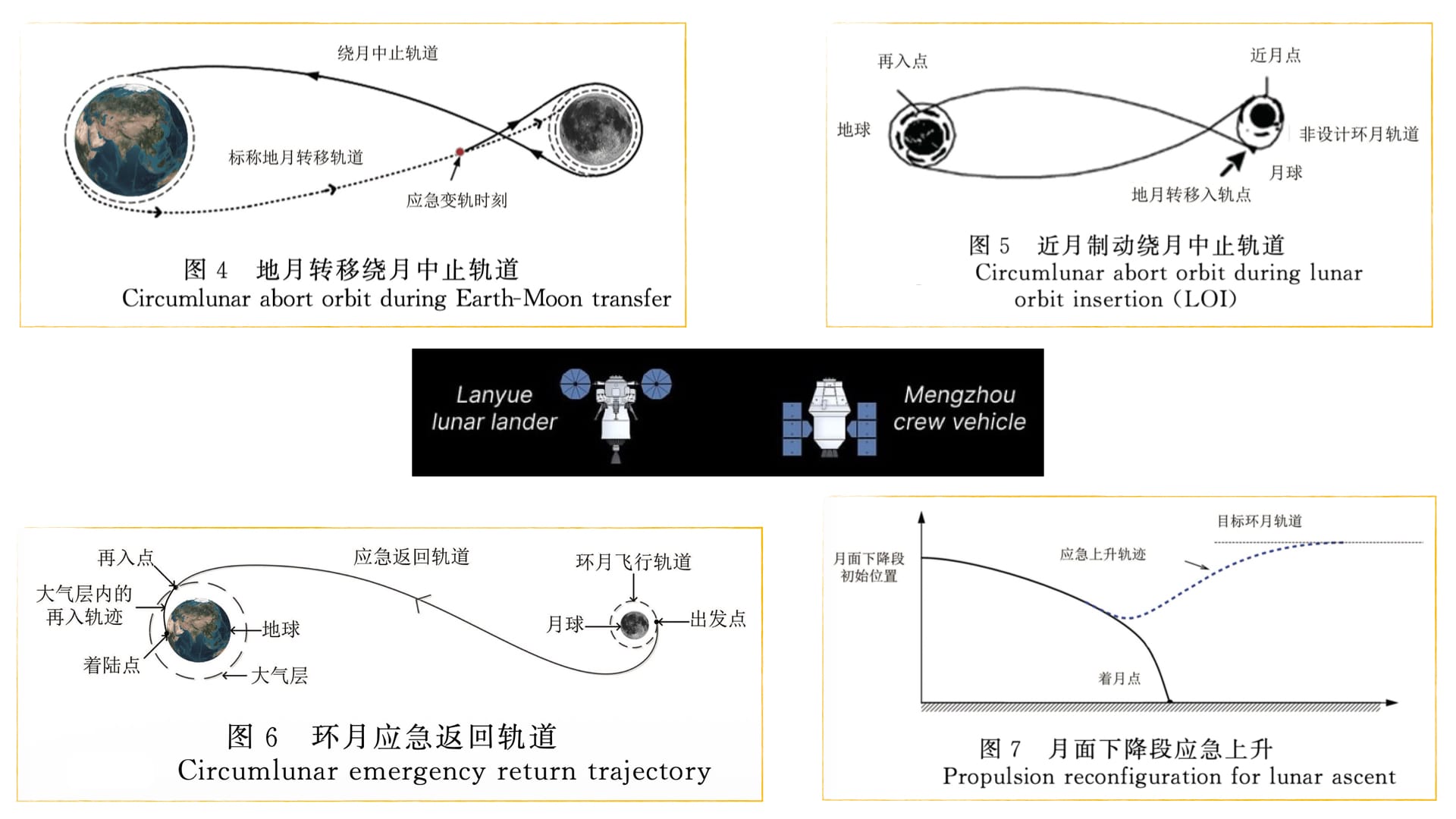
The special issue of papers also has one which details various redundancy measures China is planning for to ensure the safety of taikonauts throughout various phases of Moon missions should any key hardware element fail. From Jack Congram’s coverage of the papers:
Should the propulsion module’s engine fail [before beginning descent], the Lanyue lander remains in orbit and aborts landing attempts. If a YF-36 engine fails on the lunar landing module, the engine opposite also shuts down to retain symmetrical thrust, resulting in an abort to orbit, delayed touchdown, or longer than planned flight back into orbit. [...] Some mission abort scenarios won’t require a return to Earth, depending on what fails. For example, should Lanyue have an issue arise prior to descent orbit insertion, a longer lunar orbit mission conducting experiments and observing the Moon’s surface can take place using crew supplies intended for surface exploration.
Below is a high-level diagram of the nominal mission profile and architecture China is employing for China’s crewed Moon landing missions, followed by some key abort and adaption scenarios to handle emergencies stemming from hardware failures.
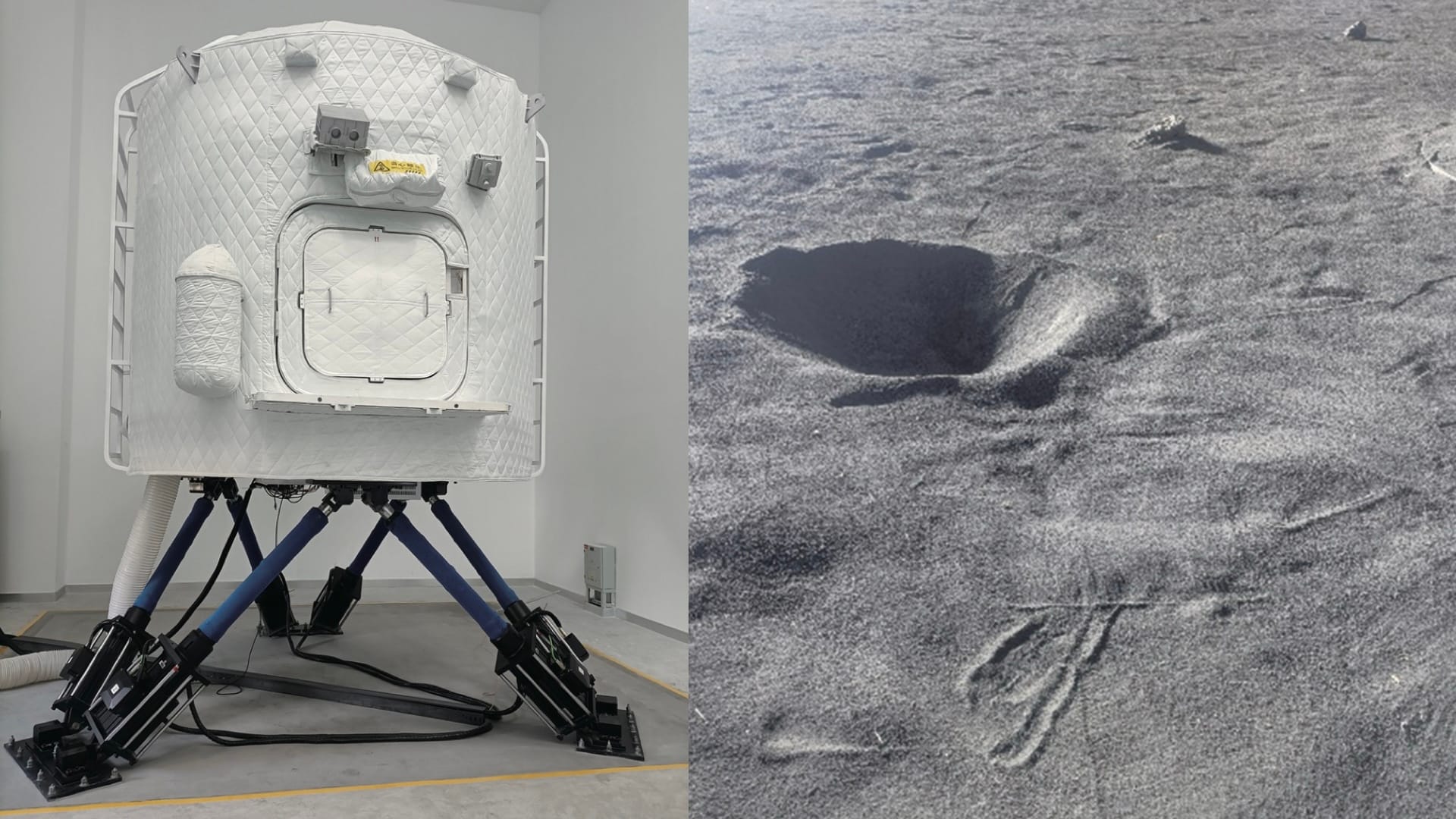
A paper also reveals that Chinese taikonauts have been training for various landing scenarios in a Lanyue lander simulator, which has manual control options to override autonomous touchdown. This training in itself is helping engineers iterate on the lander’s development. In contrast, the lack of sufficient manual control in SpaceX’s in-development Lunar Starship lander for NASA is one of the major issues flagged by the agency’s Office of Inspector General (OIG) in a recent report.
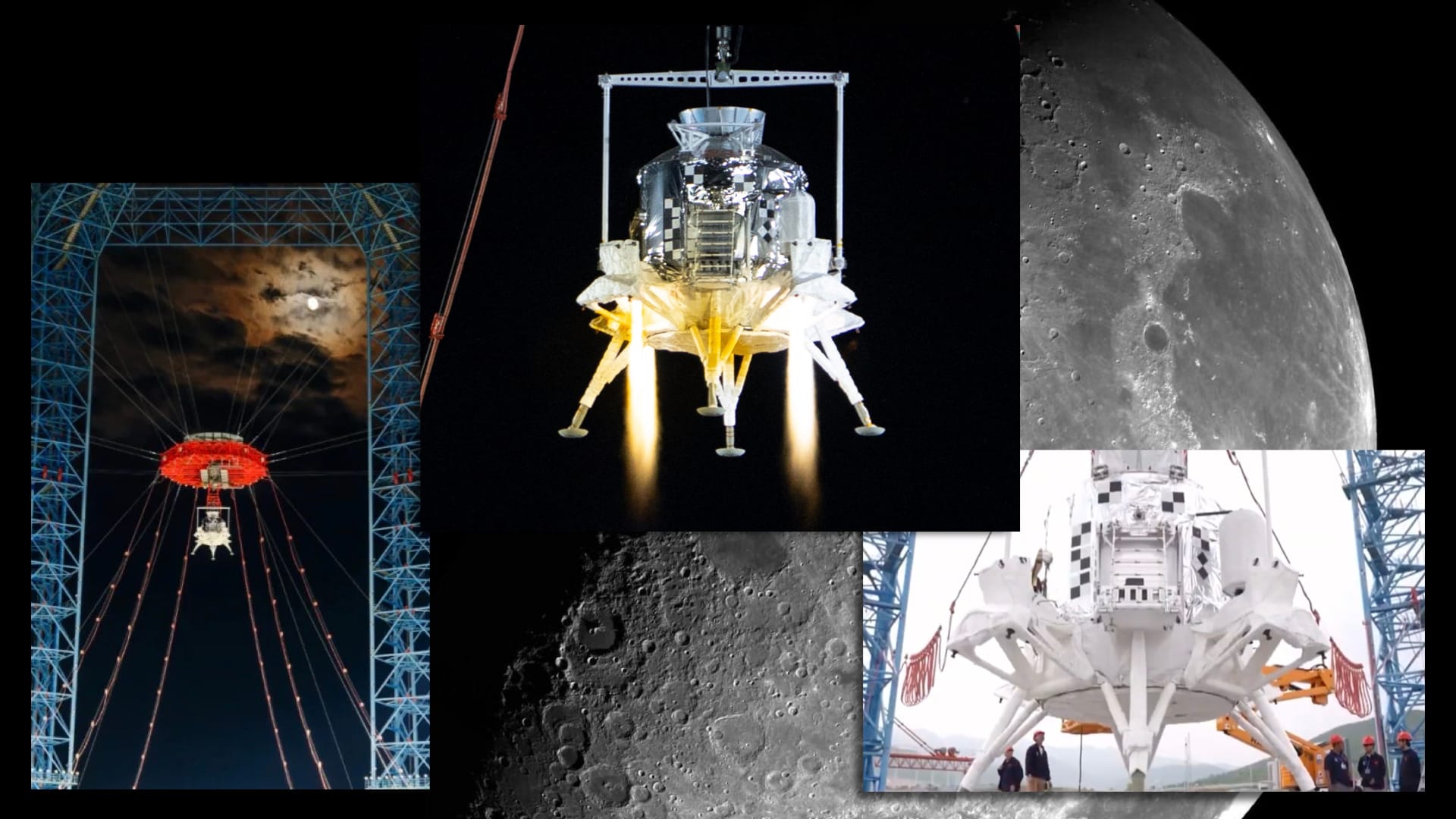
Moreover, in August 2025, China successfully conducted a terrestrially simulated autonomous lunar landing and takeoff test using a full-scale mockup of Lanyue. For this control systems test, the China Manned Space Agency (CMSA) used the same exogravity simulation system in Huailai County outside Beijing as it did for previous tests part of past robotic Moon and Mars landing missions. The system involves giant tethered towers to simulate lunar gravity and an artificially cratered, rugged terrain on the ground to mimc the Moon’s surface. The test seemed to show apt coordination between the lander’s main engines and fine-control thrusters as orchestrated by Lanyue’s guidance, navigation, and control system by engaging all sensors and imagers. As Ling Xin had noted at the time, this test did not involve the propulsion module. China is likely to test the propulsion module among the battery of tests this year as the nation targets the first crewed landing by 2030.
In late 2024, China created a test stand in the northwestern Shaanxi province, which can simulate the kind of high-altitude and vacuum conditions that the Lanyue landing system will experience during its lunar descent and touchdown. The stand allows the landing system’s engines to be tested for burn durations of beyond 20 minutes, more time than they would need to be lit during the lunar descent and touchdown. Apparently this specialized test stand took only eight months to complete, according to Li Guanghui of CAST who was involved in the project.
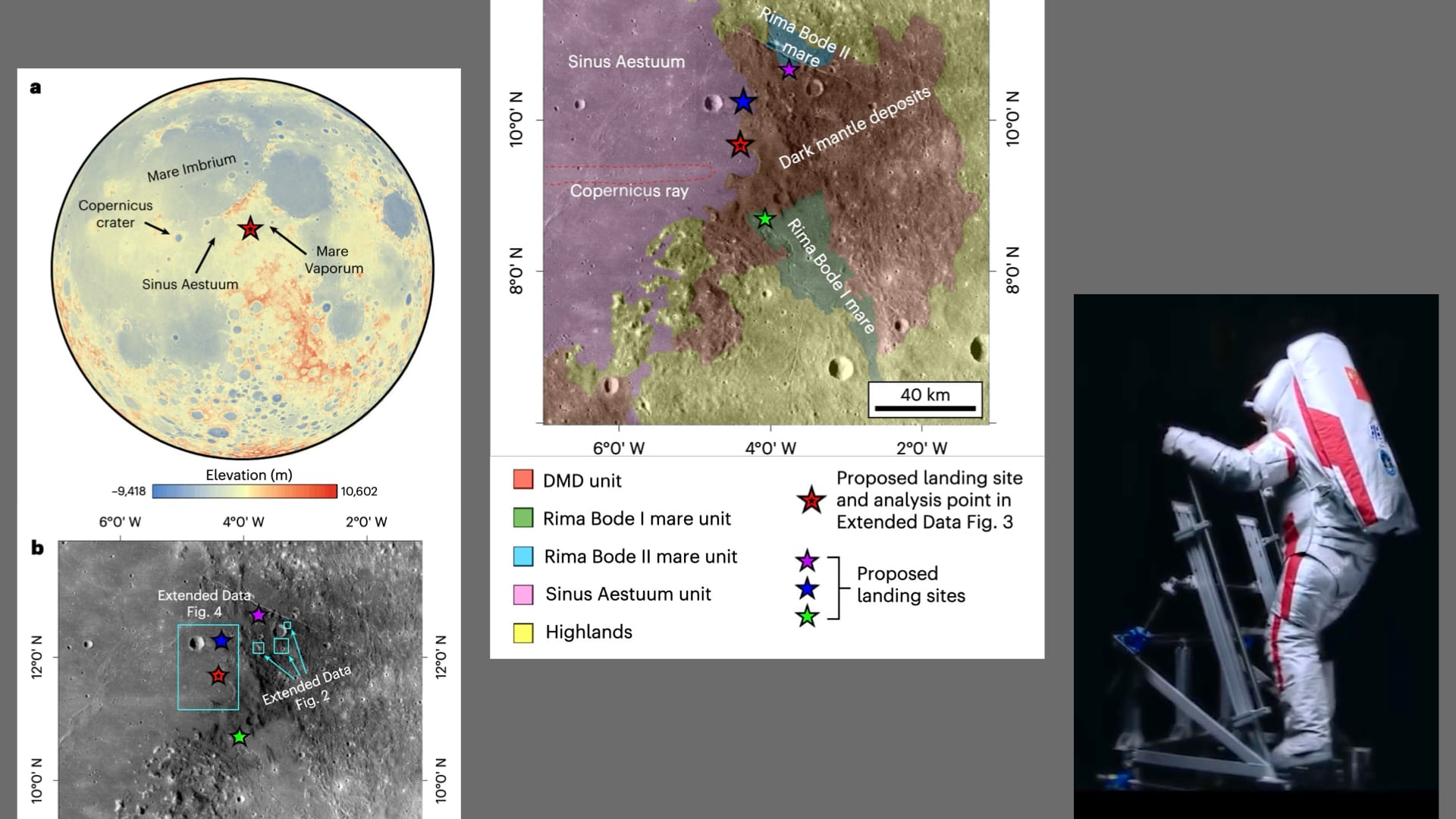
China is considering equatorial and near-equatorial sites to land humans on Luna. One of the 14 priority sites being considered based on engineering feasibility and scientific value is the volcanic landscape of Rimae Bode. Relatedly, early last year the China Manned Space Engineering Office (CMSEO) announced a call for Chinese organizations to bid for developing and operating a lunar mapping satellite by 2028 in support of crewed Moon missions. The satellite’s mandate is to obtain high-precision mineral, topographic, and geomorphic data of the Moon’s low-latitude regions to aid planning of surface missions. CAST won the bid.
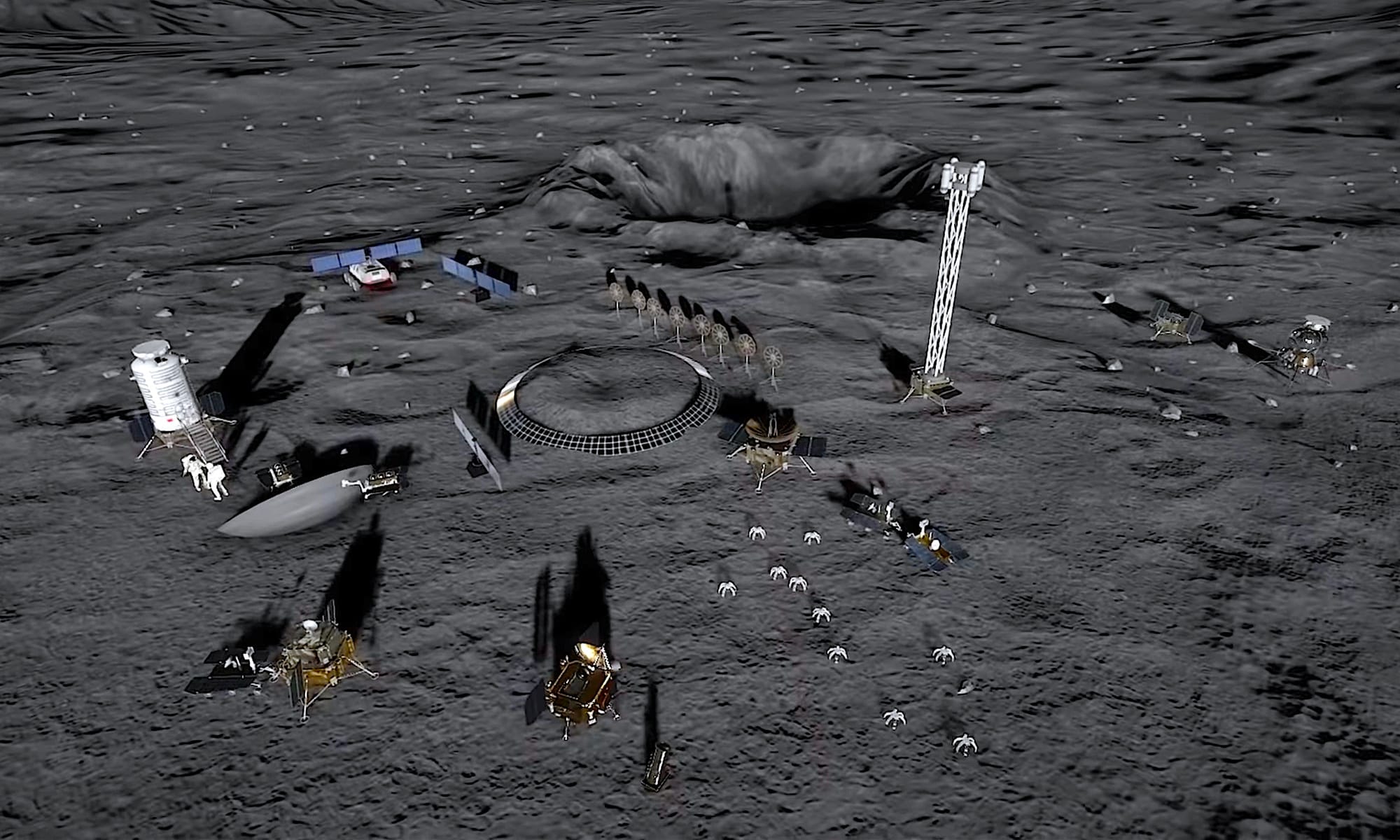
Last but not the least, Lanyue will be capable of performing precision landings on the Moon, something especially necessary to safely touchdown astronauts when targeting the treacherous south polar terrain in later missions. China’s upcoming Chang’e 7 and Chang’e 8 robotic Moon landing missions, targeted for launch later this year and in 2028 respectively, will demonstrate precision landings as well as the ability to explore the lunar south pole for water ice and other resources. Both of these capabilities will be valuable for China’s plan to create the nation-led crew-plus-robotic ILRS Moonbase in the 2030s, which will follow the string of initial crewed Moon missions. Relatedly, Jack Congram reported that China’s SAST is building what they claim is a lower-cost lunar lander program for future cargo deliveries to the ILRS Moonbase, and to various lunar location for any international customers.
Many thanks to Open Lunar Foundation, Henry Throop, Louis-Jérôme Burtz and Vidyasagar Mundroy for sponsoring Moon Monday. If you too appreciate my efforts to bring you this curated community resource on global lunar exploration for free, and without ads, kindly support my independent writing: