NASA falters in communications yet again with Lunar Trailblazer failure | Moon Monday #265
Plus: Parallel developments show how open access NASA is when the agency is at its best.

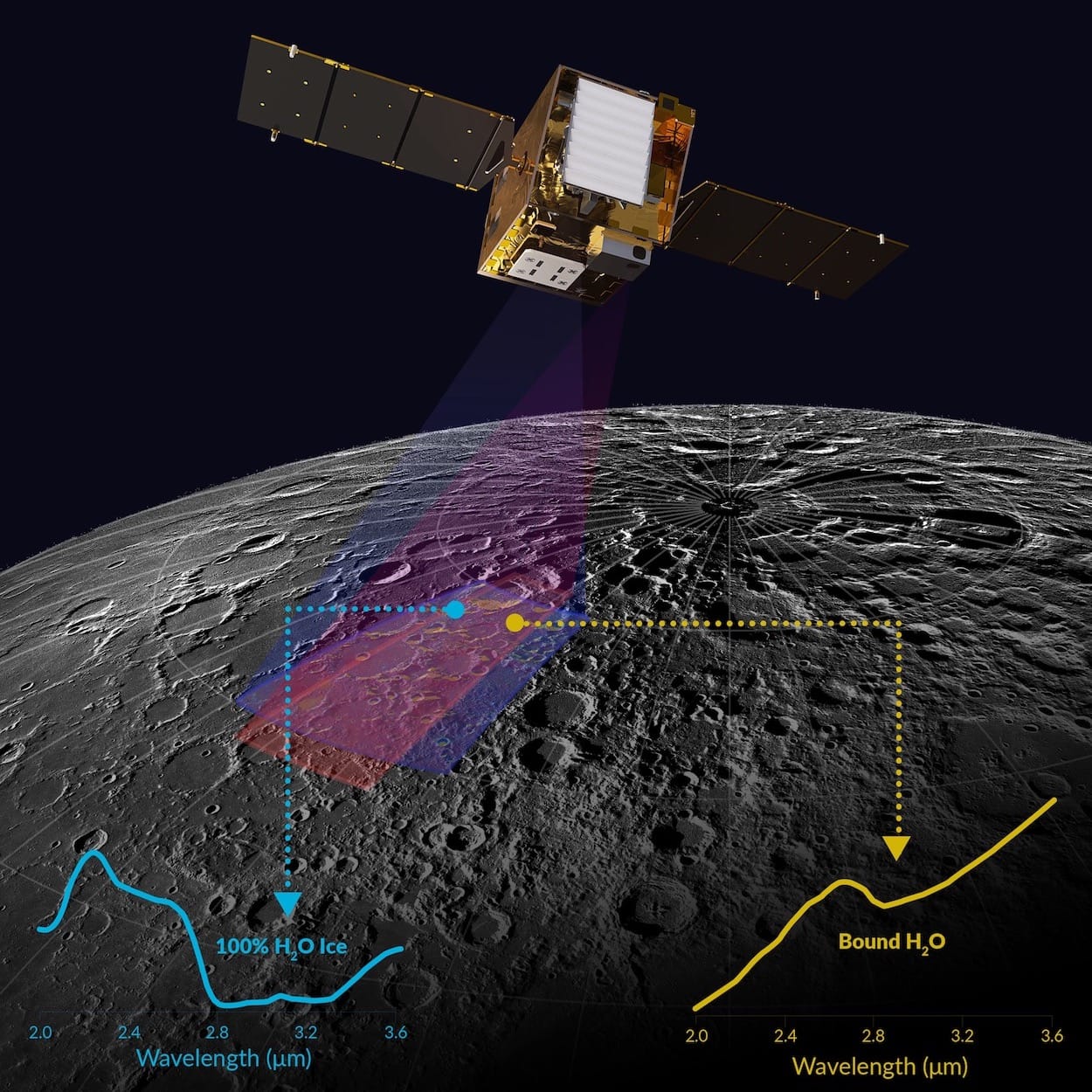
Joe Palca of NPR has reported that the NASA-funded Lunar Trailblazer spacecraft, which was lost shortly after its February 2025 launch, failed because its solar panels were pointing perfectly away from the Sun. This chiefly happened because a) the spacecraft vendor Lockheed Martin did not properly test the craft’s pointing software pre-launch and b) the 180° pointing couldn’t be corrected by Trailblazer’s computer due to a host of distinct onboard software issues in managing faults. These resulted in loss of power and permanent communications loss. The failure analysis report also highlights issues with the lunar orbiter’s mission planning and operations design as considerable contributors to the failure.
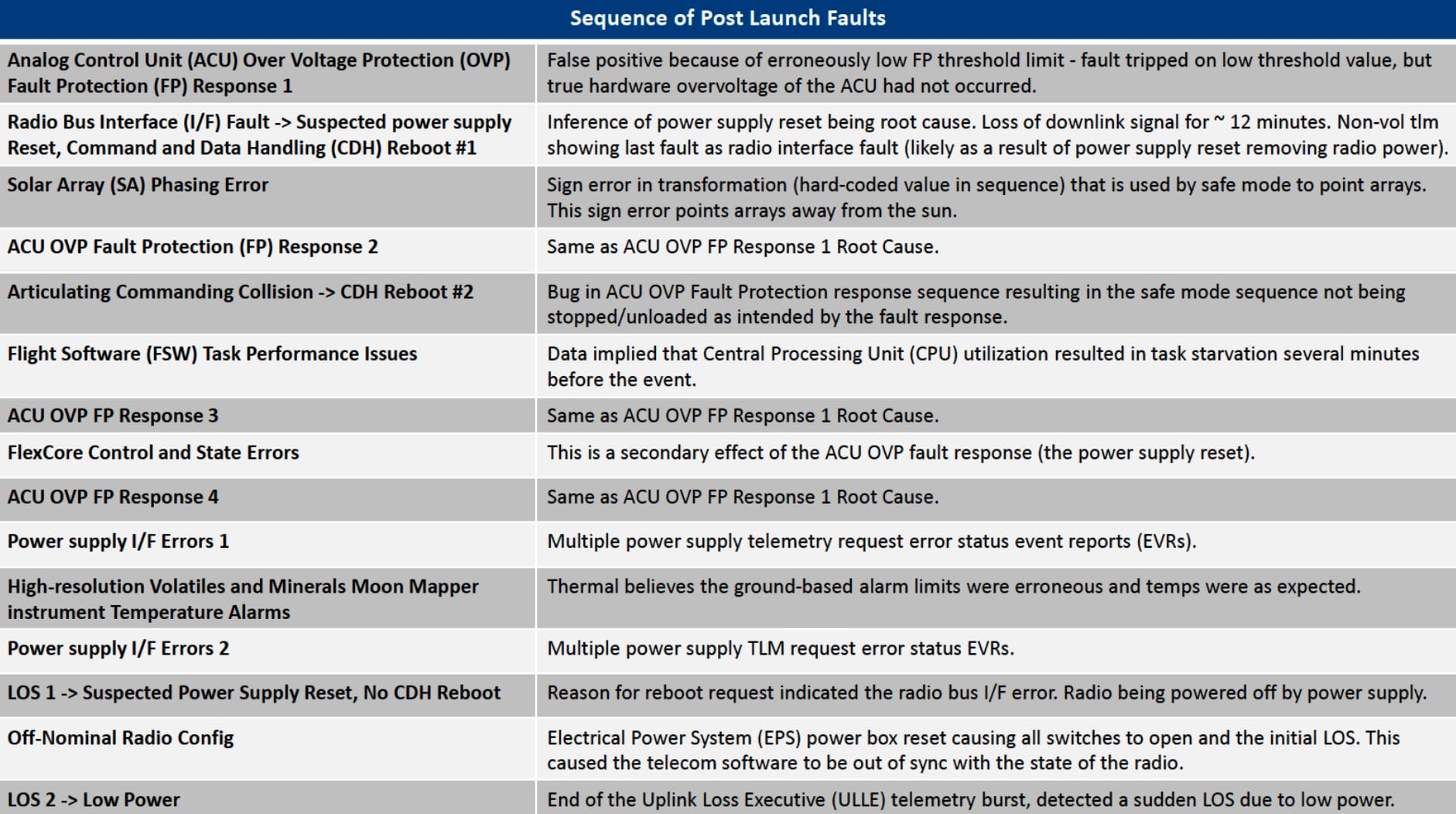
The $72 million Trailblazer spacecraft was supposed to provide scientists with unprecedented, high-resolution global orbital maps of the amount, distribution, and state of lunar water. Having this geologic context is necessary to effectively plan, conduct, and interpret future lunar water studies from the surface. Understanding lunar water so as to access it is a key goal of the Artemis program, which the US has been repeatedly failing to achieve.
Now one must consider that Trailblazer was designed as part of NASA’s SIMPLEx program, which specifically funds missions to advance the agency’s planetary science goals on low budgets, thereby accepting greater risks than typical NASA missions. Having said that, Trailblazer did go through a NASA continuation/termination review during its development and cleared it. The review had gotten triggered due to engineering cost overruns by Lockheed Martin, which ended up crossing NASA’s $55 million budget cap for SIMPLEX missions. At the end, Trailblazer’s performance issues clearly persisted despite added costs for better engineering.
Coupled with the mission’s outsized scientific importance, which the mission’s science & web teams explained brilliantly pre-launch, definitely file the panel pointing mistake and software oversights under space missions lost to human errors and mistakes to avoid in our grand return to the Moon.

Disappointingly, NASA did not provide this update on the taxpayer-funded mission’s failure analysis findings through its website and associated official public & press channels. This is an oddity for the agency. Even NASA’s Trailblazer blog and mission lead Caltech’s Trailblazer blog did not provide said update. If one engages people pre-launch and expects them to cheer you on, one should also expect people to want to stay engaged post-anomalies. Instead, NASA only provided the failure analysis report to NPR when the latter filed a legal Freedom of Information Act request.
It’s possible that the lack of official updates may be inadvertently stemming from the swath of operational changes at NASA last year by the new Trump administration. But it’s been over six months now since the August 26, 2025 date stamped on the failure analysis report. And there’s also the fact of NPR noting in its story that “neither Lockheed Martin nor NASA would provide a spokesperson” for commenting on the matter, which is February this year, and with a formal administrator, Jared Isaacman, who has repeatedly expressed calls for transparency at NASA. The situation gets disappointing further still because no one in the US or Western media seems to have pointed out these lack of official updates on the failure findings as an issue in itself.
Unfortunately for fans and admirers of NASA worldwide, myself included, this is yet another area where NASA’s communications have faltered off late. Below are other such examples:
- Isaacman started calling the Artemis program “manned” despite NASA explicitly sending a woman to the Moon on Artemis II.
- NASA falsely claimed that it could select landing sites for future Artemis missions through Artemis II.
- The agency has made blanket statements about the world’s lacking lunar capabilities which ignore China’s existing capability and plans.
- NASA has called unsuccessful missions like Intuitive Machines’ IM-1 as successful, and hasn’t changed that stance even after acknowledging the practically identical outcome of IM-2 as not being a success.
Like many, I have grown up being immensely inspired by NASA. I hold great admiration for the many pioneering aspects of the agency, including its general high communications standard. I’m often found urging ISRO officials to follow NASA’s global lead in effectively communicating the science and technology of its civil space missions [pre-launch Trailblazer qualifies]. But with NASA dropping the ball on communications lately, this ideal reference falters. NASA’s aforementioned strays are concerning in the long run. Basing on ISRO’s stints to such opaque ends in dealing with mission failures, as but one example, there’s enough precedence in spaceflight history to show that it doesn’t take too much from hereon to set less-transparent tones as the new default expectation for updates on taxpayer-funded missions. Like people, every space agency has its issues. But NASA’s technical and science communications have demonstrated the highest bar for long periods. We should hold them to that standard. It’s also how other space agencies, companies, and organizations can see a live example to match, and even aspire to outperform later on.
Open access NASA, the best
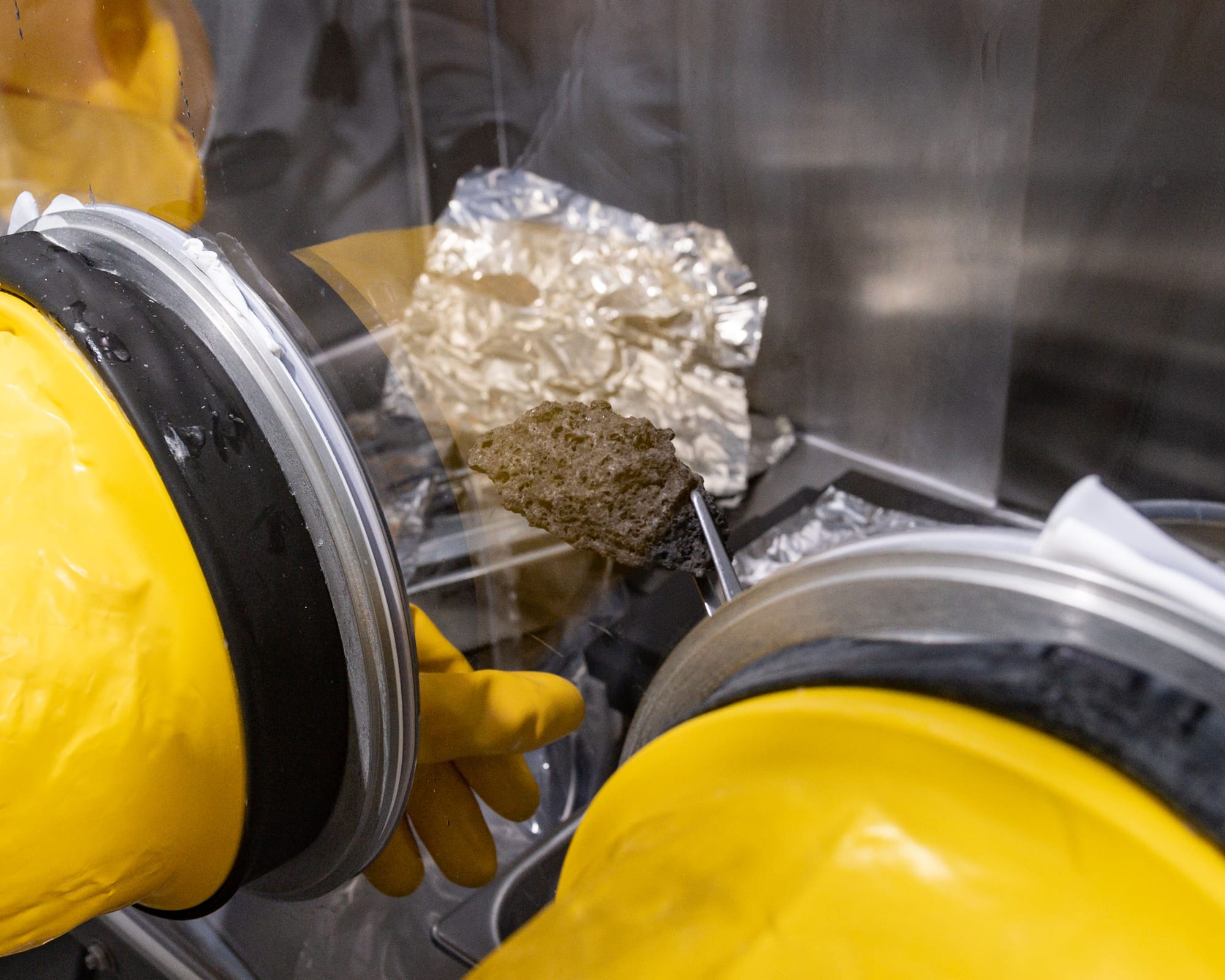
- When NASA brought lunar samples from Apollo missions, the agency knew that scientists will be able to study them better in the future in new ways to answer new questions as technology advances. And so the agency kept some core sample tubes sealed and frozen for decades. In 2018, NASA formed the Apollo Next Generation Sample Analysis Program (ANGSA) initiative to examine these specially stored samples, particularly ones from Apollo 17. In 2022, a team of 90 scientists and engineers at ANGSA began the meticulous, months-long process of opening and studying such sample tubes one by one. Now the JGR Planets journal has published a special collection of papers on ANGSA-studied lunar samples. Many of these papers are published as “open access”. To pair, NASA has also made available laboratory-analysis datasets of ANGSA samples on a dedicated site.
- The Planetary Science Journal has also published a special paper collection, this one as “open access” research works on NASA’s VIPER rover’s science and engineering planning in the mission’s quest to study water ice on the Moon’s south pole.
- NASA has made more new datasets available from its ultra-sensitive ShadowCam imager aboard South Korea’s first lunar orbiter KPLO, bringing the latest observations available publicly to Q1 2025. ShadowCam has been capturing unique observations of permanently shadowed regions on the Moon’s poles to help scientists & engineers plan future surface resource prospecting missions. A cool ASU web portal also lets you browse and search all public ShadowCam datasets in full-resolution.
- Relatedly, NASA has partnered with DLR for a project which is progressing through the development of an automated pipeline for generating high-resolution 3D terrain models of lunar sites imaged by NASA’s Lunar Reconnaissance Orbiter. Once ready, this will accelerate mission planning and advanced geology studies.
Many thanks to Catalyx Space, Gurbir Singh, Tanya Harrison and Louis-Jérôme Burtz for sponsoring this week’s Moon Monday. If you too appreciate my efforts to bring you this curated community resource on global lunar exploration for free, and without ads, kindly support my independent writing: