Moon Monday #259: Lunarbound astronauts enter quarantine as Artemis II launch approaches
Plus mission updates.

As NASA targets a Q1 launch for the Artemis II mission flying humans around the Moon and back, the four astronauts set to be aboard entered quarantine on January 23 to reduce their exposure to pathogens. This period typically starts 14 days before launch, although other hardware tests remain for NASA as the agency aims to verify cryogenic fueling and de-fueling operations as well as launch countdown procedures with the crew’s SLS rocket by February 2. More quarantine details from the NASA release:
The crew begin quarantine in Houston, and if testing continues to go well and activities progress toward a possible launch next month, they will fly to NASA’s Kennedy Space Center in Florida about six days ahead of launch. There, the Artemis II crew will live in the astronaut crew quarters inside the Neil A. Armstrong Operations and Checkout Building, before launch day. During quarantine, the crew can continue regular contact with friends, family, and colleagues who are able to observe quarantine guidelines, and will avoid public places, wear masks, and maintain distance from others they come into contact with as they continue their final training activities. Those training activities will continue in the days ahead with mission simulations and medical checkouts.
An interesting, related tangent to this is the article ‘Defending against hypothetical moon life during Apollo 11’, where Georgia Ray lays down the story of how concerns about two-way biological contamination between Earth and space objects vis-à-vis the Apollo missions led to the birth of planetary protection as a field and set of norms.
From 1959, concern over back contamination risk was extremely niche. By 1966, mitigation of back contamination risk had become a requirement for the entire moon landing mission. How did this happen? In 1957, Sputnik launched, and the USA became very aware that it was losing the space race. Also in 1957, an American biology professor named Joshua Lederberg was talking with a British biologist, J. B. S. Haldane about the possibility of the USSR setting off a nuclear weapon on the moon as a show of force. While this would be bad for US morale, it would also be terrible for future research on the moon–would there be life up there? A nuke would disturb moon dust and scatter radioactive isotopes all over the moon. It would be impossible to study the moon in its untouched state and might interfere with finding delicate chemical structures that could even relate to the origin of life. Shortly after, Lederberg began pushing the National Academy of Sciences (NAS) to avoid taking actions in space that would permanently close off aspects of research.
In the meanwhile, NASA selected 34 volunteers from across 14 countries to track the crew’s Orion spacecraft’s signals during the mission, an increase from 10 volunteers who tracked Artemis I. The Artemis II trackers comprise space agencies, companies, universities, communities, and even individuals. Notably, the Canadian and German space agencies are on the list, as is Intuitive Machines which hopes to build its own lunar communications network. NASA will evaluate the tracking data shared by these volunteers against the canonical data to validate their abilities for potential use in future missions. From the release:
These volunteers will submit their data to NASA for analysis, helping the agency better assess the broader aerospace community’s tracking capabilities and identify ways to augment future Moon and Mars mission support. There are no funds exchanged as a part of this collaborative effort. This initiative builds on a previous effort in which 10 volunteers successfully tracked the Orion spacecraft during Artemis I in 2022. That campaign produced valuable data and lessons learned, including implementation, formatting, and data quality variations for Consultative Committee for Space Data Systems, which develops communications and data standards for spaceflight. To address these findings, SCaN now requires that all tracking data submitted for Artemis II comply with its data system standards.
NASA also announced that the Artemis II Orion spacecraft will carry several mementos, two of which stood out to me:
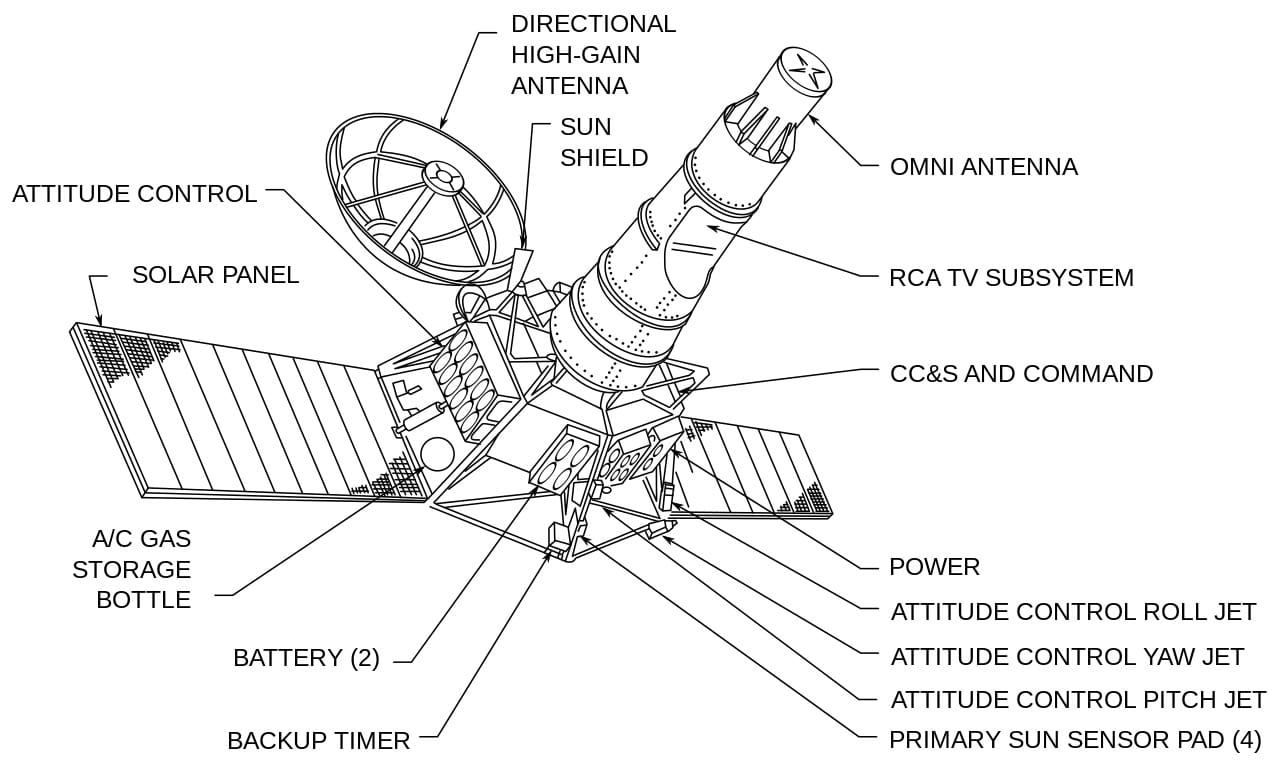
Orion also will carry a copy of a 4-by-5-inch negative of a photo from the Ranger 7 mission, the first US mission to successfully make contact with the lunar surface. NASA’s Jet Propulsion Laboratory in California managed the Ranger series of spacecraft, built to help identify safe Moon landing sites for Apollo astronauts.
On Artemis I, a variety of tree seeds flew and were distributed to educational organizations and teachers after the mission, following in the footsteps of tree seeds flown aboard the Apollo 14 mission sprouted into “Moon Trees” after being returned to Earth. The seeds have since taken root at 236 locations across the US to become their own Artemis I Moon Trees. Soil samples collected from the base of established Artemis I Moon Trees planted at NASA’s 10 centers will fly aboard Artemis II, representing the full cycle of exploration: launch, flight, growth, and return to space again. The CSA (Canadian Space Agency) will fly various tree seeds in the kit with the intention of distributing them after the mission.
More Moon
- As part of a broader move within the planetary science arm of NASA, the agency announced that it will cease funding and support for the Lunar Exploration Analysis Group (LEAG) starting May alongside other such formal community planetary science groups spread US-wide. LEAG helped NASA forge and shape its Moon exploration objectives with scientific, technical, commercial, and operational analysis.
- As expected, Blue Origin’s first robotic Moon lander called Mark I will not launch this quarter. The company announced last week that it completed the spacecraft assembly, and has dispatched the Moonbound vehicle over sea to NASA’s Johnson Space Center where it will undergo space environmental tests. Considering that Mark I aims to land on the Moon’s south pole, the launch will take place only later this year when the landing site will have access to maximum sunlight.
- NASA has selected three scientific payloads to be delivered to the Moon on as-yet-unselected CLPS landers during 2028 or later. These payload suites, intended to study the nature of the Moon’s regolith, interior, and radiation environment respectively, are agnostic to specific locations and therefore can be sent on any lander that is otherwise compatible in terms of mass, volume, power, and other operational requirements.
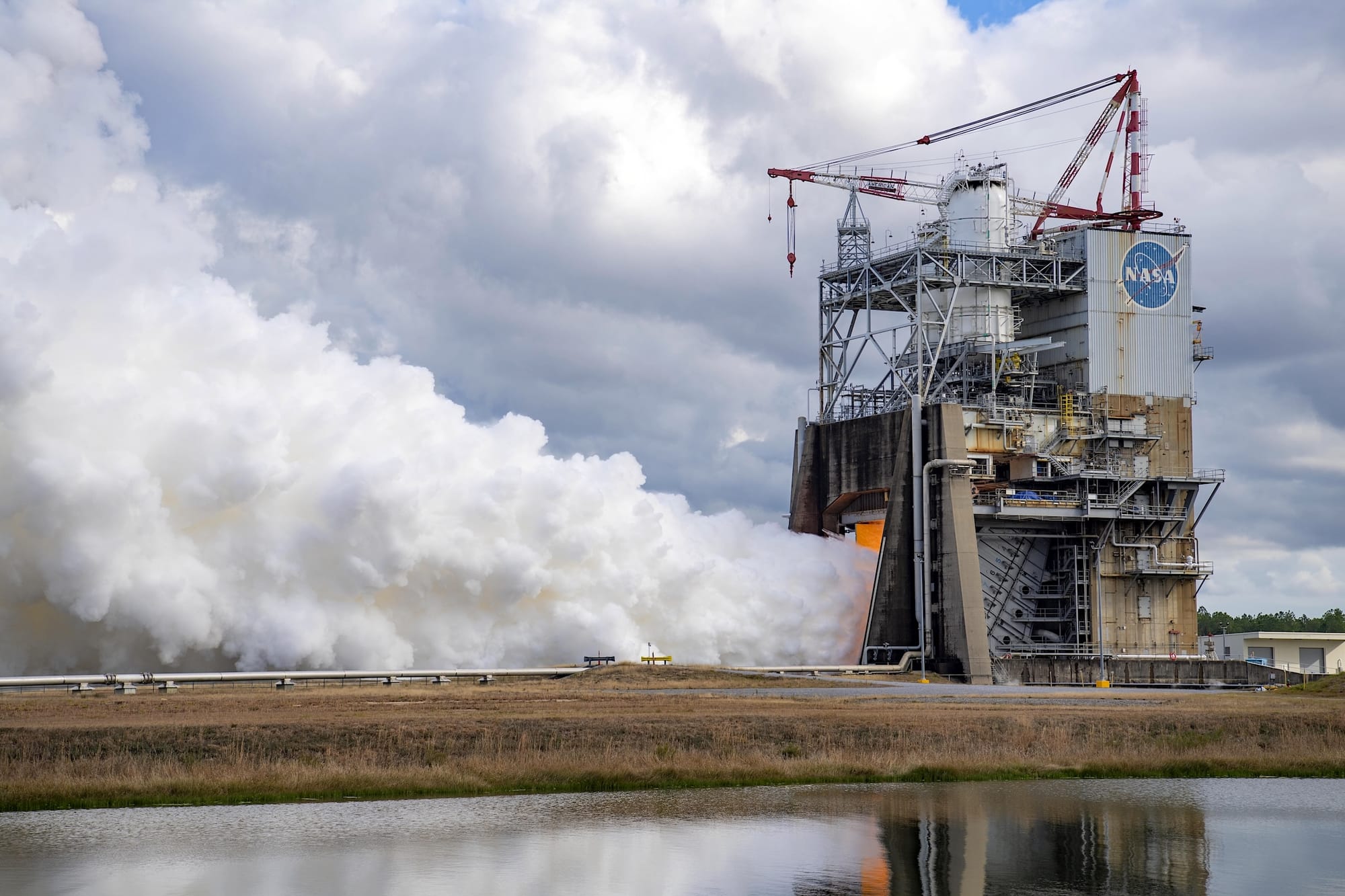
- NASA replaced a faulty oxidizer valve actuator on an RS-25 engine—which was removed from the Artemis II SLS rocket—and retested and qualified it on January 22 to power the SLS rocket for the future Artemis IV mission.
Many thanks to Astrolab and Subha Comandur for sponsoring this week’s Moon Monday! If you too appreciate my efforts to bring you this curated community resource on global lunar exploration for free, and without ads, kindly support my independent writing: