Moon Monday #258: Tests China will conduct this year in prep towards landing humans on Luna
Plus: Artemis and other updates, and articles on Japan’s lunar endeavors.
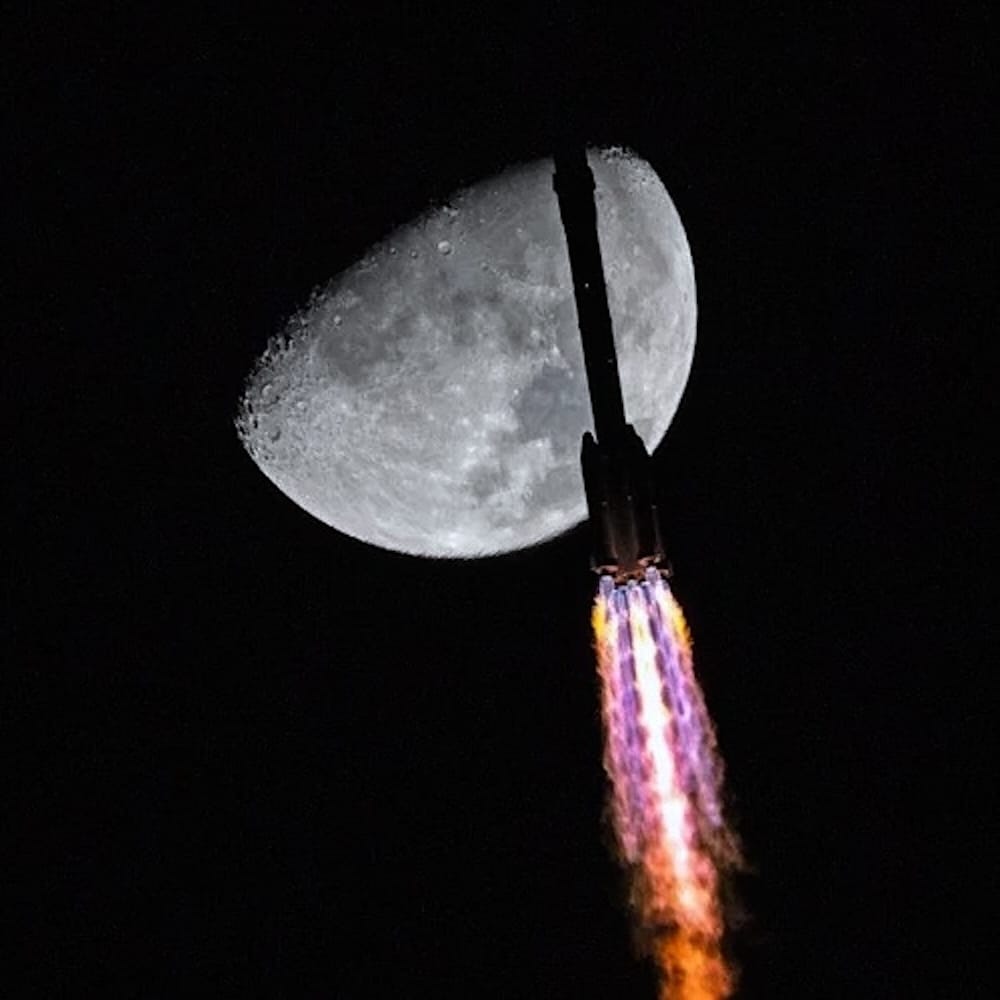
In 2025, China progressed on many elements which will help the country land humans on the Moon by 2030, notably including successful tests of the launchpad escape system, lander propulsion, and the rocket booster core stage. This year, China aims to complete testing several more aspects, as outlined by the China Manned Space Agency (CMSA):
- Perform integrated testing of the Lanyue lunar lander systems.
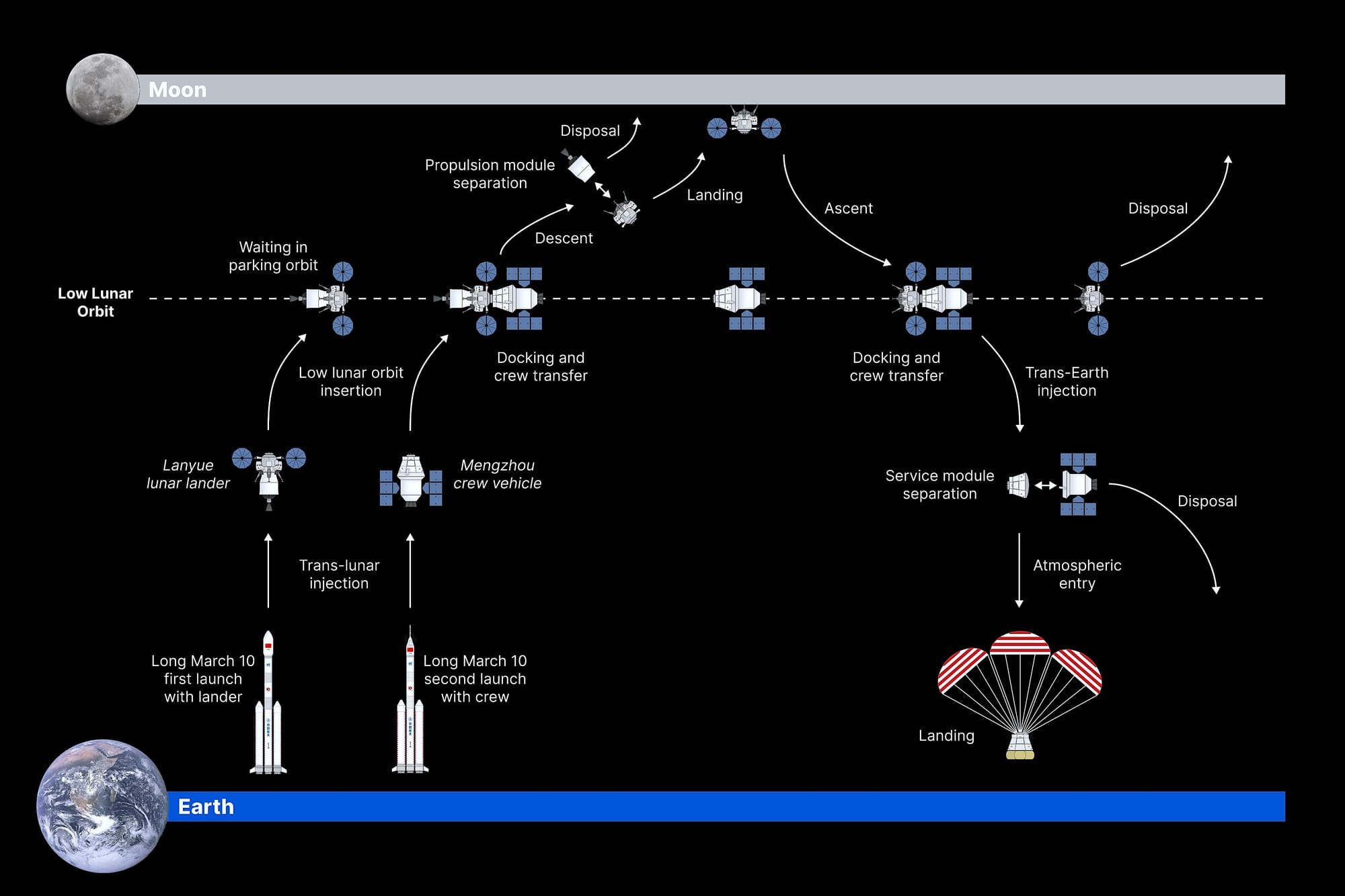
- Note: This would very likely include tests of the propulsion module. As Ling Xin previously reported, Lanyue comprises a crewed lander and an attached heavy propulsion module. It’s the latter which will initiate lunar descent and shave off the bulk of the combined craft’s orbital velocity. When the crew reaches a few kilometers above the lunar surface, the propulsion module will jettison from the lander, thereby lightening the load for the final landing and touchdown of the crew.
- Conduct another abort test of China’s next-generation Mengzhou crew capsule, this time to verify successful working of safety mechanisms during the period of maximum aerodynamic pressure on the craft.
- Note: Mengzhou flights aim to carry all future taikonauts to Earth orbit starting later this year, replacing the now old design of Shenzhou. A lunar variant of Mengzhou called ‘Mengzhou Y’ will carry astronauts to lunar orbit and dock with the Lanyue lander system so Lanyue can then land crew.
- Launch low-altitude flights of the Long March 10A rocket, clearing the way for lofting an uncrewed flight of Mengzhou to China’s Tiangong space station so as to prove the readiness of the new rocket and capsule.
- Note: The lunar Mengzhou Y will incorporate lessons and tweaks from these tests and mission before its first uncrewed flight sometime by 2029.
- Complete ground infrastructure for launch, tracking, and landing of Long March 10A boosters.
Moreover, as Jack Congram reported recently, work on lunar spacesuits called Wangyu will progress as well:
- CMSA aims to conduct comprehensive testing of the Wangyu lunar spacesuit design, including verifying its structural integrity and functioning—like that of thermal control and electrical systems—inside Moon-simulating facilities. Engineers then hope to arrive at the final suit prototype by the end of this year.
At some unspecified point, there are also tests expected of other crewed lunar elements:
- A prototype fairing separation test of the lunar Long March 10 rocket.
- Verification of payload development schedules, and subsequent selection of payloads for the first crewed Moon landing mission based on the previously sought proposals.
Of course, there will be many more tests across various aspects but these are all the specific ones we know of. It would be interesting to see how many of these milestones China accomplishes by the end of this year as the country takes on a very ambitious and fast-paced schedule for landing humans on the Moon by 2030. In any case, China’s lapses would not be as long as that of Artemis barring an unexpected major failure or technical holdup. It will be great to watch a second nation from Earth land humans on Luna. 🌙
Please tell me your Moon time
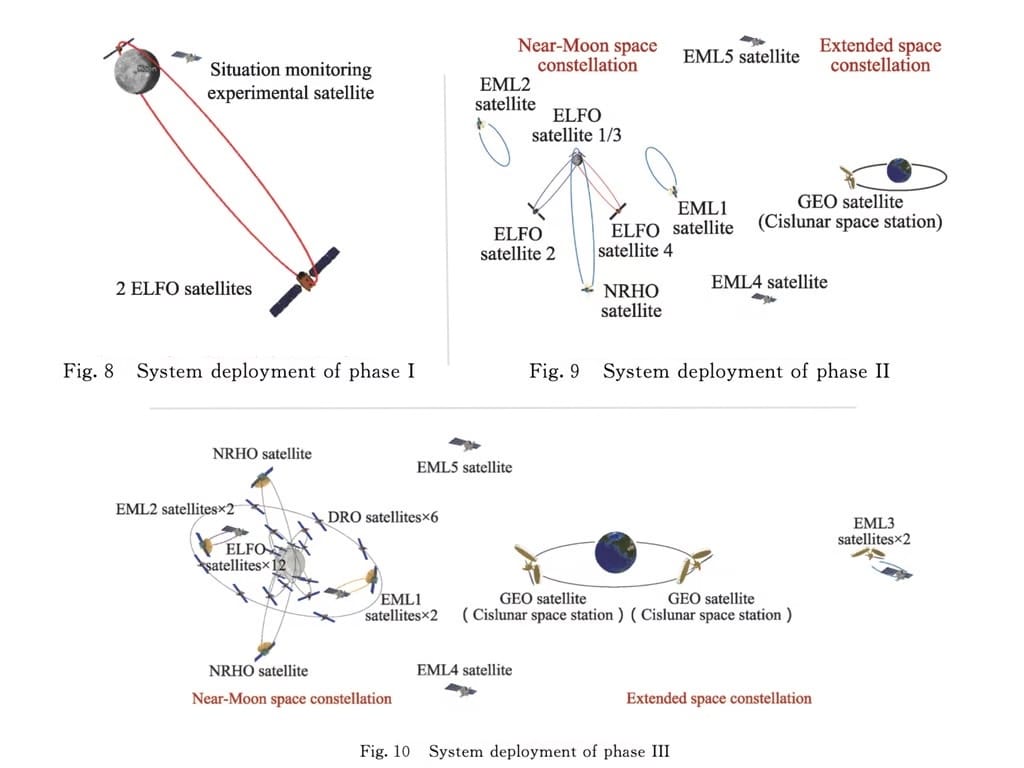
In 2025, China cemented and further advanced its lead in building a lunar communications and navigation network, including demonstrating automated navigation at the Moon, and achieving the first ever daytime Earth-Moon laser distance measurements with a retroreflector on a lunar orbiter. As lunar activity increases globally as well as from China itself towards its Moonbase plans, it’s becoming increasingly important to coordinate time differences between lunar spacecraft and Earth to operate not just safely but synergistically. To that end, Chinese researchers have released a first-of-its-kind software package to enable engineers to coordinate Moon and Earth times for multiple lunar missions in an integrated manner. The authors consider the timing accuracy of this initial work to be sufficient for coordinating spacecraft over the next decade, and note that improvements will follow. What’s commendable is that the software is public on GitHub, the paper describing the work and methodology open access, and the project is being funded by the Chinese government institutions of CAS and NSFC.
More Moon
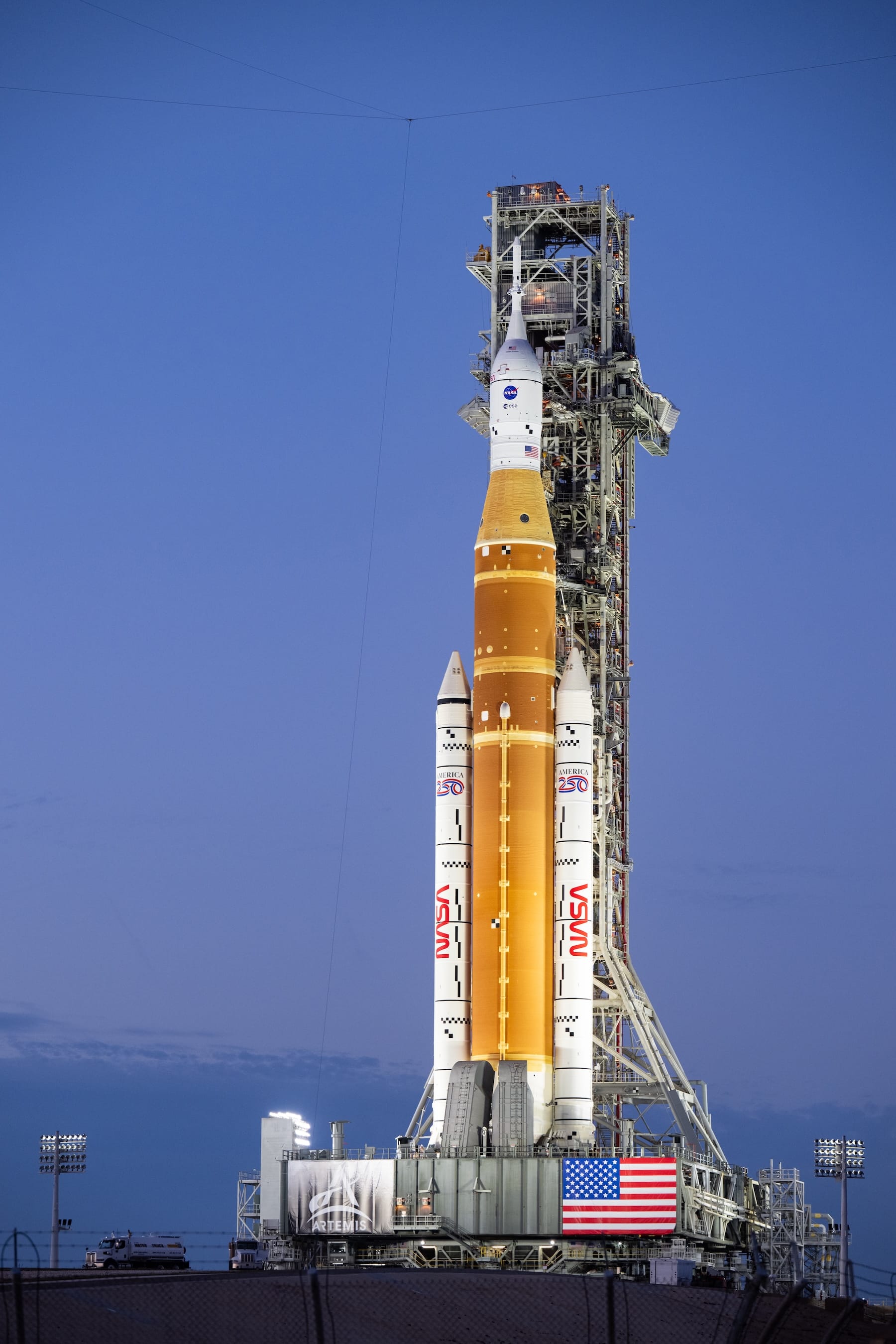
- As NASA targets a Q1 launch for the Artemis II mission to fly four astronauts around the Moon and back, on January 17 the agency transported the mission’s mammoth SLS rocket from the Vehicle Assembly Building at the Kennedy Space Center in Florida to the complex’s Launchpad 39B. The ~6.5-kilometer journey took almost 12 hours. Next in the series of the final set of pre-launch tests, NASA aims to verify cryogenic fueling and de-fueling operations as well as launch countdown procedures for the rocket by February 2. If all goes well, we would then see crew put on their spacesuits and enter Orion on the pad for a countdown demonstration test in tandem with ground teams to verify mission procedures.
- In the meanwhile, NASA has released the Artemis II press kit. CSA’s Artemis II page is also pretty good.
- ESA led a realistic communications test at their Moon-simulating LUNA facility in Germany, emulating messages between an astronaut, various lunar elements, and mission control to lay the groundwork for planning future missions. In the meanwhile, Italian researchers have identified the country’s Mount Etna’s volcanic material to be remarkably similar to Apollo 14 samples, making the place a good training ground for future astronauts and payload tests.
- On January 11, Portugal became the 30th European country to sign the US-led Artemis Accords for cooperative lunar exploration.
- JAXA has tentatively selected ispace Japan to demonstrate a precision landing on the Moon’s south pole later this decade with aid from communications relay satellites in lunar orbit. This development is interesting because JAXA has already achieved a precision robotic landing with the SLIM mission in 2024 without needing any external spacecraft. The move therefore denotes other considerations such as cost and abstracting out the advanced capability to a persistent infrastructure layer at the Moon so every lander can utilize it.
Articles on Japan’s Moon missions
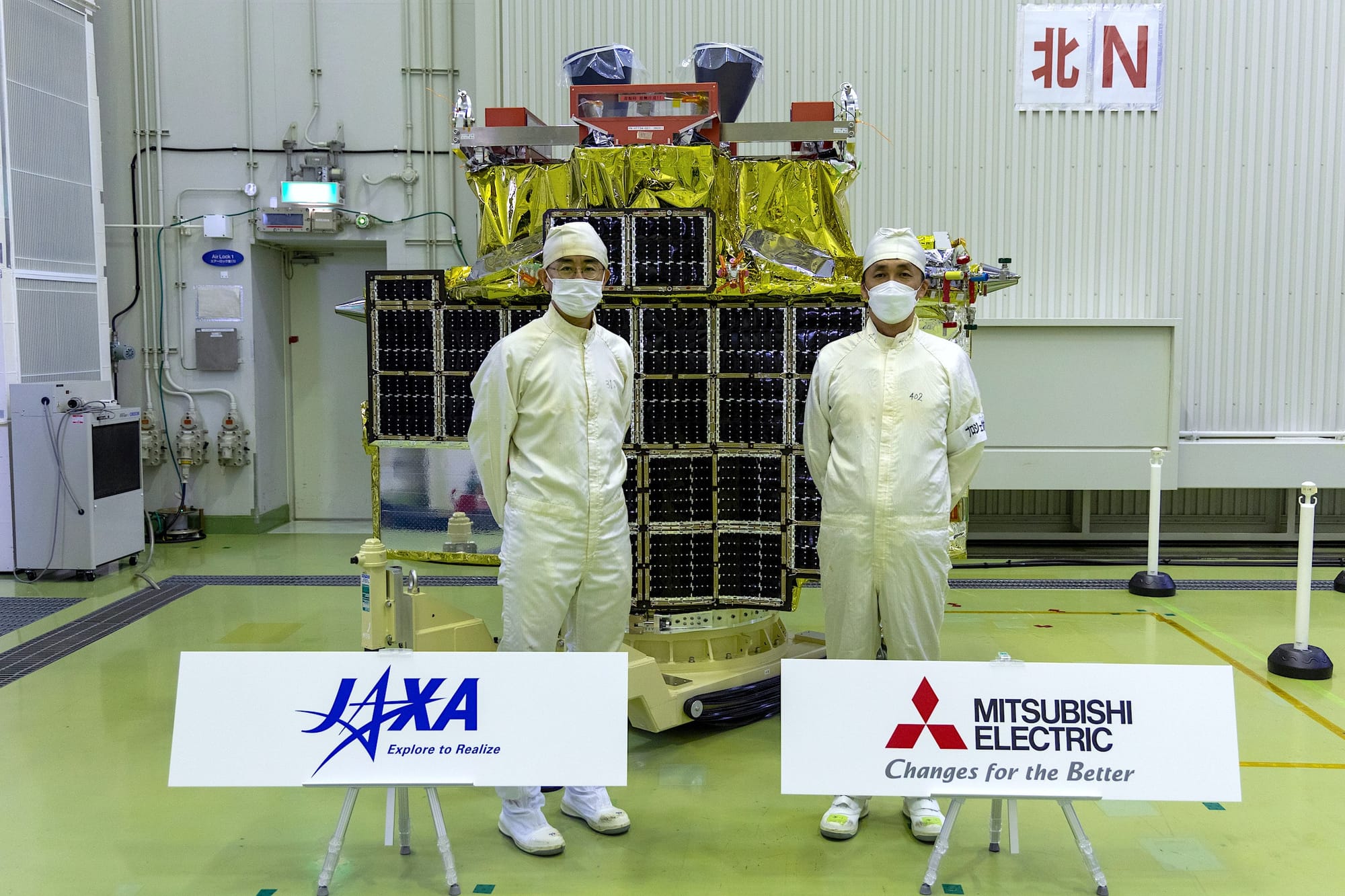
- The joint Indo-Japanese Chandrayaan 5 LUPEX mission will drill for water on the Moon
- JAXA welcomed us into the era of precision Moon landings
- Japan’s road to landing astronauts on the Moon
- The need for resilience in private Moon landing missions through expansive and collaborative testing
- On the intersection of ispace, NASA CLPS, funding, and science
- On ispace’s failed Moon landing attempt and related tangents for NASA CLPS
Many thanks to Catalyx Space and Adithya Kothandhapani for sponsoring this week’s Moon Monday! If you too appreciate my efforts to bring you this curated community resource on global lunar exploration for free, and without ads, kindly support my independent writing: